Skip to content
ScienceBlog.com
  • Featured Blogs
    • EU Horizon Blog
    • ESA Tracker
    • Experimental Frontiers
    • Josh Mitteldorf’s Aging Matters
    • Dr. Lu Zhang’s Gondwanaland
    • NeuroEdge
    • NIAAA
    • SciChi
    • The Poetry of Science
    • Wild Science
  • Topics
    • Brain & Behavior
    • Earth, Energy & Environment
    • Health
    • Life & Non-humans
    • Physics & Mathematics
    • Social Sciences
    • Space
    • Technology
  • Our Substack
  • Follow Us!
    • Bluesky
    • Threads
    • FaceBook
    • Google News
    • Twitter/X
  • Contribute/Contact

Neurology

Senior friends having dinner for Christmas evening

Father with Alzheimer’s? You May Be More at Risk of Brain Changes

abstract illustration of M S in human body

AI tool can track effectiveness of multiple sclerosis treatments

neurons

Brain Rhythm Drug Mimics Stroke Rehab Effects

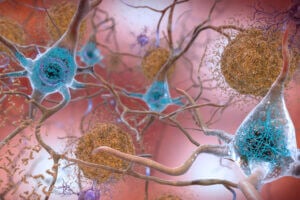
In the Alzheimer’s affected brain, abnormal collections of the tau protein accumulate and form tangles (seen in blue) within neurons, harming synaptic communication between nerve cells. Credits:Image: National Institute on Aging, NIH

How Key Enzyme Transforms Brain Protein in Alzheimer’s

woman with an itchy arm

Why Some People Itch More from Allergens and Mosquito Bites

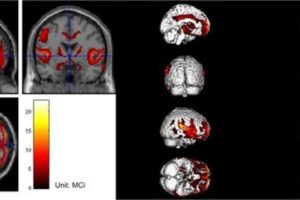
This case highlights the effectiveness of using multimodality approaches for diagnosing iNPH, which not only saves the patient time but also reduces clinical costs. This approach is worth further promotion.

New Diagnostic Approach Improves Accuracy in Detecting Brain Fluid Buildup

Strength training activates cellular waste disposal mechanisms which are essential for long-term preservation of muscle mass. This is the finding of a University of Bonn research team.

Strength training activates cellular waste disposal

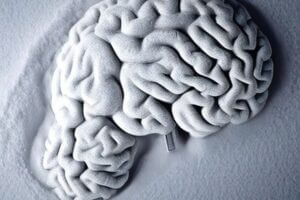
Artistic illustration of a human brain. Pixabay

Multiple sclerosis appears to protect against Alzheimer’s disease

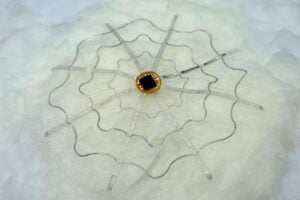
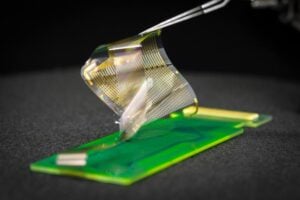
Figure 3. The electronic tent smoothly attached along the curved surface of brain-mimicking tissue (1% agarose gel)

Needle-Thin Brain Probe Offers Safer Alternative to Invasive Diagnostics

A computer screen shows results from an electroencephalogram, or EEG test.

AI boosts the power of EEGs, enabling neurologists to quickly, precisely pinpoint signs of dementia

Researchers use Optically Pumped Magnetometers to non-invasively measure activity in human cervical nerves. The technology could help medical professionals tailor treatements for inflammatory conditions like sepsis and PTSD.

Researchers use non-invasive technique to record involuntary nervous system

neurons associated with alzheimer's

Early onset dementia more common than reported and Alzheimer’s seems to be on the rise

Alzheimer's brain artistic illustration

Data from largest clinical trial of pre-symptomatic Alzheimer’s now widely available

The PtNGrid features thin, flexible and densely packed grids of either 1,024 or 2,048 embedded electrocorticography (ECoG) sensors.

FDA Approves Clinical Trial for High-Resolution Brain Recorder

Older posts
Page1 Page2 Page3 Next →
Substack subscription form sign up

Comments

  • Kidreadytobreed on Global warming reduces available wind energy
  • James on Global warming reduces available wind energy
  • James on Global warming reduces available wind energy
  • Booklet AI on Key to online education: Test early and often
  • Karoly Mirnics on Common Prescription Drugs May Disrupt Cholesterol Pathways in the Womb and Raise Autism Risk
© 2026 ScienceBlog.com | Follow our RSS / XML feed