Skip to content
ScienceBlog.com
  • Featured Blogs
    • EU Horizon Blog
    • ESA Tracker
    • Experimental Frontiers
    • Josh Mitteldorf’s Aging Matters
    • Dr. Lu Zhang’s Gondwanaland
    • NeuroEdge
    • NIAAA
    • SciChi
    • The Poetry of Science
    • Wild Science
  • Topics
    • Brain & Behavior
    • Earth, Energy & Environment
    • Health
    • Life & Non-humans
    • Physics & Mathematics
    • Social Sciences
    • Space
    • Technology
  • Our Substack
  • Follow Us!
    • Bluesky
    • Threads
    • FaceBook
    • Google News
    • Twitter/X
  • Contribute/Contact

Paleontology

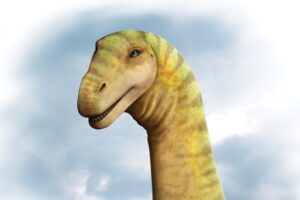
The realllly long neck of a brontosaurus

How Sauropods Achieved Their Record-breaking Sizes

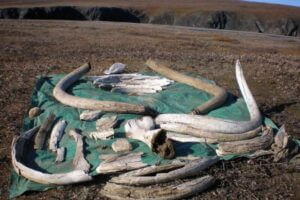
Field photo of woolly mammoth tusks, teeth and assorted bones collected on Wrangel Island by co-authors (and others) of the new Nature study. These specimens were not used in the study. They were found at least partly exposed while prospecting along river channels and banks. Image credit: Alexei Tikhonov

Surging testosterone found in male woolly mammoths

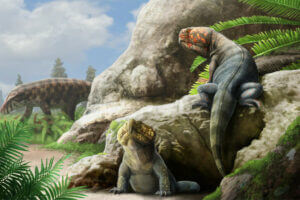
This artist’s depiction shows how Beesiiwo cooowuse may have appeared while roaming the Earth between 250 and 227 million years ago. The newly described rhynchosaur species was named in the language of the northern Arapaho, who live where its fossils were discovered in central Wyoming. GABRIEL UGUETO

Newly described ancient reptile named in language of First Nations where fossils were found

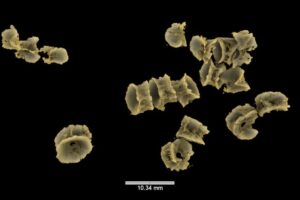
A micro-CT scan showing evidence of fish bones inside Eric the plesiosaur's gut.

X-ray analysis sheds new light on prehistoric predator’s last meal

Diamantinasaurus matildae head Australian Age of Dinosaurs Museum of Natural History

95-million-year-old sauropod dinosaur skull first of its kind in Australia

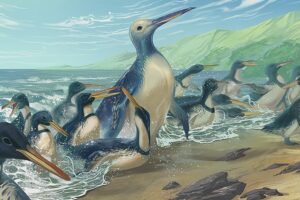
The largest penguin that ever lived

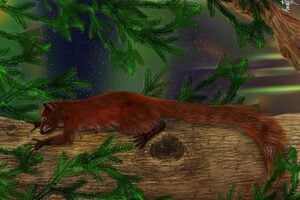
Artist's reconstruction of Ignacius dawsonae surviving six months of winter darkness in the extinct warm temperate ecosystem of Ellesmere Island, Arctic Canada.

Fossils show near-primates were cool with colder climate

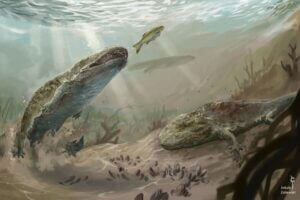
Reconstruction of the metoposaurs, - representatives of temnospondyl amphibians in their environment, some 215 million years ago.

A tumor more than 215 million years old

Life reconstruction of the 120-million-year-old bird Cratonavis zhui

Bizarre bird from China shows decoupled skull and body

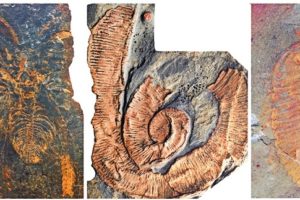
Fossils from the Fezouata Shale. From left to right, a non-mineralized arthropod (Marrellomorpha), a palaeoscolecid worm and a trilobites

Giant arthropods dominated the seas 470 million years ago

Dinosaur illiustration

Before asteroid, dinosaurs we’re killing it

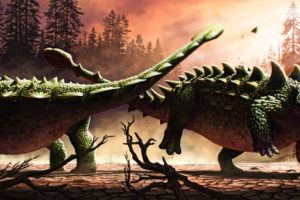
Zuul crurivastator in battle, illustrated by Henry Sharpe. © Henry Sharpe

Ankylosaurs battled each other as much as they fought off T. rex

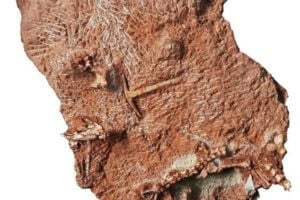
Fossil – the whole specimen showing the skull (left) and skeleton (base of specimen)

Fossil discovery in storeroom cupboard shifts origin of modern lizard back 35 million years

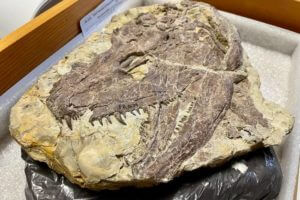
A Whatcheeria skull in the collections of the Field Museum, with its many sharp teeth visible

Ancient superpredator got big by front-loading its growth in its youth

Older posts
Newer posts
← Previous Page1 … Page4 Page5 Page6 Next →
Substack subscription form sign up

Comments

  • Josh Mitteldorf on Red States and Blue States Are Becoming the Same Unhappy Country
  • Josh Mitteldorf on Scientists Have Written the Rules for First Contact, and Step One Is Don’t Panic
  • John E on A New Theory Says DMT Entities Might Be Real, and Proposes How to Test It
  • ScienceBlog.com on A New Theory Says DMT Entities Might Be Real, and Proposes How to Test It
  • John E on A New Theory Says DMT Entities Might Be Real, and Proposes How to Test It
© 2026 ScienceBlog.com | Follow our RSS / XML feed