Skip to content
ScienceBlog.com
  • Featured Blogs
    • EU Horizon Blog
    • ESA Tracker
    • Experimental Frontiers
    • Josh Mitteldorf’s Aging Matters
    • Dr. Lu Zhang’s Gondwanaland
    • NeuroEdge
    • NIAAA
    • SciChi
    • The Poetry of Science
    • Wild Science
  • Topics
    • Brain & Behavior
    • Earth, Energy & Environment
    • Health
    • Life & Non-humans
    • Physics & Mathematics
    • Social Sciences
    • Space
    • Technology
  • Our Substack
  • Follow Us!
    • Bluesky
    • Threads
    • FaceBook
    • Google News
    • Twitter/X
  • Contribute/Contact

quantum computers

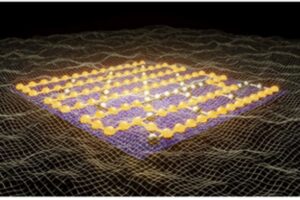
An artist’s impression of a quantum electrodynamics simulation using 100 qubits of an IBM quantum computer. The spheres and lines denote the qubits and connectivity of the IBM quantum processor; gold spheres denote the qubits used in the simulation.

100-Qubit Quantum Leap: Scientists Harness Quantum Computers to Model the Universe’s Fundamental Physics

This illustrates the principle of two oscillators giving in-phase and out-of-phase oscillation modes.

Brain-Inspired Magnetic Waves Could Power Next-Gen Computing Without the Deep Freeze

A new study finds that new quantum particles form by pairing quasiparticles that carry fractional charges. Courtesy of Demin Liu.

Scientists Discover New Quantum Particles That Break Classical Rules

Section of the quantum simulator at the Quantum for Life Centre

Quantum researchers come up with a recipe that could accelerate drug development

Substack subscription form sign up

Comments

  • Curtis Webber on The GPS-Killer? This Quantum Device ‘Feels’ Motion Like a Brain—Down to the Atomic Level
  • Ran on How the Age You First Had Sex Could Shape How You Age Decades Later
  • Sparty on How the Age You First Had Sex Could Shape How You Age Decades Later
  • Josh Mitteldorf on A Single TV Segment Sent Leucovorin Prescriptions for Autistic Children Soaring 2,000 Percent
  • Josh Mitteldorf on A Single TV Segment Sent Leucovorin Prescriptions for Autistic Children Soaring 2,000 Percent
© 2026 ScienceBlog.com | Follow our RSS / XML feed