Skip to content
ScienceBlog.com
  • Featured Blogs
    • EU Horizon Blog
    • ESA Tracker
    • Experimental Frontiers
    • Josh Mitteldorf’s Aging Matters
    • Dr. Lu Zhang’s Gondwanaland
    • NeuroEdge
    • NIAAA
    • SciChi
    • The Poetry of Science
    • Wild Science
  • Topics
    • Brain & Behavior
    • Earth, Energy & Environment
    • Health
    • Life & Non-humans
    • Physics & Mathematics
    • Social Sciences
    • Space
    • Technology
  • Our Substack
  • Follow Us!
    • Bluesky
    • Threads
    • FaceBook
    • Google News
    • Twitter/X
  • Contribute/Contact

Research

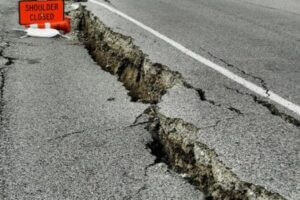
Damage after a powerful earthquake in New Zealand in 2011. Researchers at UT Austin are working to forecast earthquakes with artificial intelligence.

AI-driven earthquake forecasting shows promise in trials

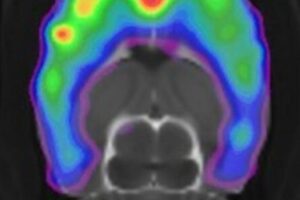
Scan of a rat brain showing the serotonin 5-HT2A receptor affected by psylocobin.

Small doses of mushrooms can have a beneficial effect on mental disorders

IV drug user. Pixabay

Decriminalizing drug possession not linked to higher overdose death rates in Oregon or Washington

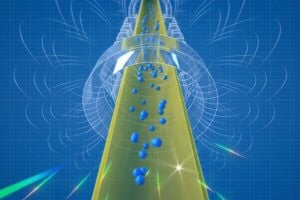
An artist's conceptual rendering of antihydrogen atoms falling out the bottom of the magnetic trap of the ALPHA-g apparatus. As the antihydrogen atoms escape, they touch the chamber walls and annihilate. Most of the annihilations occur beneath the chamber, showing that gravity is pulling the antihydrogen down. The rotating magnetic field lines in the animation represent the invisible influence of the magnetic field on the antihydrogen. The magnetic field does not rotate in the actual experiment.

Down goes antimatter! Gravity’s effect on matter’s elusive twin is revealed

Researchers take the stage – plus beer orders – as Europe celebrates lab work

Reninoma Kidney cells under a microscope and stained

Genetic code of rare kidney cancer cracked

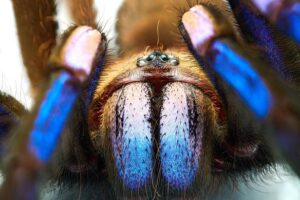
Electric blue tarantula close up.

New electric blue tarantula species discovered in Thailand

From rockets to spider silk, young scientists wow the jury – and each other!

Toddler boy in overalls

Hidden connection found between adverse drug reactions and autism

Ohio State logo

Ohio’s droughts are worse than often recognized, study finds

Wild boar in a Hungarian forest may be key to protecting Europe’s pig herds

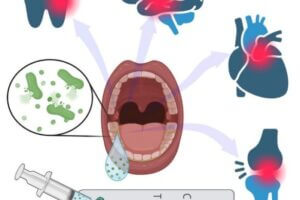
University of Cincinnati engineers have developed a test that uses saliva to warn consumers about periodontal disease, which if left untreated can lead to tooth loss, stroke, heart disease and other illnesses.

New at-home test for gingivitis protects oral health

blue arrows point at each other. pixabay

Study confirms it: Opposites don’t actually attract

Nuria Matilla-Santander

Precarious employment conditions can increase risk of early death

Older posts
Newer posts
← Previous Page1 … Page19 Page20 Page21 … Page32 Next →
Substack subscription form sign up

Comments

  • David A on Why You’re Losing Muscle on Weight Loss Drugs, and What a Gut Hormone Might Do About It
  • Marco Messina on More Than a Third of Americans Have Lost Relationships Over Politics
  • Anon on Why Fructose Behaves Less Like a Calorie and More Like a Hormone
  • Mark Mellinger on Living Plastic Can Self-Destruct on Command
  • Marie Feret on The Silent Frequency That Makes Old Buildings Feel Haunted
© 2026 ScienceBlog.com | Follow our RSS / XML feed