Skip to content
ScienceBlog.com
  • Featured Blogs
    • EU Horizon Blog
    • ESA Tracker
    • Experimental Frontiers
    • Josh Mitteldorf’s Aging Matters
    • Dr. Lu Zhang’s Gondwanaland
    • NeuroEdge
    • NIAAA
    • SciChi
    • The Poetry of Science
    • Wild Science
  • Topics
    • Brain & Behavior
    • Earth, Energy & Environment
    • Health
    • Life & Non-humans
    • Physics & Mathematics
    • Social Sciences
    • Space
    • Technology
  • Our Substack
  • Follow Us!
    • Bluesky
    • Threads
    • FaceBook
    • Google News
    • Twitter/X
  • Contribute/Contact

Research

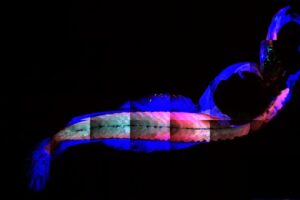
A just-hatched killifish larvae stained with antibodies against Myosin (Red), Actinin (Green) and Collagen (Blue).

African Killifish could hold secrets to reversing muscle ageing

Insomnia illustration

Losing sleep over losing sleep: how watching the clock impacts insomnia, use of sleep aids

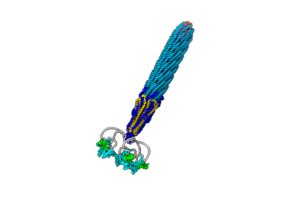
Phage image based on that published in Gold et al, Nature Communications

Looks like Marge Simpson: Phage structure captured for the first time

Black and white photo of baby

Stress Hormone in Pregnancy Linked to Improved Language Skills in Children

Colorful illustration of two skulls and brains

Restoring Brain Rhythm Can Fight Depression

The Hubble Space Telescope has captured an image of an object in the ultraviolet part of the spectrum, which appears similar in size to our Milky Way. Researchers have been puzzled by this object for some time, but recently found similarities between it and a nearby galaxy known as IC 5249, which lacks a bulge and is observed edge-on. The images in ultraviolet and visible light of both objects are strikingly similar and suggest that the object could be a galaxy without a bulge viewed edge-on. Credit for the images goes to HST.

Starry Trail Not a Fleeing Black Hole After All

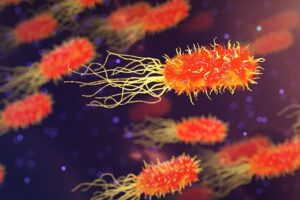
Illustration of bacteeria

Cause of Parkinson’s is Desulfovibrio Bacteria, Finnish Researchers Say

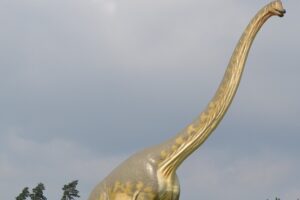
The realllly long neck of a brontosaurus

How Sauropods Achieved Their Record-breaking Sizes

University of Minnesota Twin Cities researchers have developed a groundbreaking new diagnostic technique that will allow for faster and more accurate detection of neurodegenerative diseases that affect humans, such as Alzheimer's and Parkinson's, and similar diseases that affect animals, such as chronic wasting disease (CWD) and mad cow disease.

Faster, More Accurate Tests for Neurodegenerative Diseases in Nano-QuIC

Wedding ring on Bible verse

Sharing Bank Accounts May Keep Love Alive

A representation of the global satellite network, which researchers have used to create an algorithm that listens in to satellite signals. Photo: Getty Images

Satellite “Eavesdropping” Algorithm Finds Your Spot on Earth with Stellar Precision

Smoggy cityscape

Pollution’s Rhythm

A shaking hand

Conditions like celiac disease, Parkinson’s could be detected 10 years earlier

Pi on a blackboard Credit: geralt

Search is on for ‘super memorisers’ to help scientists unlock the secrets of memory

Older posts
Newer posts
← Previous Page1 … Page24 Page25 Page26 … Page32 Next →
Substack subscription form sign up

Comments

  • Monte Dale Jr on Cracks Are Appearing in the Geometric Assumption Underlying All of Modern Cosmology
  • Monte Dale Jr on Cracks Are Appearing in the Geometric Assumption Underlying All of Modern Cosmology
  • Not Buying Yer Bullshit on More Than a Third of Americans Have Lost Relationships Over Politics
  • Marco Messina on More Than a Third of Americans Have Lost Relationships Over Politics
  • Anon on Why Fructose Behaves Less Like a Calorie and More Like a Hormone
© 2026 ScienceBlog.com | Follow our RSS / XML feed