Skip to content
ScienceBlog.com
  • Featured Blogs
    • EU Horizon Blog
    • ESA Tracker
    • Experimental Frontiers
    • Josh Mitteldorf’s Aging Matters
    • Dr. Lu Zhang’s Gondwanaland
    • NeuroEdge
    • NIAAA
    • SciChi
    • The Poetry of Science
    • Wild Science
  • Topics
    • Brain & Behavior
    • Earth, Energy & Environment
    • Health
    • Life & Non-humans
    • Physics & Mathematics
    • Social Sciences
    • Space
    • Technology
  • Our Substack
  • Follow Us!
    • Bluesky
    • Threads
    • FaceBook
    • Google News
    • Twitter/X
  • Contribute/Contact

Research

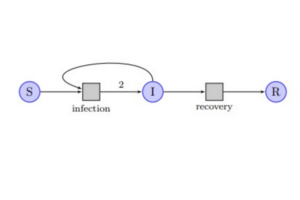
A simple version of a Petri net for COVID infection. The starting point is a non-infected person. “S” denotes “susceptible”. Contact with an infected person (“I”) is an event which leads to two persons being infected. Later another event will happen, removing a person from the group of infected. Here, “R” denotes “recovered” which in this context could be either cured or dead. Either outcome would remove the person from the infected group.

COVID calculations spur solution to vexing computer science problem

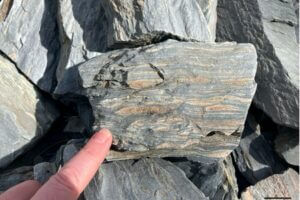
Boudinage in brecciated dolostone rocks of the Panamint Range (Wildrose Area, Death Valley National Park). New research shows that periclase is stronger than bridgmanite in earth's lower mantle, analogous to boudins developing in rigid ("stronger") rocks among less competent ("weaker") rocks.

What Are They Up To? Surprising Behavior of Minerals Deep in the Earth

A confocal microscope image of molten dark chocolate.

Why chocolate feels so good: It’s the lubrication

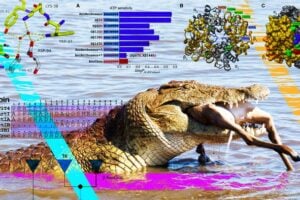
A Nile crocodile swallows an impala, its reward for lying in wait beneath the water’s surface. By resurrecting the hemoglobin of ancient crocodilian ancestors, a Husker-led team has helped explain why other vertebrates failed to evolve the adaptations that allow crocs to go hours without air.

Decoding Croc Blood: Mutations Make it an Oxygen-Ferrying Winner

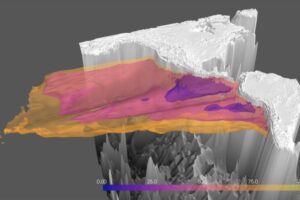
Oxygen starved Pacific Ocean chart

Pacific Ocean’s oxygen-starved ‘OMZ’ is growing, new Princeton research finds

Middle aged man exercising

How exercise preserves physical fitness during aging

Illustration of a rage-filled face

Brain can ramp up rage like a volume dial

Artificial intelligence software gleans insights from health records to shed light on chronic COVID symptoms

Machine Learning Tackles Long COVID

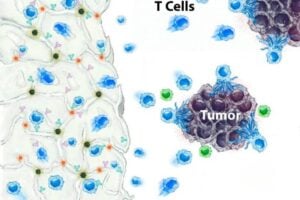
The SymphNode device (left), contains nanoparticles (red dots) that release a drug that blocks the activity of regulatory T cells (green), which suppress the body’s response to solid tumors. At the same time, the SymphNode’s microparticles (black dots) attract and beef up cancer-fighting T cells.

Tiny implantable sponge helps kill cancer

David Gamm’s laboratory developed a way to grow organoids that resemble the retina. UW–MADISON

Lab-grown eye cells connect with neighbors, paving way for blindness treatments

Glass of water

Stay hydrated for healthy aging, scientists say

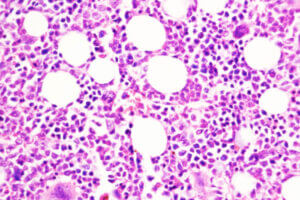
Blood cancer cells

Breakthrough in preventing aggressive form of chronic leukemia

A beautiful sunset on a farm

Researchers develop solar powered worms

Illustration of sunglasses

Dark Therapy Shows Promise in Addressing Lazy Eye Condition

Older posts
Newer posts
← Previous Page1 … Page29 Page30 Page31 Page32 Next →
Substack subscription form sign up

Comments

  • Josh Mitteldorf on Red States and Blue States Are Becoming the Same Unhappy Country
  • Josh Mitteldorf on Scientists Have Written the Rules for First Contact, and Step One Is Don’t Panic
  • John E on A New Theory Says DMT Entities Might Be Real, and Proposes How to Test It
  • ScienceBlog.com on A New Theory Says DMT Entities Might Be Real, and Proposes How to Test It
  • John E on A New Theory Says DMT Entities Might Be Real, and Proposes How to Test It
© 2026 ScienceBlog.com | Follow our RSS / XML feed