Skip to content
ScienceBlog.com
  • Featured Blogs
    • EU Horizon Blog
    • ESA Tracker
    • Experimental Frontiers
    • Josh Mitteldorf’s Aging Matters
    • Dr. Lu Zhang’s Gondwanaland
    • NeuroEdge
    • NIAAA
    • SciChi
    • The Poetry of Science
    • Wild Science
  • Topics
    • Brain & Behavior
    • Earth, Energy & Environment
    • Health
    • Life & Non-humans
    • Physics & Mathematics
    • Social Sciences
    • Space
    • Technology
  • Our Substack
  • Follow Us!
    • Bluesky
    • Threads
    • FaceBook
    • Google News
    • Twitter/X
  • Contribute/Contact

Robotics

The flying, swimming and tunnelling robots inspired by nature

Ohio State logo

Advances in soft robotics usher in a new era of scientific analysis

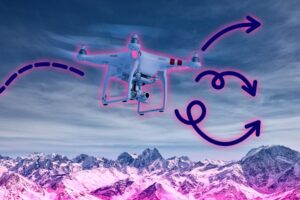
Researchers from MIT and Stanford University created a machine-learning method that can derive a controller for a robot, drone, or autonomous vehicle that is more effective at following a stable trajectory than other methods. This technique could help, for instance, a drone to closely follow a downhill skier despite being buffeted by strong winds. Credits:Image: MIT News, with figures from iStock

A simpler method for learning to control a robot

Woman interacting with a desktop robot.

AI Advances Could Equip Robots to Counter Human Loneliness

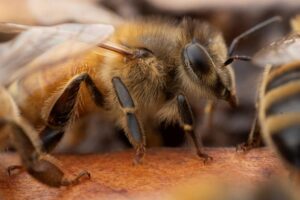
Bees make decisions better and faster than we do, for the things that matter to them

How Honey Bees Inspire Advanced Robotics and AI

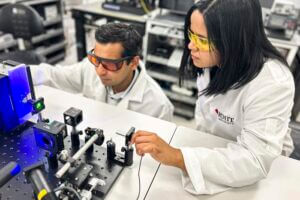
Prof Sumeet Walia (left) and PhD researcher Aishani Mazumder with a demonstration (using visible light) of the experimental set up for the research that used ultraviolet light.

Tiny device mimics human vision and memory abilities

Tomato-picking robot arm

Unleashing the Power of Language Models in Robotic Design

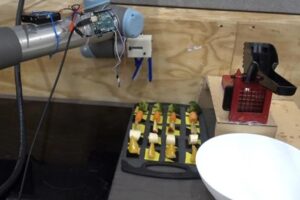
A robot cooking. Image courtesy University of Cambridge

Cooking Videos Teach Robotic ‘Chef’ to Whip Up Delicious Dishes

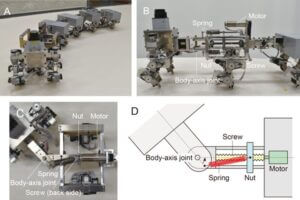
Centipede robot

Walking Robot Harnesses Instability for Navigation

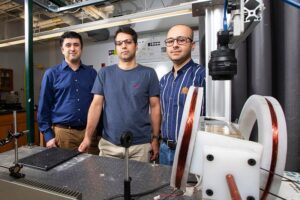
Kourosh Shoele, an assistant professor of Mechanical Engineering, Hadi Mohammadigoushki, Associate Professor of Chemical and Biomedical Engineering and Farshad Nazarinasrabad, a doctoral candidate in chemical engineering at the FAMU-FSU College of Engineering. (Mark Wallheiser/FAMU-FSU College of Engineering)

Bacteria Dance the Twist in Our Stomachs: H. pylori Gets Its Groove On

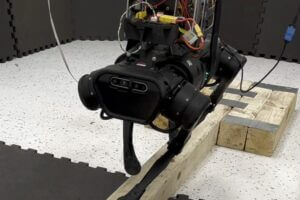
Quadroped robot can walk a balance beam

Robot Wows with Balance Beam Walking Skills

Futuristic looking robot looking at a video monitor

AI could run a million microbial experiments per year

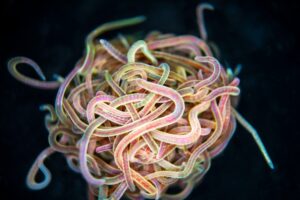
A new study explains how California blackworms can twist and curl around each other by the thousands, forming tightly wound balls and then untangling just as quickly. Credits:Image: Harry Tuazon

How to untangle a worm ball: Mathematicians solve a knotty mystery

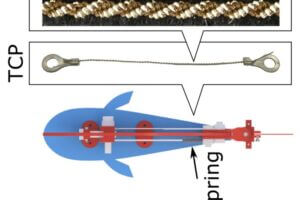
Illustration of robot fish and its Antagonistic muscles

Robot fish makes splash with motion breakthrough

Older posts
Newer posts
← Previous Page1 Page2 Page3 Page4 Page5 Next →
Substack subscription form sign up

Comments

  • Marie Feret on The Silent Frequency That Makes Old Buildings Feel Haunted
  • Dax on The Silent Frequency That Makes Old Buildings Feel Haunted
  • Karoly Mirnics on Common Prescription Drugs May Disrupt Cholesterol Pathways in the Womb and Raise Autism Risk
  • Aizen on Laziness helped lead to extinction of Homo erectus
  • Norwood johnson on Electrons in New Crystals Behave as If They Live in Four Dimensions
© 2026 ScienceBlog.com | Follow our RSS / XML feed