Skip to content
ScienceBlog.com
  • Featured Blogs
    • EU Horizon Blog
    • ESA Tracker
    • Experimental Frontiers
    • Josh Mitteldorf’s Aging Matters
    • Dr. Lu Zhang’s Gondwanaland
    • NeuroEdge
    • NIAAA
    • SciChi
    • The Poetry of Science
    • Wild Science
  • Topics
    • Brain & Behavior
    • Earth, Energy & Environment
    • Health
    • Life & Non-humans
    • Physics & Mathematics
    • Social Sciences
    • Space
    • Technology
  • Our Substack
  • Follow Us!
    • Bluesky
    • Threads
    • FaceBook
    • Google News
    • Twitter/X
  • Contribute/Contact

scientific research

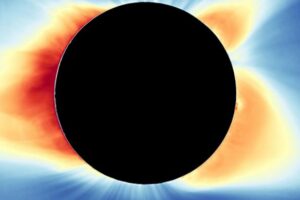
The 2017 eclipse as captured by Chasing the Eclipse I project.

NASA selects 5 experiments for 2024 total solar eclipse

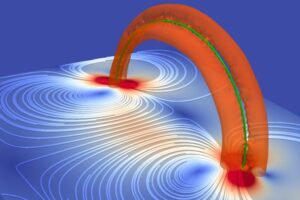
Visualization of quantized vortex ring above the plane (green curve), normal-fluid vortex rings (reddish half circles)

Scientists Unravel Mystery of Quantum Vortex Interaction in Superfluid Helium

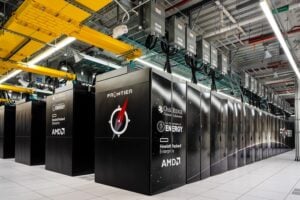
The Frontier supercomputer at ORNL remains in the number one spot on the May 2023 TOP500 rankings, with an updated high-performance Linpack score of 1.194 exaflops. Engineers at the Oak Ridge Leadership Computing Facility, which houses Frontier and its predecessor Summit, expect that Frontier’s speeds could ultimately top 1.4 exaflops, or 1.4 quintillion calculations per second.

Monster computer powering range of high-end experiments

Futuristic looking robot looking at a video monitor

AI could run a million microbial experiments per year

Futuristic looking robot looking at a video monitor

IBM, Samsung build “AI scientist” that combines theory and data

Organic Green Roasted Broccoli Florets with Garlic

Broccoli consumption protects gut lining, reduces disease, in mice

sun

Shedding light on the Sun

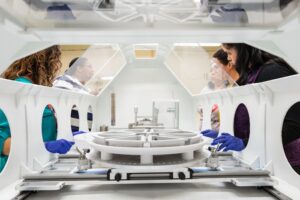
Members of NASA’s OSIRIS-REx curation team work with a glove box at the agency's Johnson Space Center in Houston. The curation team will be among the first to see and handle the sample OSIRIS-REx is returning from asteroid Bennu. They are also responsible for storing and distributing the sample to science team members around the world. Most of the sample will be stored for future generations.

NASA prepares for historic asteroid sample delivery

Artist’s Impression of the “Tadpole” Molecular Cloud and the black hole at the gravitational center of its orbit.

‘Tadpole’ Spotted Playing Around Black Hole

Application of machine learning techniques to large astronomy data sets can discover thousands of cosmic objects of various classes.

Machine learning techniques identify thousands of new cosmic objects

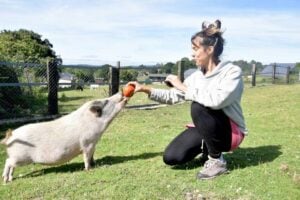
Woman playing with a pig and holding an apple

Dogs show things to humans but pigs do not

Senior beautiful woman wearing casual t-shirt standing over isolated pink background showing arms muscles smiling proud. Fitness concept.

Scientists discover secreted protein helps both repair and grow muscles

Factory at night

Exxon scientists predicted global warming with ‘shocking skill and accuracy,’ Harvard researchers say

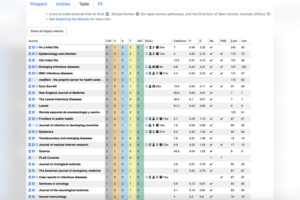
Screenshot of Jot app

Introducing Jot — a new open-source tool that help researchers with journal selection

Older posts
Newer posts
← Previous Page1 Page2 Page3 Page4 Next →
Substack subscription form sign up

Comments

  • Mark Mellinger on Living Plastic Can Self-Destruct on Command
  • Marie Feret on The Silent Frequency That Makes Old Buildings Feel Haunted
  • Dax on The Silent Frequency That Makes Old Buildings Feel Haunted
  • Karoly Mirnics on Common Prescription Drugs May Disrupt Cholesterol Pathways in the Womb and Raise Autism Risk
  • Aizen on Laziness helped lead to extinction of Homo erectus
© 2026 ScienceBlog.com | Follow our RSS / XML feed