Skip to content
ScienceBlog.com
  • Featured Blogs
    • EU Horizon Blog
    • ESA Tracker
    • Experimental Frontiers
    • Josh Mitteldorf’s Aging Matters
    • Dr. Lu Zhang’s Gondwanaland
    • NeuroEdge
    • NIAAA
    • SciChi
    • The Poetry of Science
    • Wild Science
  • Topics
    • Brain & Behavior
    • Earth, Energy & Environment
    • Health
    • Life & Non-humans
    • Physics & Mathematics
    • Social Sciences
    • Space
    • Technology
  • Our Substack
  • Follow Us!
    • Bluesky
    • Threads
    • FaceBook
    • Google News
    • Twitter/X
  • Contribute/Contact

sensory information

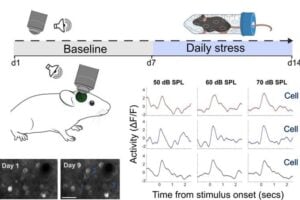
Physiological and behavioral evidence of stress. Left: Schematics of two-photon imaging during baseline and repetitive stress conditions. In repetitive stress sessions, the mice were placed in a 50 ml tube for 30 min to achieve mild stress. The imaging session started directly after the restraint. Individual cells were tracked over imaging days. Shown are examples of 2 imaging planes on day 1 and day 9 (scale bar, 50 μm) and the noise-evoked responses of 3 exemplar cells (mean ± SE).

“I can’t hear you, I’m too stressed”

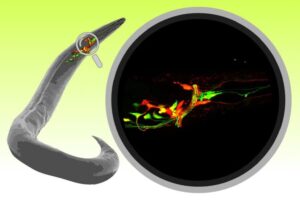
Peering into the behavioral circuits of the worm C. elegans allowed scientists to visualize how single cells connect to each other, and how changing these connections alter perception of sensory information and behavior. Illustration by Sarah Emerson

Yale Research Shows How Neural Connections Filter Sensory Information for Decision-Making

Young woman sleeping

Hearing relaxing words in your sleep slows your heart down

Substack subscription form sign up

Comments

  • Marco Messina on More Than a Third of Americans Have Lost Relationships Over Politics
  • Anon on Why Fructose Behaves Less Like a Calorie and More Like a Hormone
  • Mark Mellinger on Living Plastic Can Self-Destruct on Command
  • Marie Feret on The Silent Frequency That Makes Old Buildings Feel Haunted
  • Dax on The Silent Frequency That Makes Old Buildings Feel Haunted
© 2026 ScienceBlog.com | Follow our RSS / XML feed