Skip to content
ScienceBlog.com
  • Featured Blogs
    • EU Horizon Blog
    • ESA Tracker
    • Experimental Frontiers
    • Josh Mitteldorf’s Aging Matters
    • Dr. Lu Zhang’s Gondwanaland
    • NeuroEdge
    • NIAAA
    • SciChi
    • The Poetry of Science
    • Wild Science
  • Topics
    • Brain & Behavior
    • Earth, Energy & Environment
    • Health
    • Life & Non-humans
    • Physics & Mathematics
    • Social Sciences
    • Space
    • Technology
  • Our Substack
  • Follow Us!
    • Bluesky
    • Threads
    • FaceBook
    • Google News
    • Twitter/X
  • Contribute/Contact

stress

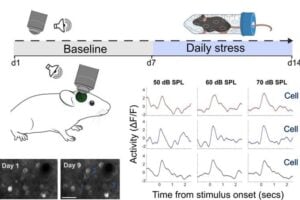
Physiological and behavioral evidence of stress. Left: Schematics of two-photon imaging during baseline and repetitive stress conditions. In repetitive stress sessions, the mice were placed in a 50 ml tube for 30 min to achieve mild stress. The imaging session started directly after the restraint. Individual cells were tracked over imaging days. Shown are examples of 2 imaging planes on day 1 and day 9 (scale bar, 50 μm) and the noise-evoked responses of 3 exemplar cells (mean ± SE).

“I can’t hear you, I’m too stressed”

stressed out young girl

How Stress Alters Memories: Insights from Neuroscience

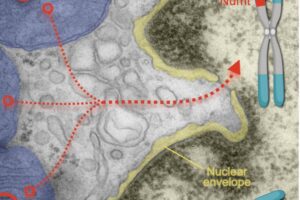
Mitochondria release segments of mitochondrial DNA that can travel through pores of the nucleus and integrate into a cell's chromosomes (where the insertions are called NUMTs, for nuclear mitochochondrial segments). A new study has found that nuclear mitochondrial DNA insertion—once thought rare—happens in the human brain likely several times over during a person’s lifespan.

Mitochondria are flinging their DNA into our brain cells

Woman lying back looking relaxed

CBG Shows Promise in Reducing Anxiety Without Intoxication

Gecko

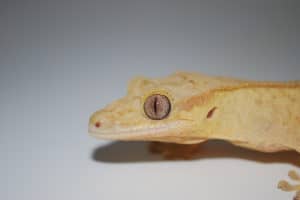
War-Induced Stress in Animals: Geckos Show Metabolic Spikes During Conflict

Sad dog with puppy eyes

Smell of human stress affects dogs’ emotions leading them to make more pessimistic choices

Middle aged man exercising

Physical activity reduces stress-related brain activity to lower cardiovascular disease risk

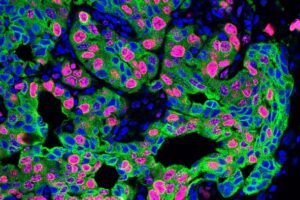
For a recent CSHL Cancer Center study, Adjunct Professor Mikala Egeblad (now a Bloomberg Distinguished Professor with Johns Hopkins University) and postdoc Xue-Yan He (now Assistant Professor of Cell Biology & Physiology at Washington University School of Medicine in St. Louis) teamed with CSHL Professor Linda Van Aelst. Above: lung cancer metastasis in a mouse that underwent experiments designed to simulate the stress that cancer patients experience.

Chronic stress spreads cancer. Here’s how

woman drinking beer

Women farm owners more apt to binge drink

stressed out young girl

Childhood stress linked to higher risk of high blood pressure, obesity, diabetes in adults

Ohio State logo

Stress, via inflammation, is linked to metabolic syndrome

Stressed out college student. Pixabay

University Students Faced High Levels of Stress and Anxiety During Pandemic

Life’s Stressors Linked to Health Decline in Multiple Sclerosis Patients

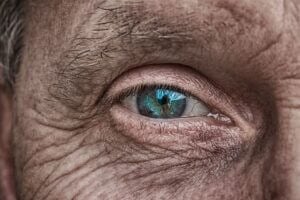
Closeup of an el man's blue eye

Biological age increases with stress but can be reversed

Older posts
Page1 Page2 Next →
Substack subscription form sign up

Comments

  • Norwood johnson on Electrons in New Crystals Behave as If They Live in Four Dimensions
  • ScienceBlog.com on Hidden Geometry Could Finally Fix Quantum Computers
  • Theo Prinse on America Is Going Back to the Moon. This Time, It Plans to Stay
  • george w on Hidden Geometry Could Finally Fix Quantum Computers
  • Tom Hughes on Years of Exercise, Blood Pressure Drugs Failed to Slow Cognitive Decline in Seniors at Dementia Risk
© 2026 ScienceBlog.com | Follow our RSS / XML feed