Skip to content
ScienceBlog.com
  • Featured Blogs
    • EU Horizon Blog
    • ESA Tracker
    • Experimental Frontiers
    • Josh Mitteldorf’s Aging Matters
    • Dr. Lu Zhang’s Gondwanaland
    • NeuroEdge
    • NIAAA
    • SciChi
    • The Poetry of Science
    • Wild Science
  • Topics
    • Brain & Behavior
    • Earth, Energy & Environment
    • Health
    • Life & Non-humans
    • Physics & Mathematics
    • Social Sciences
    • Space
    • Technology
  • Our Substack
  • Follow Us!
    • Bluesky
    • Threads
    • FaceBook
    • Google News
    • Twitter/X
  • Contribute/Contact

sustainability

Plant-based foods improve health and environment, says top EU scientific advisor

Infographic on health benfits of sorghum

Sorghum bran packs bigger punch than whole grain

Cows looking curious

How 12% of Americans eat half the nation’s beef

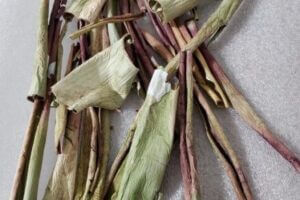
Aloe rinds, like those pictured here, contain bioactive compounds that could be used to deter insects from feasting on agricultural fields.

Discarded aloe peels could be a sustainable, natural insecticide

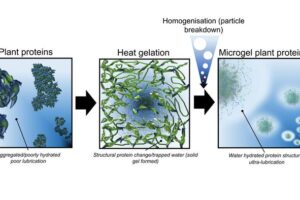
Plant proteins start off as clumpy and poorly hydrated. Water is added and they are heated. The proteins change shape and trap water around themselves, creating a gel. That gel is broken up into a plant protein microgel, with plant protein particles surrounded by water.

Making plant-based meat alternatives more palatable

The spider-inspired spinning method pioneered by researchers from the National University of Singapore produces soft fibres that are strong, stretchable and electrically conductive.

Spider-Inspired Soft Fibres Unleash New Potential for Wearable Technology

Paper makers and users look to greener frontiers

A waterway made of stone

Diminishing Depths

This is what The Line, Saudi Arabia's superlative construction project, is supposed to look like.

Why Saudi Arabia’s “The Line” isn’t a revolution in urban living

Solar panels on an industrial rooftop

Solar roofs could power 1/3 of US manufacturing

Swiss Materhron

Microbes in the Alps, Arctic can digest plastic at low temperatures

Northwestern researchers have worked with an international team of collaborators to create acetic acid out of carbon monoxide derived from captured carbon.

New catalyst transforms carbon dioxide into sustainable byproduct

To be environmentally safe, human activities should fall below an ecosystem's capacity to supply goods and services. Photo: Getty Images

Just 6% of nations provide for citizens in just, sustainable manner

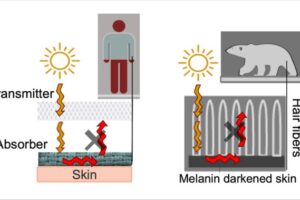
Inspired by polar bears, this new textile creates an on-body “greenhouse” effect to keep you warm.

New cloth unravels warmth-trapping secrets of polar bear fur

Older posts
Newer posts
← Previous Page1 Page2 Page3 Page4 Page5 Next →
Substack subscription form sign up

Comments

  • Karoly Mirnics on Common Prescription Drugs May Disrupt Cholesterol Pathways in the Womb and Raise Autism Risk
  • Aizen on Laziness helped lead to extinction of Homo erectus
  • Norwood johnson on Electrons in New Crystals Behave as If They Live in Four Dimensions
  • ScienceBlog.com on Hidden Geometry Could Finally Fix Quantum Computers
  • Theo Prinse on America Is Going Back to the Moon. This Time, It Plans to Stay
© 2026 ScienceBlog.com | Follow our RSS / XML feed