Skip to content
ScienceBlog.com
  • Featured Blogs
    • EU Horizon Blog
    • ESA Tracker
    • Experimental Frontiers
    • Josh Mitteldorf’s Aging Matters
    • Dr. Lu Zhang’s Gondwanaland
    • NeuroEdge
    • NIAAA
    • SciChi
    • The Poetry of Science
    • Wild Science
  • Topics
    • Brain & Behavior
    • Earth, Energy & Environment
    • Health
    • Life & Non-humans
    • Physics & Mathematics
    • Social Sciences
    • Space
    • Technology
  • Our Substack
  • Follow Us!
    • Bluesky
    • Threads
    • FaceBook
    • Google News
    • Twitter/X
  • Contribute/Contact

Technology

Northwestern researchers have demonstrated that multiple inexpensive and abundant materials, including activated carbon, nanostructured graphite and iron and aluminum oxide nanoparticles, can facilitate direct air capture of CO2.

Carbon capture could become practical with these scalable, affordable materials

Coffee-making robot pours water from a kettle into a cup

Robot Barista Breaks New Ground for AI Machines

Ohio State logo

Fertility tracking has increased in some states post-Dobbs

A car emitting radar signals

Researchers Double Radar Resolution Without Hardware Upgrades

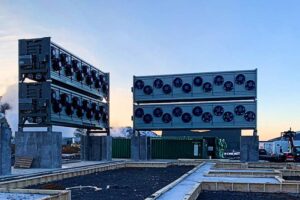
Pictured are two of the four absorber units at Climeworks’ direct air capture and storage plant, Orca, in Hellisheidi, Iceland. Each absorber unit can remove about 1,000 tons of carbon dioxide per year. Credits:Photo courtesy of Climeworks.

MIT Study Reveals Major Challenges with Carbon Removal Technology Plans

HAL 2001

Artificial intelligence is creating a new way of thinking, an external thought process outside of our minds

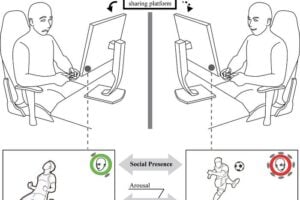
The biosignal (heart rate) of each player is obtained in real-time, uploaded to a secure online database, and displayed on the opponent's screen. The sharing of biosignals augments the sense of social presence between remote gaming partners. The researchers have named this system the “BioShare" system.

Biosignal Sharing in Online Gaming Enhances Social Presence, Study Finds

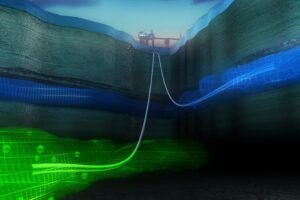
Image description: 3D visualisation of CCS at Sleipner, where carbon dioxide has been successfully stored deep below the North Sea outside the coast of Norway since 1996

Carbon Capture and Storage Falls Short of Climate Targets, Study Finds

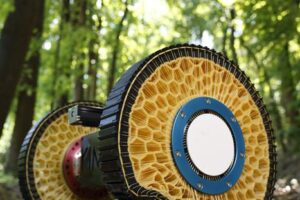
The variable-stiffness morphing wheel inspired by surface tension, developed by the Advanced Robotics Research Center of the KIMM’s Research Institute of AI Robotics, overcoming a rock

New Wheel Technology Adjusts Stiffness for Any Terrain

Ohio State logo

Physicists shine new light on ultra-fast atomic processes

man interactive on cell phone with AI avatar

Large Language Models Pose No Existential Threat, Study Finds

stressed woman

Women at risk of ‘digital overload’ – new research reveals

power lines at night

World’s highest-performance superconducting wire segment fabricated

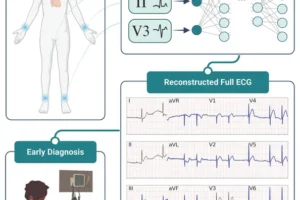
Researchers at Scripps Research have created a new way to check heart health. Instead of using the usual 12 sensors, they found that just 3 sensors, combined with a smart computer program, can spot heart problems almost as well. This simpler method could make it easier for more people to get their hearts checked.

AI Simplifies Heart Monitoring: 3-Lead ECG as Accurate as 12

Older posts
Page1 Page2 … Page5 Next →
Substack subscription form sign up

Comments

  • Kidreadytobreed on Global warming reduces available wind energy
  • James on Global warming reduces available wind energy
  • James on Global warming reduces available wind energy
  • Booklet AI on Key to online education: Test early and often
  • Karoly Mirnics on Common Prescription Drugs May Disrupt Cholesterol Pathways in the Womb and Raise Autism Risk
© 2026 ScienceBlog.com | Follow our RSS / XML feed