Skip to content
ScienceBlog.com
  • Featured Blogs
    • EU Horizon Blog
    • ESA Tracker
    • Experimental Frontiers
    • Josh Mitteldorf’s Aging Matters
    • Dr. Lu Zhang’s Gondwanaland
    • NeuroEdge
    • NIAAA
    • SciChi
    • The Poetry of Science
    • Wild Science
  • Topics
    • Brain & Behavior
    • Earth, Energy & Environment
    • Health
    • Life & Non-humans
    • Physics & Mathematics
    • Social Sciences
    • Space
    • Technology
  • Our Substack
  • Follow Us!
    • Bluesky
    • Threads
    • FaceBook
    • Google News
    • Twitter/X
  • Contribute/Contact

Technology

Taza Aya’s Worker Wearable Protection device keeps airborne virus particles from reaching a workers mouth and nose with an air curtain. That air is pre-treated to kill any viruses. Image credit: Jeremy Little, Michigan Engineering

Invisible Air Shield Blocks 99.8% of Airborne Pathogens

Ohio State logo

New dart launcher may be better way to inject animals with drugs

A friendly robot shoveling snow

Robots could clear snow, assist at crosswalks, monitor sidewalks for traffic

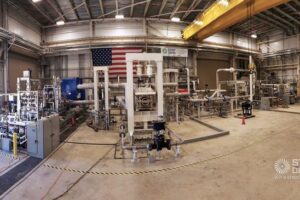
The Supercritical Transformational Electric Power (STEP) Demo pilot plant — a $169 million, 10-megawatt supercritical carbon dioxide (sCO2) test facility at Southwest Research Institute (SwRI) in San Antonio — has generated electricity for the first time. SwRI collaborated with project lead GTI Energy and GE Vernova, the U.S. Department of Energy/National Energy Technology Laboratory, and several industry participants to develop the STEP Demo project.

Supercritical Carbon Dioxide Power Plant Generates Electricity for the First Time

Some people avoid smartphones and instead use a dumbphone – a traditional mobile phone or a reduced-feature designer phone.

Ditching Smartphones: The Challenges and Consequences of Going Old-School

a cartoon, humanized apple looking for data with a magnifying glass

Keeping your data from Apple is harder than expected

a robot doctor talking to a human patient

Chatbot outperformed physicians in clinical reasoning in head-to-head study

A digitally altered video, photo or audio recording, deepfakes are typically used maliciously to spread disinformation and create confusion.

Questions to ask about government use of deepfakes

single woman using artificial intelligence to help with her dating app chat with a prospective match

‘Singles in America’ study: Daters breaking the ice with AI

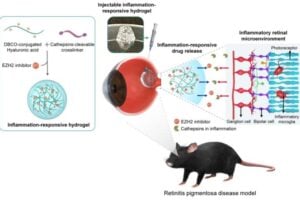
Schematic illustration of syringe-injectable inflammation-responsive hydrogel for suppression of inflammatory microglia for preventing photoreceptor death in retinitis pigmentosa.

New treatment developed to dramatically slow down the progression of blindness-causing retinal diseases


A computer terminal looking ominous

It’s getting harder to distinguish between reality and delusion, thanks to technology

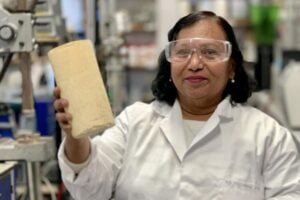
Professor Semali Perera with FOAM3R foam

Air purifier design promises virus-stopping performance and zero waste

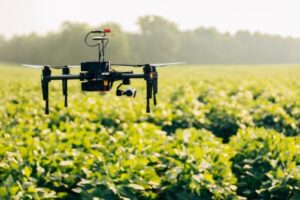
To Assistant Professor Azahar Ali, three technologies stand out for their potential to advance climate-smart, precision agriculture: wearable agriculture sensors, smart devices, and artificial intelligence.

Revolutionizing Agriculture: Advanced Technologies to Transform Global Farming

One of the studied burnt mudbricks.

Researchers use earth’s magnetic field to verify Old Testament event

Older posts
Newer posts
← Previous Page1 Page2 Page3 … Page5 Next →
Substack subscription form sign up

Comments

  • brenojames on Global warming reduces available wind energy
  • Kidreadytobreed on Global warming reduces available wind energy
  • James on Global warming reduces available wind energy
  • James on Global warming reduces available wind energy
  • Booklet AI on Key to online education: Test early and often
© 2026 ScienceBlog.com | Follow our RSS / XML feed