

For years, the indoor tanning industry has pitched a reassuring story: their sunlamps deliver controlled UV exposure, no more dangerous than lounging on a beach. The biological mechanism linking tanning beds to cancer remained murky enough that the industry, classified by the World Health Organization alongside asbestos and smoking as a Class 1 carcinogen, could keep the lights on and customers coming through the door.
A study published December 12 in Science Advances demolishes that narrative with genomic precision. Scientists from Northwestern Medicine and the University of California, San Francisco found that tanning bed use nearly triples melanoma risk, but the real discovery lies in the molecular damage pattern. Indoor tanning doesn’t just concentrate harm where UV hits hardest. It creates widespread DNA mutations across almost the entire skin surface, leaving a “broader field” of precancerous cells waiting to transform.
Dr. Pedram Gerami, the study’s first author who directs Northwestern’s melanoma program, spent 20 years watching unusually high numbers of young women develop multiple melanomas. The pattern nagged at him. Many had no strong family history, but they shared one thing: heavy tanning bed use in their teens and twenties. His team designed a two-part investigation to prove what he suspected and reveal exactly how the damage occurs.
The Numbers Tell a Stark Story
The epidemiological portion analyzed medical records from roughly 6,000 patients at Northwestern dermatology clinics. Half had documented tanning bed histories, the rest served as age-matched controls. Melanoma appeared in 5.1 percent of tanning bed users versus just 2.1 percent of non-users. After adjusting for age, sex, sunburn history, and family melanoma risk, indoor tanning still carried a 2.85-fold increased cancer risk. More sessions meant higher risk, a classic dose-response relationship.
But where the melanomas appeared raised a bigger question. Tanning bed users developed tumors on their lower backs and buttocks, areas that typically receive minimal natural sun exposure throughout life. That observation suggested tanning beds might injure skin in a fundamentally different way than outdoor light.
The genomic analysis confirmed it. Using single-cell DNA sequencing, researchers examined 182 individual melanocytes, the pigment-producing cells where melanoma begins, from normal skin biopsies. Eleven donors had logged hundreds of lifetime tanning sessions. Matched controls had never used the beds.
Melanocytes from tanning bed users carried nearly twice the mutation burden of controls. The excess mutations showed up in skin from body regions usually protected from sun, not just the face and arms that outdoor UV typically hammers. Natural sun exposure might damage 20 percent of your skin surface at most. Tanning beds exposed the whole canvas to mutagenic radiation.
“Even in normal skin from indoor tanning patients, areas where there are no moles, we found DNA changes that are precursor mutations that predispose to melanoma. That has never been shown before.” – Dr. Pedram Gerami
The Human Cost of Teenage Decisions
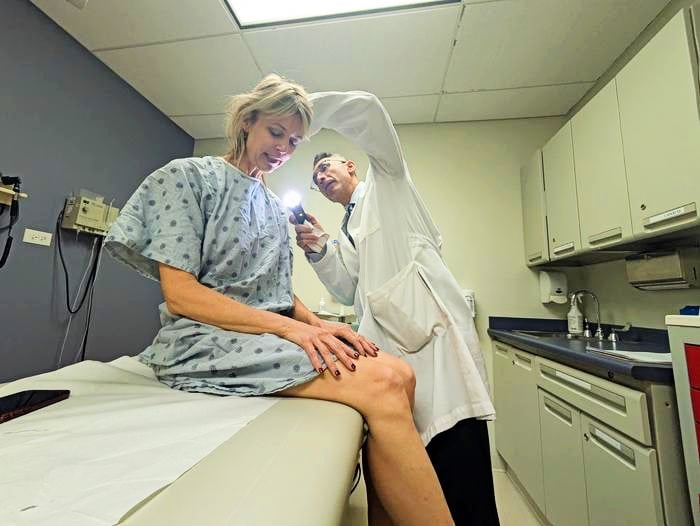
Heidi Tarr, 49, from the Chicago area, volunteered biopsies for the study. During high school she hit the tanning beds two or three times a week because bronzed skin felt like the price of beauty. Decades later came melanoma, surgery, years of anxious follow-ups, and more than 15 additional biopsies. The physical sting of the procedure fades quickly. The mental agony of waiting for pathology results never quite does.
“The biopsies can be painful, but the mental anxiety is worse. You’re always waiting for the call that it’s melanoma again.” – Heidi Tarr
Gerami says most of his melanoma patients started tanning young, without full knowledge of the biological risk. They feel wronged by an industry that marketed a carcinogen to teenagers. The new molecular evidence shows those early sessions created pools of mutated skin cells across their bodies, cells already one step closer to malignancy.
The findings undermine industry claims about safer UV spectrums or controlled exposure. Tanning beds deliver high-dose mutagenic radiation to vastly more skin than natural sunlight ever would, expanding both the number of mutations and the number of vulnerable cells.
Gerami now argues for policy changes matching the biological reality: ban indoor tanning for minors, require cigarette-pack-style warnings on equipment, and mandate total-body skin exams for anyone with significant tanning bed history. Melanoma kills about 11,000 Americans yearly. This study shows exactly how indoor tanning contributes to that toll, one mutated melanocyte at a time.