

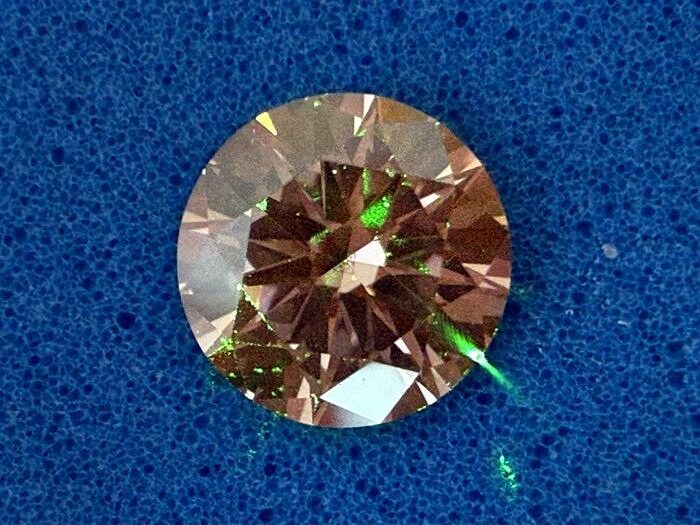
Tiny diamonds may soon help surgeons trace cancer spread. Researchers at the University of Warwick have built a handheld magnetic sensor that uses diamond quantum properties to detect iron oxide tracers injected into tumors.
Reported in Physical Review Applied, the device is the first diamond-based magnetometer small enough for endoscopic use, potentially improving breast cancer surgery and expanding to other cancers. By providing a non-toxic, non-radioactive alternative to standard tracers, the innovation could reduce risks and broaden access to precision cancer care.
Diamonds as medical sensors
The breakthrough centers on nitrogen vacancy (NV) centers in diamonds, which make the gemstone sensitive to magnetic fields. When combined with a small permanent magnet, the tiny 0.5 mm³ diamond can detect iron oxide nanoparticles, known commercially as MagTrace, that are injected into tumors. These nanoparticles travel to sentinel lymph nodes, which are often the first sites of metastasis.
Pinpointing these nodes is crucial for effective cancer surgery. Traditional approaches use radioactive tracers or blue dyes, but both have drawbacks. Radioactive tracers require special facilities and expose patients and staff to radiation. Blue dyes can cause allergic reactions in about one percent of cases and may leave permanent skin stains. A magnetic tracer combined with a diamond sensor could sidestep these issues.
How the device works
The Warwick team developed a fiber-coupled sensor with a probe head just 10 millimeters wide, small enough for laparoscopic or keyhole surgery. Tests showed it could detect iron oxide concentrations as low as 2.8 mg/ml, about one hundredth of the standard clinical dose, at working distances up to 14.6 millimeters.
The design eliminates bulky electronics by placing the diamond directly on the fiber tip with a compact magnet. This portability means the sensor could be held by a surgeon and used in real time during operations.
- Sensor head diameter: 10 mm, suitable for endoscopy
- Diamond size: 0.5 mm³ with NV centers
- Detection limit: 0.56 mg of iron mass
- Working distance: up to 14.6 mm at high concentrations
Clinical collaboration and future potential
Surgeons are already using magnetic tracers in breast cancer, but current detection systems are larger and less sensitive. Stuart Robertson, consultant breast cancer surgeon at University Hospitals Coventry and Warwickshire, noted the clinical significance:
“I now regularly utilise magnetic localisation in my breast cancer work, for impalpable breast lesions and detecting lymph nodes, as it offers advantages over more traditional techniques.”
By integrating the diamond magnetometer, procedures could become safer, less invasive, and more widely available. The Warwick researchers also highlight that the sensor’s sensitivity and versatility may extend beyond breast cancer to lung, liver, colorectal, and esophageal cancers.
Quantum sensing beyond medicine
Senior author Professor Gavin Morley emphasized that diamonds have broad applications: “Diamonds can sense magnetic fields thanks to colour centres in the diamond, called nitrogen vacancy centres. They allow the diamond to detect very small changes in magnetic field and give the diamonds a lovely pink colour.” The team also hopes to adapt the technology for use in spacecraft navigation and fusion power systems.
A step toward safer surgery
By uniting quantum physics and surgical needs, the Warwick team has opened a pathway for more precise cancer detection without relying on radioactive tracers. As quantum technologies advance, miniaturized diamond sensors may become standard tools in operating rooms. Looking ahead, the challenge will be refining sensitivity and integrating the technology into existing surgical workflows, potentially transforming how cancers are found and treated.
Journal: Physical Review Applied
DOI: 10.1103/znt3-988w