

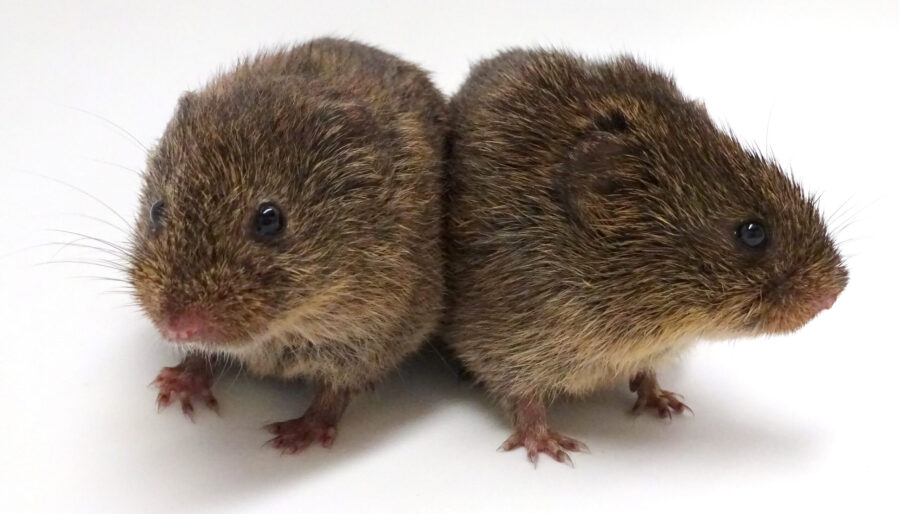
Oxytocin, often called the love hormone, is best known for bonding couples and parents with their children. But new research from UC Berkeley shows it is just as crucial for building friendships, at least in prairie voles, animals whose social habits often mirror our own.
The study, published Aug. 8 in Current Biology, found that without oxytocin receptors, these small rodents are slower to form selective peer bonds, less motivated to seek out friends, and more willing to mingle with strangers.
Why Prairie Voles Matter
Prairie voles are unusual in the rodent world because they form stable, selective relationships with both mates and peers. That makes them a valuable model for exploring the neurobiology of friendship. Lead author Annaliese Beery, an associate professor of integrative biology and neuroscience at UC Berkeley, says such studies could shed light on human psychiatric conditions, such as autism and schizophrenia, that disrupt social bonding.
“Oxytocin seems to be particularly important in the early formation phase of relationships and especially in the selectivity of those relationships,” Beery said. “The animals that didn’t have intact oxytocin signaling took longer to form relationships. And then when we challenged those relationships by making new groups, they lost track of their original partners right away.”
Testing Friendship Chemistry
The team worked with prairie voles genetically modified at UC San Francisco to lack oxytocin receptors. In one experiment, normal voles needed only a day of close contact to prefer one peer over a stranger. Modified voles took up to a week. In a mixed-group “party” setup, wild-type voles stayed close to known friends before mingling, while receptor-deficient animals treated everyone the same. In lever-press tests for social access, normal females worked harder to reach friends or mates, but modified females only showed that extra effort for mates.
- Female prairie voles lacking oxytocin receptors were slow to form new peer bonds.
- These voles showed reduced motivation to spend time with friends.
- They were less avoidant of strangers and less aggressive toward them.
- Oxytocin release in a key brain reward center, the nucleus accumbens, was reduced.
Measuring Oxytocin in Action
To see how receptor loss changed brain chemistry, the researchers used nanosensors developed in UC Berkeley’s Markita Landry Lab. These carbon nanotube devices, coated with DNA that binds to oxytocin, fluoresce when the hormone is present. The sensors revealed lower oxytocin release from fewer sites in the nucleus accumbens of receptor-deficient voles, with no sign of a compensatory boost through other pathways.
Implications for Human Social Health
Beery notes that while oxytocin is not essential for forming friendships or pair bonds, it speeds the process and helps maintain social selectivity. In humans, this could mean that subtle differences in oxytocin signaling influence not how social we are, but who we choose to be social with. Understanding those mechanisms could help address social deficits in mental health conditions, and even refine our picture of how complex social behaviors evolved.
Journal: Current Biology | DOI: S0960-9822(25)00943-1