

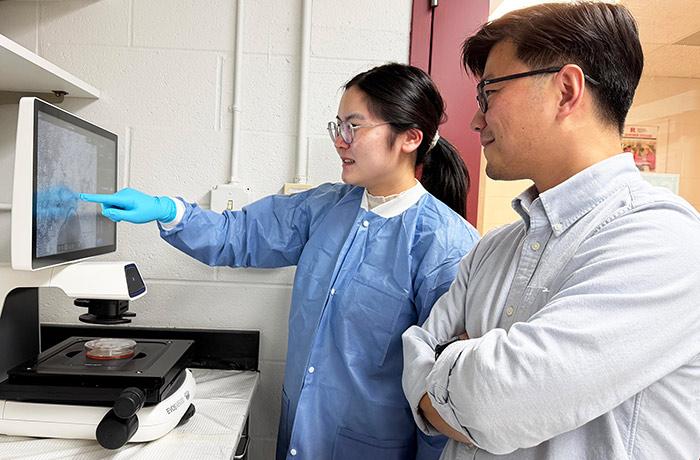
A mother’s fading memory and a son’s quiet heartbreak helped steer a basic research question in a very specific direction. Years after that conversation in rural Anhui, Rutgers neuroscientist Peng Jiang and his collaborators report that a rare gene variant can help human microglia resist Alzheimer’s related tau pathology. The work, published in Nature Neuroscience, focuses on a trisomy 21 associated mutation once linked to leukemia risk in Down syndrome and reframes it as a potential source of resilience.
Jiang and first author Mengmeng Jin engineered human microglia with a trisomy 21 associated mutation called CSF2RB A455D. They derived these cells from human pluripotent stem cells, transplanted them into mouse brains to create chimeric models, and then exposed the animals to tau rich fractions from brains of people with Down syndrome and Alzheimer’s disease. In that setting, microglia carrying the mutation stayed functional. They showed reduced type I interferon signaling, less inflammation, and stronger phagocytosis of pathological tau compared with unmutated cells.
The mutated microglia also avoided classic signs of cellular aging. Instead of shrinking and developing shortened, stunted processes, they remained more ramified, with larger cell bodies and longer branches. Markers of senescence, such as ferritin and p21, were lower. At the same time, autophagy and lysosome related pathways were more active, with higher levels of p62, LC3B positive autophagosomes, and CD68 positive phagolysosomes. In other words, these cells were still doing the unglamorous housekeeping work that microglia are supposed to do in a stressed brain.
For Jiang, the motivation is straightforward, and personal.
“The fact that there is still no effective treatment fuels my determination to pursue new therapeutic ideas,” said Jiang, also a faculty member of the Rutgers Brain Health Institute.
A Different Kind Of Disease Associated Microglia
Individuals with Down syndrome almost universally develop early amyloid and tau pathology, yet a small subset never develops dementia. That observation, together with the elevated rate of myeloid mutations in Down syndrome, pushed the Rutgers group toward CSF2RB A455D, a gain of function mutation in a cytokine receptor subunit that can drive preleukemic changes in the blood.
In the chimeric mouse brains, single cell RNA sequencing showed that the A455D microglia do not simply remain “normal.” They form a distinct disease associated microglia state that looks different from the dysfunctional microglia typically seen in Alzheimer’s models. One cluster, tied to the mutation, was enriched for gene programs involved in tissue repair, stress resistance, and protein degradation, including higher expression of CHI3L1, VIM, SOD2 and the autophagy adaptor SQSTM1 (p62). Another cluster, more common in wild type microglia, showed signatures of lipid droplet accumulation, senescence, and stronger interferon pathways.
Over months, the A455D driven protective state persisted. Interferon responsive clusters faded, overall microglial profiles shifted back toward homeostatic states, and the protective disease associated microglia remained as a stable subpopulation. That long term stability matters, because microglia are highly sensitive to their environment and can easily drift into harmful states in chronic disease.
The neurons in these chimeric brains reacted in ways that are easier to measure. In mice populated with unmutated human microglia and challenged with tau, long term potentiation in the hippocampus was impaired and newborn neurons in the dentate gyrus were sparse. When A455D microglia were present, LTP looked normal and doublecortin positive newborn neurons were far more numerous. Levels of B2M, a molecule the group has previously linked to synaptic decline, were lower in the mutation bearing microglia.
When Resilient Microglia Replace Their Neighbors
A key test came when the team mixed both microglial types in the same brain. Using fluorescent labels and single nucleotide polymorphism based demultiplexing, they transplanted equal numbers of wild type and A455D progenitors, then exposed the mice to tau. Over time, the A455D microglia made up a larger share of the human microglial population. They showed larger cell volumes, more autophagic and lysosomal puncta, and more engulfment of debris derived from wild type cells.
Ligand receptor analyses supported this picture, identifying interaction pairs involving receptors such as MERTK, LRP1, SCARF1, ITGAV, TLR4 and TLR6 that are associated with recognition and clearance of damaged cells and their remnants. The data cannot fully distinguish whether A455D microglia are phagocytosing live wild type microglia or mainly cleaning up dying ones, but in either case the result is the same in practical terms. Under tau stress, the resilient population gradually replaces the more vulnerable one.
The effect is not limited to Down syndrome derived cells. When the mutation was introduced into control human induced pluripotent stem cells and embryonic stem cells, the resulting microglia behaved in a similar way. They resisted tau induced cytotoxicity in vitro, preserved morphology in vivo, reduced ferritin positive senescent profiles, maintained hippocampal neurogenesis, and protected synaptic plasticity. This makes the mutation relevant beyond the narrow context of trisomy 21.
Jiang frames the broader goal in simple language.
“We’re trying to learn from nature to harness a naturally occurring mutation for therapeutic purposes,” he said.
The immediate therapeutic ideas are concrete. One is to engineer a patient’s own cells into A455D like microglia and transplant them into the brain as a replacement strategy. Another is to use gene therapy to adjust CSF2RB signaling inside resident microglia so that they adopt a similar protective state without transplantation. Before any of that, questions about safety, delivery, and long term behavior will have to be addressed, including the leukemia related history of this mutation in the blood.
Still, the study shows that human microglia can be pushed toward a resilient, less inflammatory fate that holds up for months in a tau rich environment. For families watching Alzheimer’s erase recognition and relationships, that kind of engineered resilience is not a cure, but it is a new and specific target to aim at.
Journal: Nature Neuroscience
DOI: 10.1038/s41593-025-02117-8