

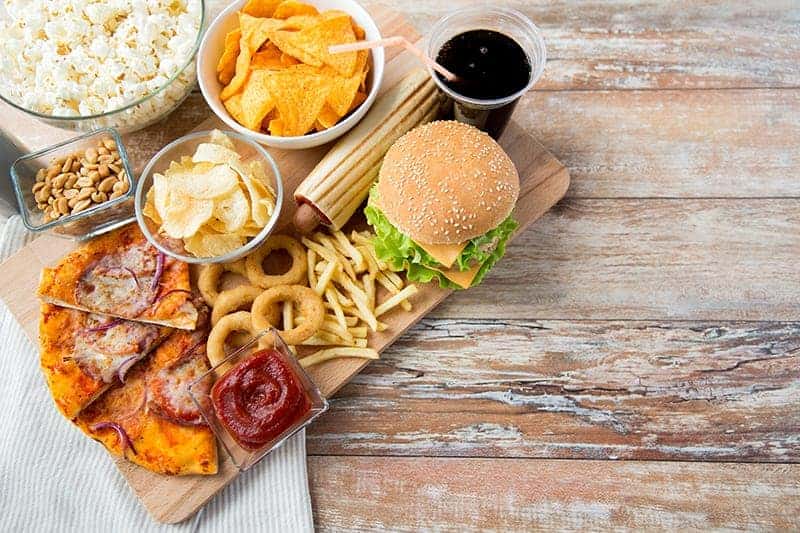
By the time a child starts school, roughly half of everything they’ve eaten has been ultraprocessed. Not junk food in the familiar sense — not just the luridly coloured sweets or the sugary drinks — but the breads, the cereals, the ready-to-heat pasta pots, the chicken nuggets eaten on ordinary weekday evenings when everyone is tired and the oven is the path of least resistance. In Canada, where preschoolers get about 46% of their daily calories from foods classified as ultraprocessed, that figure is fairly typical of what researchers find across wealthy countries. What researchers at the University of Toronto have now found, in one of the largest childhood dietary studies conducted on Canadian soil, is that this proportion seems to matter for how children behave — not just how they grow.
The study, published this week in JAMA Network Open, tracked more than 2,000 children enrolled in the CHILD Cohort Study from four cities spanning central to western Canada. Dietary habits were assessed at age 3 using detailed food questionnaires, and behaviour was measured two years later using the Child Behavior Checklist, a widely used parent-reported tool that captures both internalising symptoms (anxiety, fearfulness, social withdrawal) and externalising ones (aggression, hyperactivity, difficulty with conduct). The finding, adjusted for a substantial list of potential confounders including prenatal stress, breastfeeding history, household income and screen time, was that higher ultraprocessed food consumption at 3 predicted worse scores on both dimensions at 5.
Each 10-percentage-point increase in the share of calories from ultraprocessed food was associated with an increase of roughly 0.8 points on the internalising scale and about 0.5 points on the externalising one. The effect sizes are, by conventional standards, modest. The authors themselves are careful to say so. But they point to prior research suggesting that even small shifts in these scores during the preschool period tend to persist, and that the checklist is a reasonably reliable early indicator of later mental health trajectories. At a population level, a modest average effect spread across millions of children eating diets weighted heavily toward industrial formulations represents something worth paying attention to.
Particularly notable was what the researchers found when they modelled a simple dietary substitution. Replacing 10% of energy from ultraprocessed food with the equivalent from minimally processed alternatives, while holding total caloric intake constant, was associated with lower scores across all behavioural domains. Not dramatically lower. But the direction was consistent, and the confidence intervals didn’t cross zero.
The subgroup results added some texture. Sugar-sweetened and artificially sweetened beverages showed the strongest association with internalising symptoms, and ready-to-eat mixed dishes and processed breads and cereals both showed links to inwardly directed behavioural problems as well. Sweets and desserts, despite contributing the single largest share of ultraprocessed calories in the sample, showed weaker associations — which the authors note is consistent with other cohort findings suggesting that different categories of ultraprocessed food carry different risks. Not all of these products are, nutritionally speaking, the same thing.
The mechanisms remain poorly understood, and the Toronto team is honest about that. Several biological pathways have been proposed in the broader literature: saturated fats promoting neuroinflammation; excess sodium linked to heightened stress responses; high sugar intake associated with emotional dysregulation. There is also the question of what ultraprocessed food displaces. A diet in which nearly half the calories come from industrially formulated products may crowd out the nutrients most relevant to neurodevelopment — omega-3 fatty acids, iron, zinc, folate, vitamin B12 — even if no single food is obviously deficient. And then there is the gut-brain axis, where emerging research suggests that heavily processed diets alter microbial diversity and inflammatory signalling in ways that could, plausibly, feed back into mood and behaviour.
Plausibly. That word is doing a lot of work. None of these mechanisms were directly measured in the CHILD study. The associations between nutrient deficits and behavioural outcomes remain, the authors note, largely speculative as explanations for their particular findings. Sensitivity analyses that accounted for sugar, sodium and saturated fat intake separately did not attenuate the results, which is interesting — it suggests the observed associations are not simply a proxy for excess sugar or salt, but it doesn’t clarify what the actual driver is.
There are other limitations worth holding in mind. The cohort skews toward higher-income, better-educated families, which might actually mean the study underestimates the effect in populations with fewer food choices. Dietary data came from questionnaires rather than direct observation, with all the recall and classification uncertainty that entails. And the study is observational. Children who eat more ultraprocessed food at 3 may differ from those who eat less in ways that even careful statistical adjustment cannot fully resolve.
Still, this is the first prospective study to examine the relationship between ultraprocessed food consumption and standardised behavioural assessment in young children. Earlier work from the UK found that a high-fat processed diet at 4.5 years was linked to greater hyperactivity by 7. The adult literature connecting ultraprocessed food with depression is now fairly substantial. The Toronto study extends that line of inquiry into earlier childhood, and does so with a larger sample and a broader range of covariates than most of its predecessors.
What the preschool years have going for them, as a focus for intervention, is that dietary patterns formed early tend to stick. The same research base that links CBCL scores at 5 to later psychiatric outcomes also tells us that food preferences and eating habits established in toddlerhood predict what children eat at school age, and what adolescents eat after that. If there is a window for shifting the developmental trajectory, it probably starts before children are old enough to have strong opinions about it.
Canada already has front-of-pack warning labels on foods high in sugar, sodium and saturated fat, and restrictions on advertising processed food to children. The study’s authors suggest the findings reinforce both policies — and perhaps argue for extending the nutrition conversation in paediatric settings to include behavioural development alongside the more familiar concerns about obesity and cardiovascular risk.
Study link: https://jamanetwork.com/journals/jamanetworkopen/fullarticle/2845768