

The ocean floor off North Carolina is expensive real estate for energy projects. Cables thick as tree trunks snake across the seabed, connecting turbines to the mainland grid. Every device you deploy has to justify the cost of that connection, and wind turbines sitting idle on calm days don’t help the math. Engineers at North Carolina State University think they’ve found a workaround: pair those turbines with underwater kites that fly through ocean currents, creating a two-part system where at least one technology is always working.
Their computational model, published in Energy, doesn’t just pick locations. It designs the devices themselves and figures out where they belong together, treating the whole offshore array like a diversified investment portfolio. The Gulf Stream alone could theoretically power 207 million homes if harnessed efficiently. But getting there means solving a tricky coordination problem between technologies that operate on different schedules.
When Wind Drops, Water Keeps Moving
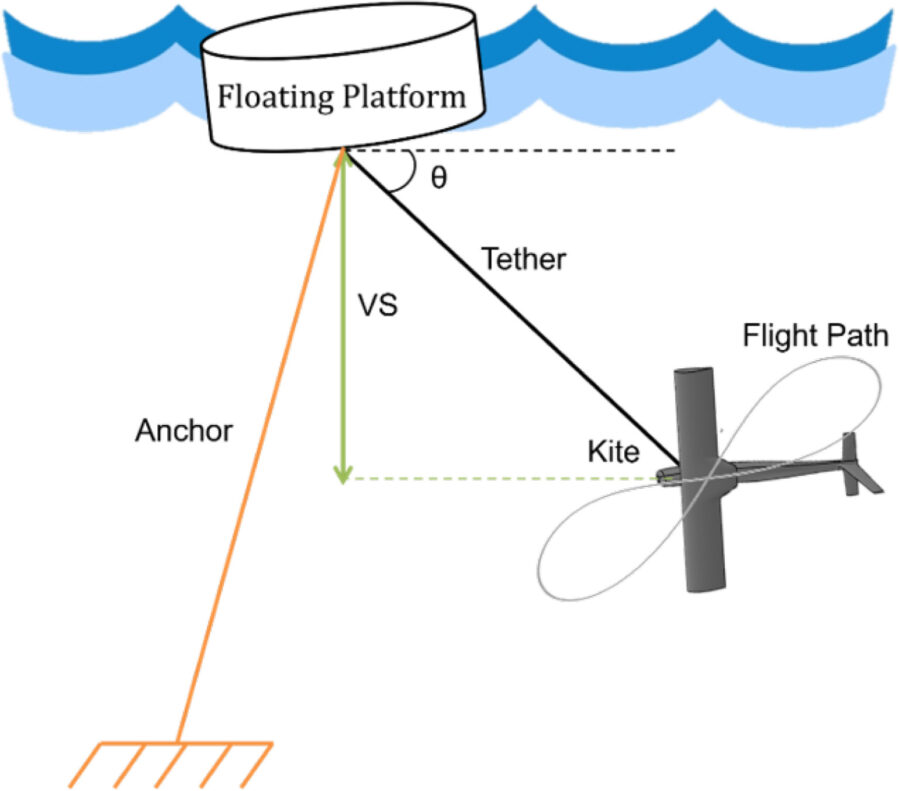
Marine hydrokinetic kites aren’t the beach toys the name might suggest. These devices have high-lift wings and onboard turbines, and they fly in figure-eight patterns perpendicular to the current. By doing so, they reach speeds 5 to 10 times faster than the water around them, harvesting significantly more energy than a stationary turbine stuck in the same flow. The researchers developed open-source designs for these kites to feed accurate performance data into their model.
The model evaluates wind speeds, ocean currents, water depth, distance from shore, and transmission capacity all at once. It accounts for the levelized cost of energy, spreading lifetime expenses across total electricity generated, and identifies configurations that maximize power sent back to shore within a strict budget. Some locations favor wind turbines but offer weak currents for kites. Others have strong currents but inconsistent winds. The sweet spots support both, and that’s where costs drop because the technologies share infrastructure.
“We found that location makes a tremendous difference. Some places work well for wind turbines, but not for kites; other places work well for kites, but not for turbines.” – Anderson de Queiroz, Associate Professor, NC State
Co-locating these technologies isn’t just about saving money on cables. It stabilizes the grid. When wind speeds dip, the Gulf Stream’s steady flow keeps kites generating power. When the current shifts or meanders, wind turbines pick up the slack. This complementary relationship reduces the risk of sudden drops in energy production, a persistent headache for utilities trying to balance renewable supply with demand.
Building a Smarter Grid
North Carolina has set a goal to cut carbon emissions by 70 percent by 2030, which puts pressure on planners to extract as much energy as possible from offshore resources. The model’s framework is flexible enough to incorporate other marine energy technologies as they mature, treating offshore development as an integrated system rather than isolated projects.
For developers weighing multimillion-dollar investments, the findings are straightforward. Offshore energy isn’t just about finding the windiest or fastest-flowing spots. It’s about identifying places where different renewable forces work together, where infrastructure can be shared instead of duplicated, and where the grid gets a steadier flow of electrons regardless of what the weather’s doing on any given day.