

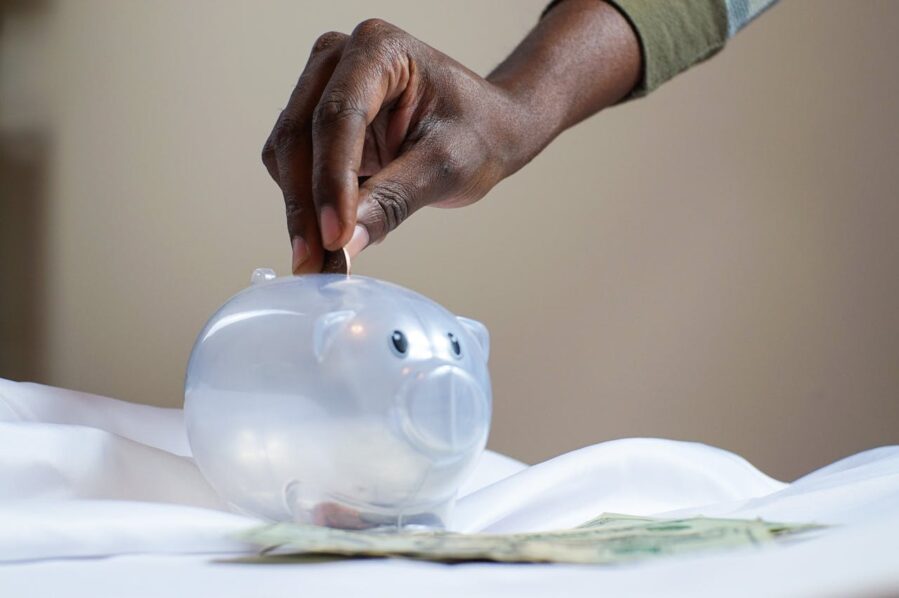
Here’s an economic puzzle that sounds backwards at first: households hunting for better interest rates during recessions might actually make those downturns worse. New research from the University of Surrey suggests that the collective scramble to squeeze extra pennies from savings accounts, while perfectly rational for individuals, creates a feedback loop that deepens economic slumps.
The findings, published in the American Economic Journal: Macroeconomics, reveal a counterintuitive dynamic at play in retail banking. When the economy is humming along, most people don’t pay much attention to their savings account rates. A percentage point here or there? Not worth the hassle of switching banks. But when unemployment rises and household budgets tighten, that calculation changes dramatically.
Dr. Alistair Macaulay analyzed detailed UK banking data and discovered that during recessions, savers become remarkably better at picking the highest-yield savings products available to them. Think of it as a kind of economic survival instinct kicking in. The problem is that when millions of households simultaneously start chasing better rates, they collectively pull more money out of circulation right when the economy needs spending most.
The Attention Amplifier
The study built an economic model to quantify this effect, and the numbers are striking. This heightened attention to savings rates makes fluctuations in consumer spending about 14% more pronounced than they would be if people’s financial vigilance remained constant throughout the business cycle. Picture a recession as a wave, this research suggests households inadvertently make that wave taller by being, ironically, more financially responsible.
The mechanism works like this: during downturns, people work harder to find accounts paying higher interest. They succeed, collectively earning better returns on their savings. But those higher personal returns mean money that might have been spent on goods and services instead sits in bank accounts, compounding the economic contraction. It’s a textbook example of the paradox of thrift, but with a modern twist involving information costs and consumer search behavior.
“For many families, tightening the purse strings and seeking better savings rates is a natural response to difficult times. But when millions do the same, it can unintentionally make the downturn worse.”
Macaulay’s analysis drew on UK retail banking data, where the savings market is fragmented enough that interest rates vary considerably between institutions. During economic contractions, when average interest rates are low, his data showed that households on average made better savings choices, more reliably selecting products at the top of the rate distribution. During boom times, that precision relaxed.
A Policy Puzzle
The research points toward a potential policy solution, though it’s not the one you might expect. Rather than trying to discourage people from seeking better rates, which would be both impractical and arguably unfair, Macaulay suggests making financial information more accessible and comparable. If households could find the best rates more easily, they would need to spend less cognitive effort on the search, potentially dampening the cyclical swing in attention.
“My findings show that small, individual decisions, like shopping around for the best savings account, can collectively magnify economic swings. If consumers could more easily access clear, comparable information about savings options, this effect could be reduced.”
The study’s simulations indicate that cutting the “cost” of gathering financial information in half could reduce fluctuations in consumer spending by around 11%. That’s significant enough to matter for macroeconomic stability, though implementing such transparency in practice raises questions about regulatory design and industry cooperation.
This research arrives at a time when central banks worldwide are grappling with how household behavior shapes monetary policy transmission. The study adds a new wrinkle: it’s not just whether households save or spend, but how attentively they manage those savings that matters for the broader economy. During the next recession, policymakers might want to watch not just savings rates themselves, but how much energy households are putting into finding them.
For individual savers, the message is mixed. Being smart about your money remains good personal finance. But Macaulay’s work reveals that financial prudence, like so many economic behaviors, creates spillover effects that nobody intended and few people notice until researchers start digging through the data.
American Economic Journal: Macroeconomics: 10.1257/mac.20220311