

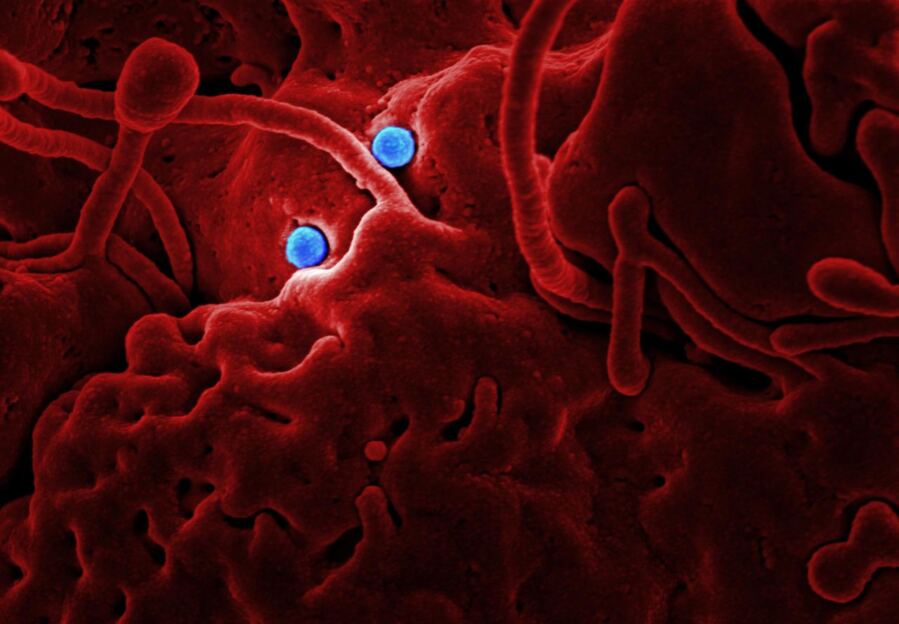
For someone living with HIV, the number on a blood test can run their whole week. The drugs are supposed to push the virus below the threshold a machine can see, and most of the time they do. So when the lab comes back with a reading above 20 copies per millilitre, the worry sets in. Has the treatment failed? Is the virus loose again, ready to infect a partner?
For a small group of patients, that reading keeps coming back month after month, year after year, with no obvious reason. Clinicians call it nonsuppressible viremia, and it has long been a genuinely awkward problem.
It affects fewer than one in a hundred people on long-term therapy, but the consequences ripple outward: extra clinic visits, changes to medication, the quiet suspicion from some providers that the patient simply isn’t taking their pills. A team at Johns Hopkins, working with collaborators across the United States, Canada and Denmark, studied one selected group of these cases.
In that group, most of the viral material detected in the blood came from defective genomes that could not produce infectious virus.
Writing in Nature Communications, the researchers studied a selected group of more than 50 people with documented treatment adherence and persistent low-level viral readings. Across analysed participants, 5′-leader-defective genomes accounted for a median of about 95% of plasma HIV-1 RNA. That is a share of detected viral RNA, not a claim that 95% of patients had the same result.
A factory still running, making faulty goods
Here’s the wrinkle that makes this counterintuitive. Modern HIV drugs, which have been around since 1996, stop the virus from infecting fresh immune cells. What they can’t do is reach back into cells that were infected long ago and silence them. Most of those cells stay quiet. A few, expanded into clones over the years, keep churning out viral particles, and it turns out the genomes they’re churning out are duds.
“We know that these defective proviruses cannot infect new cells, but they are still clinically relevant,” says Francesco Simonetti, the senior author and an infectious diseases physician at Johns Hopkins. “Think of how many extra visits, extra drugs, extra costs and tests they’ve been causing.”
Modern HIV drugs stop the virus from infecting fresh immune cells but do not remove every previously infected cell. In the cellular reservoir examined by the researchers, 5′-leader defects represented a median of about 2.5% of proviruses, yet they were strongly over-represented in plasma RNA. The authors proposed that immune selection may preferentially remove cells producing intact virus while defective producers persist; the study did not directly observe intact genomes being “quietly cleared away.”
The damage, when they mapped it, clustered with surprising precision around a single spot, the major splice donor. It’s the site where the cell’s splicing machinery, guided by something called U1 snRNA, normally latches on. Knock out the right nucleotide there and the splicing falls apart, the virus loses its ability to replicate, but transcription carries on regardless. The cell keeps reading a broken blueprint and shipping out the useless product.
A test borrowed from cancer
Spotting all this the slow way, by sequencing virus one genome at a time, is expensive and fiddly. So the team built a shortcut. Their assay, named CLAWS, for Capturing 5′ Leader Anomalies Without Sequencing, runs on digital PCR and uses two molecular probes: one that always binds, and a second that only sticks if the splice site is intact. If the second probe goes dark, the virus is broken. The trick is borrowed straight from oncology, where similar “drop-off” tests hunt for cancer mutations in cell-free DNA.
It is cheap, fast, and sensitive enough to catch nine copies of virus in a millilitre of plasma. Used on samples taken soon after people started treatment, CLAWS picked up defective genomes emerging within about a month, then watched them take over. In people who’d been on therapy for two decades, the defective forms made up more than 95 per cent of what was left.
There is a catch, naturally. The assay was built almost entirely on subtype B virus, the dominant strain in wealthy countries, and it will need checking against the diverse subtypes that drive the epidemic globally before anyone rolls it out widely. It also can’t yet read residual virus down at the single-copy level, though the researchers reckon that’s within reach.
Still, the practical payoff could land soon. A clinician who can confirm that a stubborn viral load is just defective debris could skip the extra drugs and the anxious conversations. People could qualify for hip or knee replacements, organ transplants, or cure-focused clinical trials they might otherwise have been shut out of. “From a clinical perspective, this is important because people with HIV are taught that the absolute goal of their medication is to achieve undetectable viral load and they worry,” Simonetti says.
And the broken virus may yet have something to teach. The fact that defective genomes survive while functional ones are culled hints at a vulnerability, some difference in how the immune system sees the two. Pin that down, and it might point the way toward clearing the reservoir that has kept HIV out of reach of a cure for forty years.
Read the full study in Nature Communications
Frequently Asked Questions
If the virus showing up is broken, why does it still set off the test?
Standard viral load tests detect HIV genetic material, not whether that material can actually infect anyone. A defective provirus can still be transcribed and packaged into particles that show up as detectable RNA, even though the virus inside is incapable of replicating. That’s exactly why a detectable result has historically caused so much alarm: the test couldn’t tell functional virus from broken debris. A newer assay aims to close that gap.
Does a detectable viral load always mean someone’s treatment is failing?
A detectable result requires clinical interpretation and can have several explanations. In this selected group of adherent patients with persistent low-level viremia, most detected material came from defective genomes rather than replicating virus. The finding should not be used to interpret an individual test without specialist assessment.
Could this change whether people with HIV can get surgery or join cure trials?
Potentially, yes. A confirmed detectable reading has sometimes excluded people from procedures like joint replacements or organ transplants, and from clinical trials with strict viral-load criteria. If a clinician can show the detectable virus is defective and noninfectious, those barriers may fall away. The cost-effective new test was designed partly with that use in mind.
What’s stopping this test from being used everywhere tomorrow?
Mainly genetic diversity. The assay was validated almost entirely on the HIV subtype common in North America and Europe, and it needs further testing against the wider range of strains circulating across Africa and Asia before global use. The researchers also want to push its sensitivity down toward single-copy detection. Both look achievable, but neither is done yet.
Editor’s note: This article was updated on September 14, 2026, to align its headline and wording more closely with the evidence and sources.
