

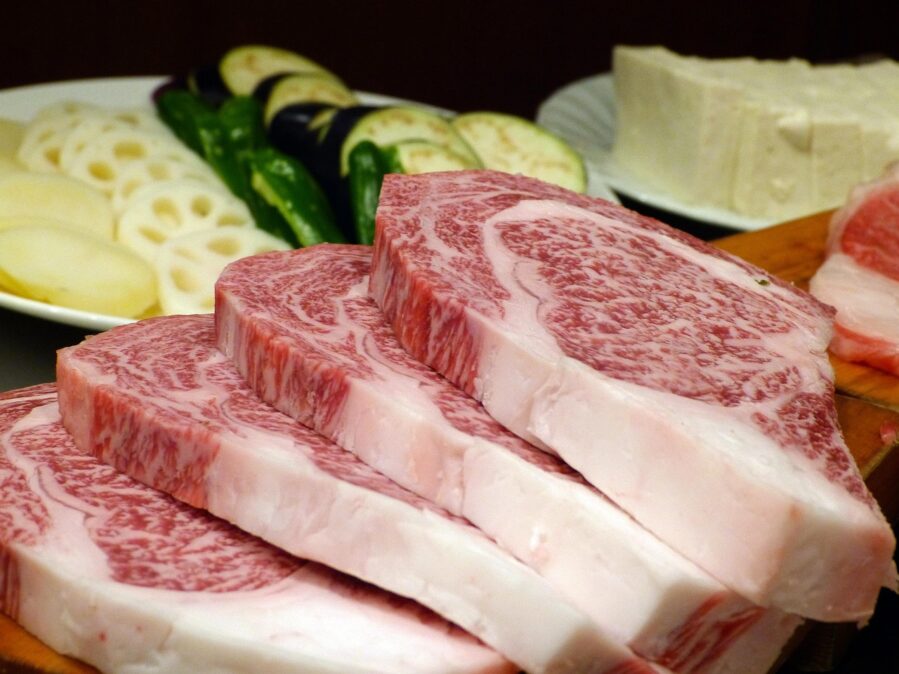
We praise the marbling in a Wagyu steak for its rich flavor, but the same kind of fat embedded in our own muscles may quietly be undermining our strength.
A new study from the University of Florida reveals that intramuscular fat doesn’t just coexist with weakened muscles, it actively gets in the way of healing and recovery. The research, published July 15 in Cell Reports, shows that fat cells infiltrating injured muscle create a physical barrier that blocks new muscle fibers from forming and maturing, leading to smaller, weaker muscles that can’t produce normal force.
Fat as a Roadblock, Not a Bystander
The study focused on a condition called intramuscular adipose tissue (IMAT), which is common in obesity, type 2 diabetes, neuromuscular diseases, and aging. Until now, it wasn’t clear whether this fat simply appeared alongside declining muscle or played a more active role in driving the problem. Daniel Kopinke, PhD, senior author and associate professor at the UF College of Medicine, wanted to find out.
“Now, we have functional evidence that it is an active driver of declining muscle function,” Kopinke said in a university release.
Using a genetically engineered mouse model dubbed mFATBLOCK, the team was able to prevent fat from forming in injured muscle. This allowed researchers to compare healing in fat-free muscle with healing in muscles infiltrated by fat.
Key Findings from the Study
- Fat cells physically block new muscle fibers from forming after injury.
- IMAT-restricted muscles had 12% of their volume taken up by fat, limiting space for recovery.
- Without fat, muscles regenerated with higher fiber density and produced more force.
- The effect was due to physical obstruction, not inflammatory or hormonal signaling.
Think of it like a forest fire, Kopinke explained: you can’t regrow trees if a boulder is in the way. Similarly, muscles can’t regrow fibers if space is already taken up by fat cells.
More Than Just Muscle Weakness
This has implications beyond sports injuries. IMAT accumulation is a hallmark of chronic diseases like Duchenne muscular dystrophy and ALS. Clinicians can sometimes even track disease progression by watching fat build up in muscle on MRI scans.
“This directly translated to a loss of strength,” said Kopinke. Muscles infiltrated by fat in the study were not able to generate the same force as fat-free ones. Even when regeneration did occur, the new fibers were smaller and less powerful.
Can We Shrink the Fat?
Yes, and that’s the hopeful part of the story. The team notes that, much like fat elsewhere in the body, IMAT responds to energy balance. Diet and exercise that create a calorie deficit may reduce intramuscular fat over time.
“You can shrink your fat cells,” Kopinke said. “If you make the area that fat cells occupy in your muscles smaller, the muscle fibers would have more space to grow into.”
Rethinking Treatment for Muscle Loss
Until now, most therapies for muscle injury or disease have focused on encouraging new muscle growth. But this study suggests that removing obstacles like IMAT may be just as important. That shift in perspective could influence how doctors approach everything from athletic recovery to age-related muscle loss.
As Kopinke put it, “By clearing the path for muscle fibers to heal correctly, we may be able to restore function and improve strength in millions of people affected by these debilitating conditions.”
Journal Information
Journal: Cell Reports
DOI: 10.1016/j.celrep.2025.116021
Article Title: Intramuscular adipose tissue restricts functional muscle recovery
Publication Date: July 15, 2025