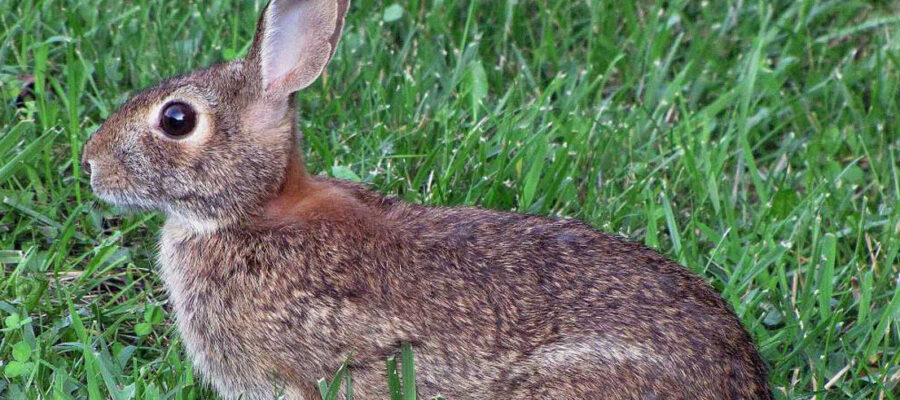
When domesticated rabbits escape captivity and establish wild populations, they don’t simply revert to their ancestral forms—instead, they develop distinct anatomical features never seen in either wild or domestic rabbits. A comprehensive study of 912 rabbit skulls from around the world reveals that feralisation creates novel evolutionary pathways, with escaped domestic rabbits occupying an intermediate morphological space while also exploring entirely new body plan territories.
The research, led by Associate Professor Emma Sherratt from the University of Adelaide and published in Proceedings of the Royal Society, challenges conventional assumptions about how animals change when returning to natural environments. Rather than simply reversing domestication effects, feral rabbits demonstrate that human-influenced evolution can produce unpredictable anatomical innovations.
Morphological Innovation Through Feralisation
“Feralisation is the process by which domestic animals become established in an environment without purposeful assistance from humans,” Sherratt explained. “While you might expect that a feral animal would revert to body types seen in wild populations, we found that feral rabbits’ body-size and skull-shape range is somewhere between wild and domestic rabbits, but also overlaps with them in large parts.”
The study analyzed specimens from 20 locations worldwide, comparing wild European rabbits from their native Iberian Peninsula with domestic breeds and feral populations established through human introductions. Using advanced geometric morphometric techniques, researchers mapped skull shape variations across the entire spectrum of rabbit populations.
Domesticated rabbits showed the greatest morphological diversity, occupying substantially more shape-space than their wild counterparts. However, feral populations revealed the most intriguing patterns, developing anatomical features that positioned them not just between wild and domestic forms, but in previously unexplored morphological territories.
Geographic Patterns Reveal Environmental Drivers
The extent of morphological change in feral rabbits correlated strongly with distance from their native range. European feral populations showed modest deviations from wild forms, while rabbits in Australia, New Zealand, and remote islands displayed the most dramatic anatomical modifications.
Key findings include several notable patterns:
- Australian feral rabbits grew significantly larger than European ancestors
- Skull proportions shifted toward longer faces and relatively smaller braincases
- Island populations didn’t follow Foster’s rule for island gigantism
- Latitude showed weak correlation with body size variation
The largest specimens emerged from isolated locations including Enderby Island near New Zealand, Phillip Island near Australia, and populations in Argentina and parts of the United States. These size increases occurred independently of traditional biogeographic rules, suggesting that local environmental pressures drove morphological evolution.
Evolutionary Implications Beyond Rabbits
“The greater diversity seen in the skull shape of feral rabbit populations could be related to changes in evolutionary pressures,” Sherratt noted. “Exposure to different environments and predators in introduced ranges may drive rabbit populations to evolve different traits that help them survive in novel environments, as has been shown in other species.”
The research reveals that feral rabbits follow the same fundamental evolutionary axes observed across the entire rabbit family (Leporidae), particularly allometric scaling where body size drives proportional changes in skull features. However, they’ve pushed these patterns into previously unexplored regions of morphological space.
Domesticated rabbits contradicted typical “domestication syndrome” predictions by developing longer faces rather than shorter ones, though they did show the expected reduction in braincase size. This pattern aligns with broader mammalian allometric trends rather than domestication-specific changes.
Conservation and Management Insights
The findings carry significant implications for understanding invasive species and conservation biology. Rabbits represent both ecological disasters in places like Australia and conservation paradoxes in their native Iberian Peninsula, where they’re endangered despite global abundance.
“Understanding how animals change when they become feral and invade new habitats helps us to predict what effect other invasive animals will have on our environment, and how we may mitigate their success,” Sherratt emphasized.
The study suggests that relaxed predation pressure in environments like Australia and New Zealand may allow greater morphological experimentation, while new environmental challenges drive adaptive responses. This creates a complex landscape where feral populations can evolve rapidly in multiple directions simultaneously.
Future research will investigate specific environmental factors driving the observed variations, particularly in Australia where feral rabbits have become notably larger than their European ancestors. The work provides a framework for understanding how human-mediated species introductions can accelerate evolutionary processes and generate novel biological forms.
The rabbit’s morphological journey from domestic captivity to feral success illustrates evolution’s capacity for rapid innovation when species encounter new environments and selection pressures, offering insights into how life adapts to our increasingly human-modified world.
Discover more from Wild Science
Subscribe to get the latest posts sent to your email.