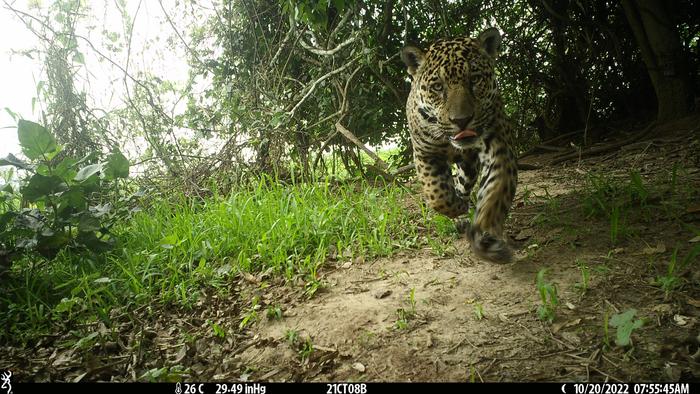
Jaguars Flood Into Brazilian Wetlands After Massive Wildfire

When wildfires scorched half of Brazil’s northern Pantanal in 2020, researchers expected to find fewer jaguars in their long-term study site. Instead, they discovered something remarkable: the wetland had become a magnet for the big cats, drawing immigrants from fire-ravaged areas and boosting the local population to even higher densities.

The finding suggests this corner of the world’s largest freshwater wetland may serve as a climate refuge—a safe harbor where wildlife can weather extreme events that are becoming more frequent as the planet warms.

A Natural Experiment in Climate Resilience

Charlotte Eriksson, a postdoctoral researcher at Oregon State University, has been studying this 36,700-acre protected area since 2017. The site already hosted the world’s highest known density of jaguars before the fires hit. What makes these cats unusual isn’t just their numbers—it’s their diet and behavior.

Unlike most jaguars that hunt terrestrial prey, these wetland cats specialize in aquatic meals: fish, caimans, and other water-dwelling creatures. They’re also more socially tolerant, willing to share space in ways that surprise researchers accustomed to solitary big cats.

The 2020 fires provided an unplanned natural experiment. Driven by extreme drought and record temperatures, the blazes consumed more than 11 million acres across the Pantanal, killing an estimated 17 million vertebrates. Eriksson’s team used camera traps and collected 175 jaguar scats to track how the cats responded.

Surviving and Thriving

The study, published in Global Change Biology, revealed a complex story of short-term disruption followed by remarkable recovery:

  • Immediate impact: Jaguar activity dropped right after the fires, suggesting temporary displacement or stress
  • Population rebound: Within a year, researchers documented a significant increase in jaguar abundance and new cub births
  • Resident survival: Jaguars that lived in the area before the fire maintained similar sighting rates afterward, indicating they survived and kept their territories
  • Immigration surge: A large number of new jaguars arrived from other areas, likely fleeing fire-damaged habitats

Perhaps most intriguingly, the jaguars stuck to their aquatic menu even as terrestrial mammals became more abundant in the area. This dietary loyalty supports a key ecological hypothesis: when jaguars focus on water-based prey, they reduce pressure on land animals, allowing those populations to flourish.

More Than Just Big Cats

The mammal community as a whole showed similar resilience. Species richness and abundance increased throughout the study period, though researchers found this trend correlated more strongly with drought conditions than with fire itself. The increase actually began in 2018, two years before the major wildfire, suggesting drought may drive animals to seek refuge in wetter areas.

Camera sites that burned showed no significant difference in species diversity compared to unburned areas—further evidence that this wetland system can absorb major disturbances without losing its ecological richness.

The research site’s remoteness adds to its refuge value. Located five hours by boat from the nearest town, with no roads or settlements nearby, it offers wildlife a buffer from human pressures that compound climate stresses elsewhere.

Climate Havens in an Uncertain Future

While the researchers caution against generalizing from this unique protected wetland to other areas, their findings highlight the critical importance of maintaining climate refugia. As extreme weather events intensify, these ecological safe harbors may become lifelines for species struggling to adapt.

The study also underscores the value of long-term ecological monitoring. Only by tracking this jaguar population since 2014 could researchers distinguish between fire impacts and drought effects, revealing the complex ways animals respond to multiple environmental stressors.

For Eriksson, who has walked among jaguar tracks so fresh they might have been made minutes earlier, the research offers both hope and urgency. The Pantanal’s jaguars have shown they can weather extreme events—but only if their wetland refuge remains intact and protected.


Discover more from Wild Science

Subscribe to get the latest posts sent to your email.

Leave a Comment