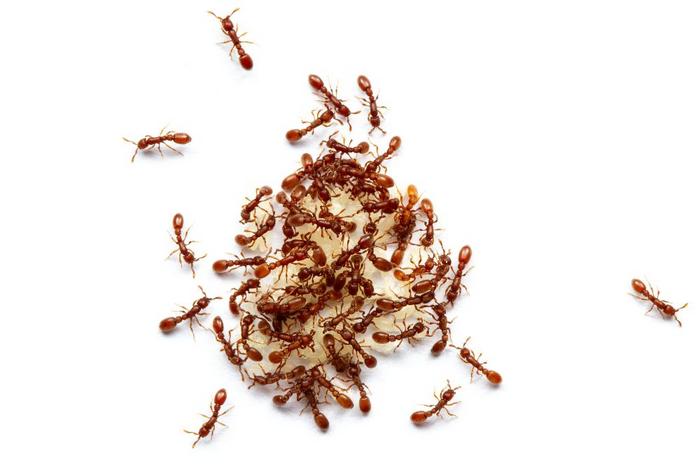
In the complex world of ant colonies, who becomes a queen and who stays a worker isn’t just about size—it’s about what that size means, genetically. A new study from Rockefeller University, published in PNAS, reveals that while larger ants are more likely to develop queen-like traits, genes ultimately determine how body size maps to social role. Even ants raised in the same environment can diverge in destiny, depending on their genetic background.
Body size predicts caste—but only through a genetic lens
Ant queens don’t just grow bigger than workers—they sprout wings, develop egg-producing ovaries, and take on radically different lives. But what sets them on this path? Scientists have long debated whether environmental factors like food or temperature alone can separate size from caste development. This new research settles the debate for one species: in clonal raider ants (Ooceraea biroi), caste traits and size are inseparably linked—but genes decide how tightly they’re coupled.
Using this species’ unique biology—clonal reproduction and synchronized life cycles—the team manipulated both genetics and environmental conditions to observe how ant larvae develop. The findings show that while environment affects how big an ant grows, only genetics can change what that size means for its future role.
Key findings from the study
- Environmental variables like food availability and temperature affected ant size—but not caste traits independently.
- Queen-like features such as larger ovaries and eye development appeared once ants reached a genetically set size threshold.
- Genetic lines differed in how size predicted caste: some ants developed queen traits at smaller sizes than others.
Genetics draws the caste line
“If some environmental factor affects caste, it will affect size too,” said Patrick Piekarski, co-author of the study. “It can’t induce change in one and not the other.” In other words, you can’t make a queen from a small ant just by changing the environment—unless her genes define that small size as queenly.
The research showed that ants from two genetic lines, labeled M and A, grew to different sizes on average. Yet, for the same body size, M-line ants were more likely to develop queen-like features than A-line ants. This means that genetics not only influences how big an ant gets—it also adjusts the meaning of that size within the colony’s developmental rules.
Implications for evolution and behavior
For senior author Daniel Kronauer, the work offers a window into how ant societies function as superorganisms. “Workers leave the nest to forage, take care of the larvae, build and expand the nest; the queen mostly just mates and lays eggs,” Kronauer said. “So understanding how body size relates to caste isn’t just a question of morphology—it opens the door to understanding how social roles, brain function, and colony dynamics develop and evolve together.”
In ants, it turns out, size matters—but only because genes say so.
Journal: Proceedings of the National Academy of Sciences
DOI: 10.1073/pnas.2501716122
Discover more from Wild Science
Subscribe to get the latest posts sent to your email.
