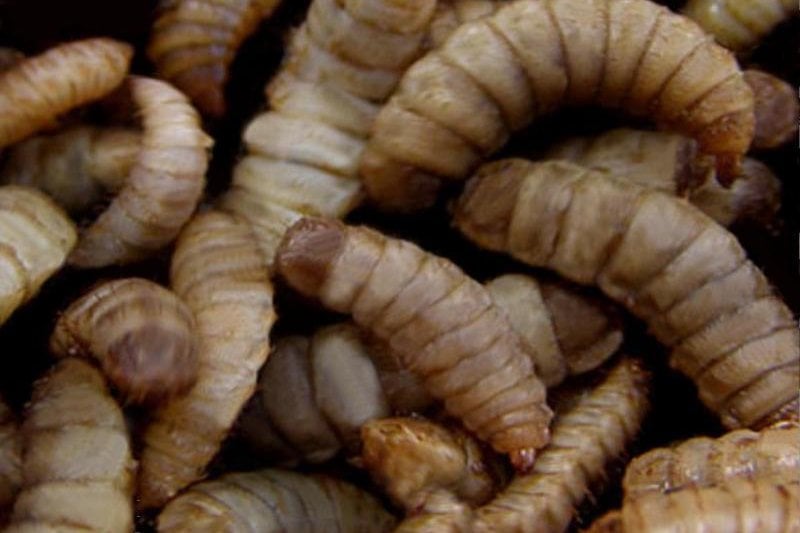
Buried in a container of pig manure or sewage sludge, a black soldier fly larva spends its first weeks doing something genuinely useful: eating. It consumes the organic matter around it, converts it into body mass, and excretes what it cannot use as nutrient-rich pellets called frass. The process is efficient, well-understood, and increasingly seen as a serious alternative to landfilling or incineration. What nobody had systematically examined, until now, was the viral content of what goes in and what comes out.
The answer turns out to be considerably more complex than the waste management industry had assumed. Researchers at Fudan University in Shanghai fed separate groups of larvae three types of organic waste: food scraps, sewage sludge and pig manure. After sequencing the RNA from the waste, the larvae and their frass, the team identified 175 distinct viral types across all samples. More than half had never been described before.
Gang Luo, a corresponding author on the study published in Environmental Science & Technology Letters, says the field has been oddly quiet on this question. “Viruses in organic wastes have rarely been studied in a systematic way, but our research shows that black soldier fly larvae can help reduce potential viral risks, highlighting the promise of this approach for future waste treatment.” The group used metatranscriptomics, essentially reading all the RNA present in a sample, to take an unusually comprehensive snapshot of what those waste streams actually contain.
The viromes varied dramatically by feedstock. Larvae that ate food waste accumulated viromes dominated almost entirely by insect-specific viruses, organisms adapted to live in flies and other invertebrates with no known route into humans. Between 98 and 99 percent of viral material in food-waste larvae fell into that low-risk category. Larvae fed pig manure or sewage sludge were a different matter: their viral communities contained astroviruses, picobirnaviruses, noroviruses and enteroviruses, all capable of causing human disease.
The larvae, it seems, are reasonably good at clearing some of those pathogens. Within six to eight days, the treatment eliminated astrovirus from pig manure entirely. Norovirus and enterovirus levels dropped substantially over the same period. The digestive system of Hermetia illucens, the black soldier fly, appears to suppress or destroy many human-pathogenic RNA viruses during the conversion process, though the precise mechanism remains unclear.
But not everything disappears. Picobirnavirus, which can cause digestive symptoms in humans, persisted in the frass from both manure and sewage sludge despite the larvae’s best efforts. Plant-infecting viruses also survived in frass from sewage and manure treatments, raising a separate concern: if that frass is spread on agricultural land as fertilizer, it could potentially carry phytopathogens into crop systems. The frass is, commercially speaking, a valuable product. Getting its safety profile right matters.
There is a further complication. The team measured viral RNA, not viral infectivity. Detecting genetic material from norovirus in frass tells you the virus was present; it does not confirm that it could still make anyone ill. RNA degrades, and capsid proteins can be disrupted by the acidic environment of larval digestion without leaving traces in a transcriptomic dataset. The researchers note that cell-culture infectivity assays and capsid-integrity methods will be needed to determine whether the residual viral material poses a genuine biological hazard or simply a detectable molecular remnant. Luo describes establishing that distinction as “key to safely reusing them in a circular waste management system.”
One finding did not fit the expected pattern. Viral microdiversity, meaning the degree of genetic variation within viral populations, increased roughly elevenfold after larval treatment. The viruses that survived were not identical copies; they were a genetically more varied pool than what went in. Yet the researchers found that purifying selection still predominated in these survivors, most mutations were being weeded out rather than accumulating, which suggests the viral population was diversifying at the margins without undergoing the kind of rapid adaptive evolution that might produce more dangerous or treatment-resistant variants.
The commercial context gives these questions some urgency. Fresh black soldier fly larvae make up more than 80 percent of the market for insect-based animal feed, sold to poultry and aquaculture operations. Frass is marketed as a soil amendment. Both products flow from waste streams that, according to this study, routinely contain human-pathogenic RNA viruses before treatment. The larvae handle most of it. The question is what to do about the rest.
One option is additional treatment steps for larvae and frass derived from fecal waste streams: heat, UV, or chemical disinfection applied after the biological conversion. Another is more selective sourcing, since food waste appears to produce larvae with minimal pathogen risk while supporting better larval growth. Larvae fed food scraps gained more weight, grew more consistently and carried a far simpler viral community than those raised on sewage or manure. From a biosafety perspective, the cleanest product comes from the cleanest input.
Understanding how those pathogen thresholds interact with regulatory approval for insect-based feed will shape how quickly the industry can expand. The biology is encouraging: an organism that converts contaminated waste into protein while destroying most of the pathogens in it is a genuinely useful piece of infrastructure. The 175 viruses found in these waste streams, more than half of them previously unknown to science, suggest that the full inventory of what those larvae encounter and metabolise has barely been taken.
Study link: https://doi.org/10.1021/acs.estlett.5c01207
Discover more from Wild Science
Subscribe to get the latest posts sent to your email.