

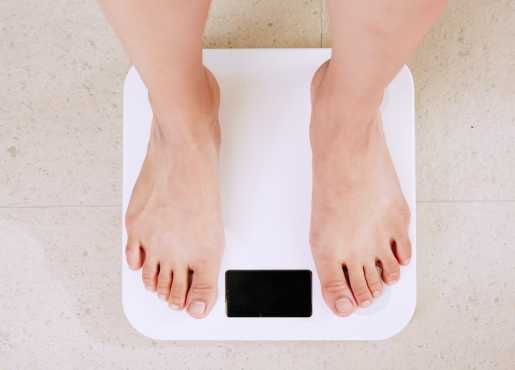
Sort 200,000 people by body weight and you’d expect a fairly tidy story: heavier means sicker. But when researchers at Queen Mary University of London and the Berlin Institute of Health ran the numbers, they kept finding the same awkward result. Among the people predicted to develop type 2 diabetes within the next decade, roughly 30 per cent didn’t have obesity at all. They had overweight. A different BMI category, a different clinical pathway, and yet the same looming risk. The signal wasn’t in the scale reading. It was somewhere else entirely.
The result, published this week in Nature Medicine, points at something healthcare systems have perhaps known for a while but struggled to act on: BMI is a blunt instrument, and using it as the primary gatekeeper for who gets early intervention in obesity care is leaving a lot of high-risk people undetected.
Beyond the Number on the Scale
The researchers built what they’re calling OBSCORE, a risk prediction model that draws on 20 clinical measurements to forecast a person’s likelihood of developing any of 18 obesity-related complications over ten years. These aren’t exotic measurements, for the most part. Blood test results, waist-to-height ratio, HbA1c, cholesterol levels, smoking status, blood pressure, a handful of standard markers you’d expect to see on a routine GP record. The team started with a pool of more than 2,300 candidate variables, including plasma metabolites and polygenic risk scores, and ran the whole lot through a machine-learning framework to identify what actually predicts complications. Genetic data, it turns out, added very little (polygenic scores achieved a median concordance index of just 0.56, barely better than random). Metabolite profiles were similarly unimpressive at the margin. The information that mattered most was already in the clinical record.
“With obesity affecting a growing proportion of the global population, preventing its long-term health complications has become a major challenge for healthcare systems,” says Professor Claudia Langenberg, who led the work. “Our work shows how deeply phenotyped large-scale health data can be used to develop data-driven frameworks that identify individuals at higher risk of developing complications and may help support more risk-based approaches to manage obesity.”
What the model found, when applied to UK Biobank participants, were risk differences that should give anyone who still defaults to BMI thresholds a reason to pause. People in the top 20% of predicted OBSCORE risk for chronic kidney disease were 89 times more likely to develop it over ten years than those in the bottom 20%. For type 2 diabetes, the ratio was 42-fold. Cardiovascular mortality showed a 47-fold spread, with a 10-year event rate of 5.7% in the highest-risk group compared with 0.1% in the lowest. And importantly, these weren’t just comparisons between obese and non-obese participants. Even in the lowest-risk quintile, everyone had a BMI of at least 27. The variation was happening within the weight categories, not between them.
The People Getting Missed
This is the part that makes the research worth sitting with. Across the 18 conditions tested, a median of 40 per cent of the individuals flagged as highest-risk had overweight rather than clinical obesity. Current NHS guidelines and, for that matter, US Medicare coverage rules, tend to tie intervention eligibility to BMI cut-offs. Semaglutide coverage, for instance, has been largely restricted to people with obesity and a history of heart disease or stroke. OBSCORE suggests that approach is systematically missing a substantial chunk of the people who’d benefit most from early treatment.
“Two people with similar body weight can have very different risks of developing diseases such as diabetes or heart conditions,” says Dr Kamil Demircan, who co-led the analysis. “By systematically analysing a wide range of health factors in a data-driven manner, we identified a small set of factors that together may help detect individuals at highest risk earlier, providing a clearer picture of their future risk for obesity-related conditions.”
The model was validated in two independent cohorts. In the EPIC-Norfolk study, a prospective European cohort recruited fifteen to twenty years before UK Biobank, OBSCORE’s performance held up well (a correlation of 0.83 between predicted and observed performance across outcomes), which is the sort of generalisability that gives a tool like this a chance of being useful in the real world rather than just in the paper that describes it. The team also tested the model in Genes & Health, a British South Asian cohort, where it predicted incident diabetes with a concordance index of 0.78 and outperformed the BMI-only baseline by an even larger margin than in the European data, perhaps because South Asian populations tend to develop metabolic complications at lower BMI levels, making the irrelevance of weight cut-offs especially acute.
Can the Drug Trials Tell Us Anything?
There’s one other result in the paper that’s worth flagging, because it speaks directly to the question everyone is actually asking: who should be getting GLP-1 receptor agonists and tirzepatide? The researchers applied OBSCORE to participant-level data from the SURMOUNT-1 trial of tirzepatide. Weight loss achieved over 72 weeks was comparable across all OBSCORE risk groups, which is what you’d hope to see. The drug doesn’t stop working just because you’re lower-risk. But crucially, predicted risk scores dropped significantly in all treatment arms versus placebo. OBSCORE captured the treatment-associated changes in risk, which suggests it’s picking up the kind of physiological shifts that actually matter for long-term outcomes, not just weight on a scale.
Some caveats are worth noting. UK Biobank skews older and healthier than the general population, which means absolute risk estimates from OBSCORE probably undercount what you’d see in a less selected group. The model also hasn’t been validated for younger adults or adolescents, which is awkward given that obesity rates in younger age groups have risen sharply and intervention in that population may be especially impactful. Calibration was decent but not perfect; for some outcomes, the model tended to overestimate risk, which has real implications if you’re using it to decide who gets treatment.
None of that makes OBSCORE unready. It makes it what it is: a clinical support tool that might sit inside an electronic health record system, flagging patients at high metabolic risk before a doctor might otherwise notice them. The researchers envision it complementing, rather than replacing, existing BMI-based frameworks. You don’t need to tear up NICE guidance to make use of it; you just need to interrogate your patient’s blood results and waist measurements with a bit more rigour than a scale reading permits. There’s an interactive version of the tool already publicly available at omicscience.org.
Whether healthcare systems will actually move on this is, as ever, a different question from whether the science warrants it. But as obesity drug costs and shortages continue to dominate clinical decision-making, a way to identify who genuinely can’t afford to wait for treatment looks considerably more useful than a number that tells you how much someone weighs.
Source: Demircan K, Carrasco-Zanini J, Williamson A, et al. Data-driven prioritization of high-risk individuals for weight loss interventions. Nature Medicine. Published 30 April 2026.
Frequently Asked Questions
Why doesn’t BMI alone tell us who will develop obesity complications?
BMI measures body weight relative to height, but it doesn’t capture how that weight is distributed metabolically. Two people with identical BMIs can have very different blood glucose levels, cholesterol profiles, blood pressure, and organ stress. Those differences, not the weight itself, drive much of the variation in who develops conditions like type 2 diabetes or kidney disease. OBSCORE was designed to measure that variation directly.
What are the 20 measurements OBSCORE uses?
The model uses clinically standard variables that are widely available in health records: things like HbA1c, total and HDL cholesterol, creatinine, urate, alanine aminotransferase, waist-to-height ratio, blood pressure, and smoking status, alongside basic demographic data. Importantly, genetic data and plasma metabolite profiles were tested but added very little predictive power on top of these standard measures, which makes the tool practically deployable without specialist laboratory work.
Could OBSCORE change who qualifies for weight loss drugs?
That’s the ambition, at least in the long run. Current prescribing guidelines in the UK, US, and elsewhere rely heavily on BMI thresholds and the presence of specific comorbidities. OBSCORE’s findings suggest this approach is missing a meaningful proportion of people at high metabolic risk who happen to fall below clinical obesity cut-offs. Whether that translates into changes to NICE guidance or insurance coverage policies will require further cost-effectiveness studies, but the researchers explicitly designed the tool to slot into existing decision-support frameworks rather than require a complete regulatory overhaul.
Is this tool available to use now?
An interactive version of OBSCORE is publicly available at omicscience.org, where clinicians or researchers can explore model-derived risk estimates. Clinical deployment at scale would require integration with electronic health record systems and, ideally, further validation in prospective trials before it influences prescribing decisions routinely.
What happens to OBSCORE-predicted risk when patients take tirzepatide?
When the researchers applied OBSCORE to participants in the SURMOUNT-1 tirzepatide trial, predicted risk scores fell significantly in all treatment groups relative to placebo after 72 weeks. Weight loss was comparable across different baseline risk groups, meaning the drug appeared to work regardless of starting risk level. The fact that OBSCORE captured these treatment-induced changes suggests it’s measuring physiological factors that actually respond to effective obesity treatment, not just static characteristics.