

When a person loses significant weight, the benefits show up in blood pressure readings, cholesterol panels, and diabetes risk. But what happens inside the fat itself? For years, researchers suspected that fat tissue might harbor a kind of biological grudge, holding onto the inflammation and dysfunction of its heavier days even after the pounds come off.
New research from Denmark suggests otherwise. Fat tissue, it turns out, can heal far more completely than scientists once assumed. After substantial weight loss, the cellular makeup of fat begins to resemble that of someone who was never obese in the first place.
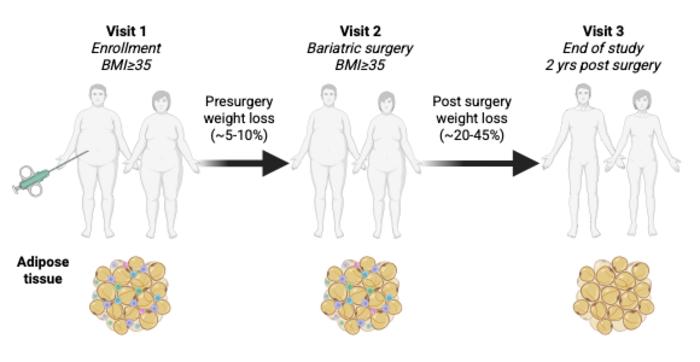
The study, published in Nature Metabolism, followed men and women with severe obesity through two phases of weight loss. First came a modest reduction of 5 to 10 percent through diet and lifestyle changes. Then, after bariatric surgery, participants lost between 20 and 45 percent of their body weight. Researchers at the University of Southern Denmark took fat biopsies at each stage and used single-cell sequencing to examine what was happening inside the tissue at the molecular level.
Inside the Inflamed Landscape of Obese Fat
In people carrying excess weight, fat tissue becomes something more than a storage depot. Immune cells flood in. Blood supply struggles to keep pace with expanding cells. Under a microscope, the tissue shows crown-like structures, circles of dying fat cells surrounded by aggressive immune cells, a hallmark of chronic stress.
Two years after surgery, much of this had cleared. The number of immune cells had dropped, often to levels seen in lean individuals. New blood vessels had sprouted, improving oxygen and nutrient delivery. Gene activity across cell types had largely returned to a lean-like state.
“When we analyzed the adipose tissue samples taken two years after surgery, following considerable weight loss, the changes were striking,” Anne Loft, an assistant professor on the research team, said. “The number of immune cells was greatly reduced, and several types of immune cells were down to levels normally seen in lean individuals.”
In plain terms, the tissue stopped acting like a chronic irritant and started behaving like a healthy organ again.
Small Losses Count
The study also revealed something unexpected about modest weight loss. Even before surgery, when participants had lost only 5 to 10 percent of their body weight, changes were already underway. Inflammation had not yet dropped, but a different repair process had begun. The researchers observed an uptick in precursor fat cells and gene programs linked to building new, healthier fat cells rather than stretching out old, overloaded ones.
This early shift matters because it suggests the benefits of weight loss begin at the molecular level well before the scale shows dramatic results. The groundwork for a healthier tissue environment gets laid during those first difficult months, even when progress feels slow. For anyone trying to improve their metabolic health, every bit of effort appears to count toward resetting the body’s internal machinery.