

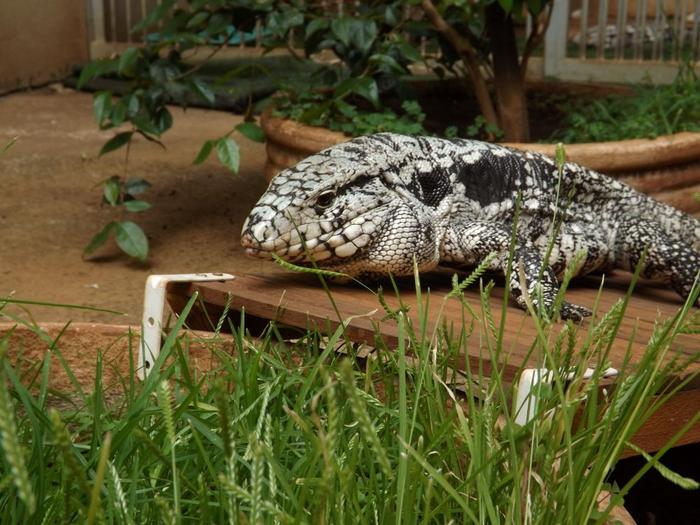
A new study has uncovered the physiological mechanism behind the ability of Salvator merianae, the Black and white tegu lizard, to raise its body temperature independently during the mating season. This discovery raises questions about long-held beliefs regarding reptilian thermoregulation and the distinctions between cold-blooded and warm-blooded animals.
Unraveling the Tegu’s Thermal Adaptation
Researchers from São Paulo State University’s School of Agrarian and Veterinary Sciences have identified the cellular processes responsible for an observation first made in 2016: tegu lizards can maintain body temperatures higher than their surroundings during the reproductive season. The new study, published in Acta Physiologica, details the mechanisms behind this unexpected endothermic behavior.
Livia Saccani Hervas, the study’s lead author, explains the context of their findings: “Generally speaking, only birds and mammals are considered endotherms, which can keep warm even in a cooling environment. Reptiles and other animals are considered ectotherms, as they rely on external sources to regulate their body temperature.”
The research team conducted a three-year study, collecting muscle biopsies from ten lizards during summer and spring. Through biochemical analysis and calorimetry, they identified a notable adaptation in the tegu’s skeletal muscles.
Mitochondrial Activity: The Source of Tegu Warmth
The study found that during the reproductive season, both male and female tegus experience an increase in mitochondrial production within their muscles. Mitochondria, critical for cellular energy production, appear to play a key role in heat generation in these lizards.