

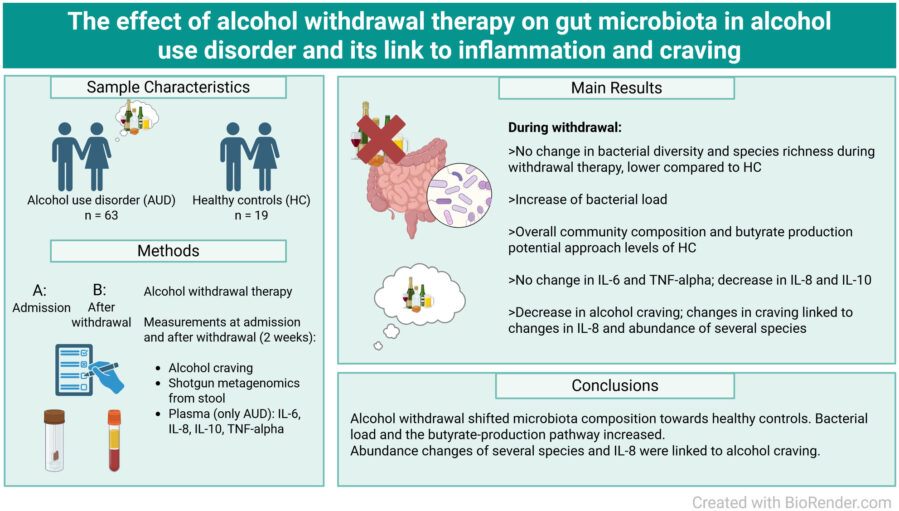
The gut begins to heal when drinking stops. In a new study from Germany, researchers found that alcohol withdrawal therapy improved gut microbiome function, boosted beneficial bacteria, and reduced alcohol cravings. Published in Alcohol: Clinical & Experimental Research, the study of 63 people with alcohol use disorder (AUD) links gut microbial recovery with reduced brain inflammation and behavioral improvements, pointing to new probiotic or microbiome-targeted therapies for addiction.
The Gut-Brain Link in Alcohol Use Disorder
AUD is long known to damage the gut, promoting inflammation and altering brain chemistry. The study builds on emerging evidence that certain bacteria produce butyrate, a short-chain fatty acid that reduces inflammation and helps regulate appetite, which may influence alcohol craving. Disruptions to this system can worsen mood and drive compulsive drinking.
Inside the German Study
Researchers at Hannover Medical School and Minden/Lübbecke Psychiatry enrolled 63 adults with AUD undergoing 10–14 days of withdrawal therapy. Participants provided blood and stool samples at the start and end of treatment. Using shotgun metagenomic sequencing, the team tracked microbial changes and measured immune proteins called interleukins, along with validated craving scales.
What Changed During Withdrawal
- Overall bacterial load increased, even though diversity remained stable.
- The microbiome shifted toward a profile resembling healthy controls.
- Butyrate-producing bacteria, including Eubacterium rectale and Faecalibacterium prausnitzii, increased.
- Levels of pro-inflammatory bacterium Ruminococcus gnavus decreased.
- Interleukin-8 (IL-8), linked to brain inflammation and craving, declined significantly.
- Alcohol cravings, measured by PACS and OCDS, dropped by more than 50 percent.
“Alcohol withdrawal affected gut microbiota composition and increased concentration of the butyrate pathway along with overall bacterial load.” — Proskynitopoulos et al., ACER
Why Butyrate Matters
Butyrate is central to the gut–brain axis. It fuels intestinal cells, reduces systemic inflammation, and influences hormones like leptin and ghrelin that control appetite and reward. Previous animal studies show sodium butyrate can reduce alcohol preference. The new findings suggest withdrawal therapy naturally restores butyrate potential, strengthening appetite regulation and dampening alcohol craving.
Key Findings
- Sample: 63 adults with alcohol use disorder, average age 48, Germany
- Duration: 10–14 days of inpatient withdrawal therapy
- Methods: Shotgun metagenomics, blood cytokine analysis, craving scales
- Results: Increased butyrate pathway genes, higher bacterial load, reduced IL-8 and IL-10
- Clinical Effect: Alcohol craving scores fell significantly during therapy
- Safety: No adverse effects reported, patients received standard withdrawal care
Implications for Treatment
The study highlights potential therapeutic targets in AUD: boosting butyrate-producing bacteria and modulating inflammatory pathways like IL-8. This could open the door to probiotic interventions or microbiome-based drugs to complement traditional withdrawal therapy. It also reinforces the idea that AUD is not just a brain disorder but a gut–brain–immune condition.
Takeaway
Alcohol withdrawal therapy helps restore gut microbiome balance, increasing butyrate production and reducing inflammation. These shifts correlate with lower cravings, pointing to the gut as a promising target for future treatments of alcohol use disorder.
Journal: Alcohol: Clinical & Experimental Research
DOI: 10.1111/acer.70128