

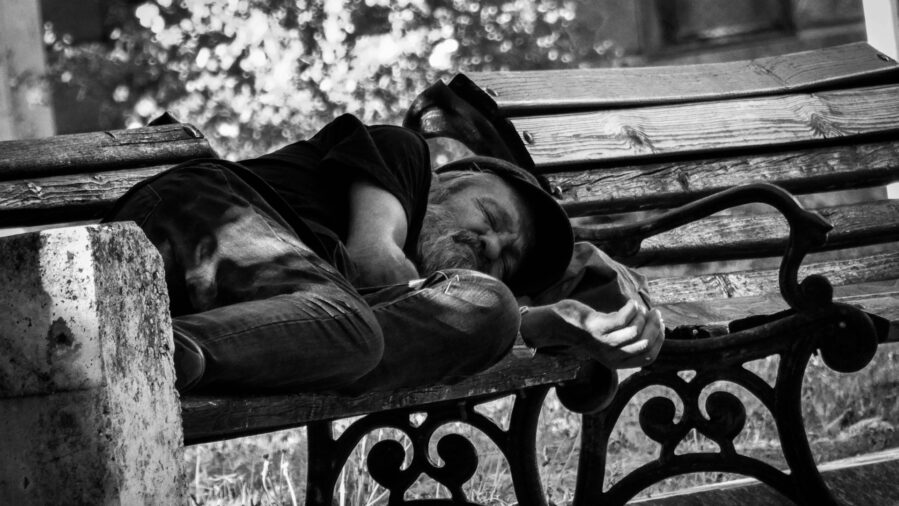
The numbers are grim: nearly one in four unhoused people in Vancouver reported losing their belongings to city workers during street sweeps between 2021 and 2023. For many, that loss was not just inconvenient. It was life-threatening.
A new study from Simon Fraser University, published in Public Health, shows that confiscations of tents, medications, and harm reduction supplies are strongly tied to overdose risk, violence, and barriers to health care. The findings lend statistical weight to what residents and advocates in Vancouver’s Downtown Eastside have been saying for years: the sweeps are not cleaning up the streets. They are destabilizing lives.
“These sweeps punish people for surviving in the only ways available to them. It is a public health crisis that endangers lives amidst the ongoing toxic drug crisis,” said Kanna Hayashi, associate professor at SFU and St. Paul’s Hospital Chair in Substance Use Research.
The research team analyzed data from 691 participants across three long-running cohorts of people who use drugs in Vancouver. Thirteen percent had their belongings confiscated at least once in a six-month window. That proportion jumped to almost one-quarter among those living on the street or in shelters. The study also found that people who lost belongings were twice as likely to report non-fatal overdose and more than twice as likely to experience violent victimization.
The mechanics of confiscation matter. When a person’s naloxone kit or prescribed medication is taken, they are pushed into riskier environments. When identification or housing paperwork disappears, service access collapses. Displacement does not erase encampments. It scatters them, making overdoses harder to reverse and outreach harder to track.
Advocacy groups such as Our Streets, P.O.W.E.R., and Stop the Sweeps have long argued that these municipal tactics inflict systemic harm. Now they have quantitative evidence.
“Our study provides the statistical evidence to back up what community groups have been saying all along: street sweeps are implicated in overdose risk and systemic violence,” Hayashi noted.
For those on the ground, the study feels like belated validation. “We have tried it all: peer reviewed research, reports, a federal housing advocate, consultations and meetings, rallies and marches,” said Dave Hamm, a member of Our Streets and researcher with P.O.W.E.R. “If the government will not change its violent approach, we need people to keep showing up to support our neighbours, because in the end, we keep each other safe.”
The legal dimensions are equally stark. Courts in British Columbia have ruled that displacing people with nowhere else to go violates their rights under the Canadian Charter of Rights and Freedoms. Seizing personal belongings deepens that violation. Pivot Legal Society lawyer Caitlin Shane called it “a matter of life or death for people who continue to be pushed to the margins.”
Hayashi and her colleagues stress that the real solution lies in expanding dignified housing and scaling harm reduction services. But in the short term, even small reforms could reduce immediate harm: accessible storage services, receipts or documentation when belongings are taken, and a policy shift away from punitive sweeps toward supportive interventions.
The study makes clear that sweeps offer only cosmetic relief for city officials. “The street may get cleaned up for one day, but it does not last because there is nowhere else for people to go,” Hayashi said. “We need to fix the policies that created this crisis, not criminalize its victims.”
The tension between visible order and hidden harm remains unresolved. And while Vancouver debates policy language, people continue to lose not only their belongings but sometimes their lives. The open question is whether data this clear will finally shift political will—or whether the cycle of confiscation and overdose will simply continue.
Journal: Public Health
DOI: 10.1016/j.puhe.2025.105885