
Balancing growth with environmental survival has long been painted as a cruel trade-off for developing countries. A new study from Tokyo University of Science, published in The Singapore Economic Review, argues that this choice is less rigid than it seems. By applying what they call the “kindergarten rule,” clean up the mess you make, researchers show that zero-emissions policies can align with sustained economic expansion, even in nations heavily reliant on foreign aid.
The work, led by Professor Hideo Noda with PhD candidate Fengqi Fang, builds on earlier models that assumed wealthy, innovation-driven economies. This time, the team ran the math under conditions more typical of low- and middle-income nations, where foreign assistance often props up public budgets. Their models suggest a clear threshold: once GDP per capita rises above a certain level, governments can enforce zero-emissions policies without stalling growth.
“Our research will help people in developing countries who believe that it is difficult to achieve both environmental conservation and economic growth,” Noda said.
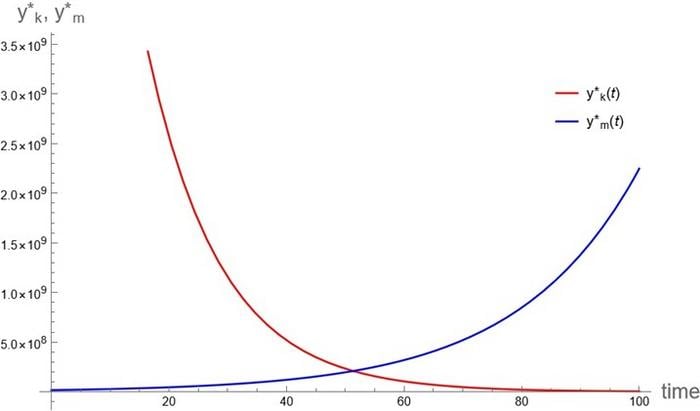
Two approaches guided their analysis. In the “public goods” model, infrastructure and education scale freely with population. In the “congestion” model, too many users dilute the benefits. Both led to the same conclusion: clean growth is possible, but timing and policy matter. Better technology, larger populations, and smarter taxation all lower the income level required to reach the so-called kindergarten rule of pollution abatement.
The details may sound abstract, but the stakes are not. For donor countries, it means aid money earmarked for clean technology has a multiplier effect: it accelerates the moment when growth and zero emissions become compatible. For recipients, it shifts the narrative from impossible balancing act to achievable policy sequence. And for global goals like the UN’s SDGs, it provides a rare theoretical backbone.
The study’s simulations offer some nuance worth lingering on. Congestion in public services delays progress compared to the idealized public goods case. Yet higher aid ratios or stricter donor conditions on how aid is spent can close that gap. In practice, that could mean that when donor agencies insist on cleaner production technology, the payoff is faster than governments trying to do it all alone.
“The motivation for our study was to prove that zero-emissions policies and sustainable economic growth are compatible even in developing countries that rely on official development assistance,” Noda explained.
Whether the framework will resonate outside academia is an open question. Models are tidy; politics, far less so. Still, the notion that a simple kindergarten rule could underpin a workable growth-climate strategy has an undeniable appeal. The real test will be whether finance ministries and aid agencies absorb the lesson.
Journal: The Singapore Economic Review. DOI: 10.1142/S0217590825500304
ScienceBlog.com has no paywalls, no sponsored content, and no agenda beyond getting the science right. Every story here is written to inform, not to impress an advertiser or push a point of view.
Good science journalism takes time — reading the papers, checking the claims, finding researchers who can put findings in context. We do that work because we think it matters.
If you find this site useful, consider supporting it with a donation. Even a few dollars a month helps keep the coverage independent and free for everyone.