

You don’t need to watch a knockout reel to see trouble building in a fighter’s brain. A new analysis presented by researchers from the University of Alabama at Birmingham and Cleveland Clinic Nevada at the Radiological Society of North America meeting looks inside the heads of professional boxers and mixed martial arts fighters, and what they found is not neat or orderly. It’s a pattern of compensation, misfires, and a cleanup system that seems to overwork itself before sagging.
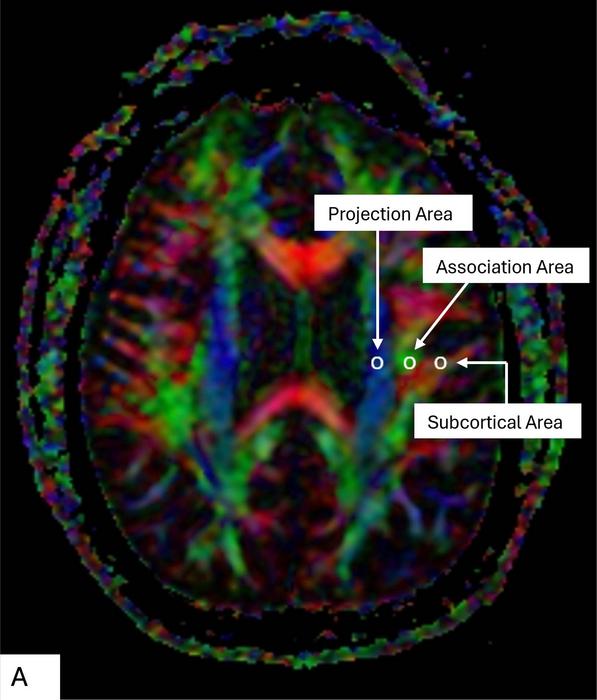
The team focused on the glymphatic system. It’s the network of fluid-filled channels that carries waste out of the brain, something like housekeeping for neurons. The idea sounds simple. Measure how well water moves through the perivascular space using diffusion tensor imaging along those channels, a technique called DTI-ALPS, and compare fighters who show cognitive problems with those who don’t. It should give a snapshot of how the system responds to years of hits.
“The recently discovered glymphatic system is like the brain’s plumbing and garbage disposal system,” said Dhanush Amin, M.D. “It’s vital for helping the brain flush out metabolites and toxins.”
The data came from 280 fighters enrolled in the Professional Athletes Brain Health Study, a long-running project that tracks about 900 participants. Ninety-five of them were already cognitively impaired at baseline. There were also twenty healthy controls who provided something like a reference point. Everyone went through MRI scans so the researchers could compute an ALPS index, a number that reflects how efficiently the glymphatic system is moving fluid.
The researchers expected impaired fighters to show worse glymphatic activity from the start. Years of trauma, slower cognition, lower scores. That sort of tidy alignment. But the early readings didn’t match the prediction. The impaired fighters had significantly higher glymphatic index values. It’s not the kind of result that fits snugly into a headline. It feels more like a puzzle piece that looks like it should fit somewhere but doesn’t, at least not at first glance.
Looking at the fighters’ histories helped. Many of those with cognitive impairment had long records of knockouts. When the team checked how the ALPS index changed with the total number of knockouts, the numbers dipped sharply. There was an early surge, then a downturn that kept going. Instead of a damaged system from the start, it looked more like a system running hot, then faltering as trauma accumulated.
“We believe that the glymphatic index was initially high in the impaired athlete group because the brain initially responds to repeated head injuries by ramping up its cleaning mechanism, but eventually, it becomes overwhelmed,” Dr. Amin said. “After a certain point, the brain just gives up.”
Something else stood out. Fighters who were not cognitively impaired had significantly lower right and total glymphatic index values than the impaired group. The relationship between their index values and knockout history also followed a different slope. There isn’t a neat way to summarize that. It suggests that fighters may be diverging along different biological tracks long before they feel off, which is a harder message for anyone in the sport to sit with.
The study didn’t settle on a single explanation. Glymphatic activity is influenced by sleep, inflammation, cerebrospinal fluid pressure, maybe other factors that weren’t the focus here. But the timing matters. The fighters with the highest early activity were already showing cognitive strain. The ones with lower activity were not, at least not yet. The mismatch between performance and cleanup may be part of why fighter brains age in uneven ways.
Amin pointed to a practical angle. If imaging can catch glymphatic strain before symptoms appear, there might be a way to intervene early, even if intervention only means recommending longer rest or non-contact periods. It’s not dramatic. But in sports where decisions about fighting again can be made on thin margins, any early signal is better than none.
The researchers say they plan to keep following the fighters, comparing how rapidly the ALPS index changes and whether those changes predict later decline. The work is still early, and the patterns are not straightforward. That might be the most honest takeaway. The brain’s clearing system is not built for constant impact, but it doesn’t fail all at once. It shows strain in ways that don’t line up cleanly with symptoms. And by the time the deterioration is unmistakable, the shift began years earlier, hidden in the movement of water through spaces most people never think about.