

Key Takeaways
- Portugal’s hydropower plants faced a severe collapse during droughts, forcing reliance on fossil fuels which increase carbon emissions and worsen climate change.
- A study revealed that droughts from 2017 to 2023 added 141 million tonnes of CO₂-equivalent emissions across 25 European countries, equal to the Netherlands’ annual emissions.
- Droughts disrupt hydropower and wind energy, leading countries to ramp up fossil fuel use, particularly natural gas and coal, to meet electricity demands.
- The public health impacts from increased pollution during droughts include rising respiratory diseases and cardiovascular issues, with significant losses in healthy life years across Europe.
- Europe’s climate strategy struggles because renewable energy sources are not reliable during droughts, necessitating investment in resilient grids and alternative energy solutions.
Portugal’s hydropower plants sit idle. In October 2022, when the country’s largest reservoirs should have been swollen with autumn rain, the Iberian peninsula was gripped by one of the most severe droughts in recent memory. The numbers tell the story of what didn’t happen: hydropower output collapsed by 93 per cent that month. By the time the crisis passed, Portuguese generators had burned through months of natural gas, coal and fuel oil to keep the lights on, adding millions of tonnes of carbon to an atmosphere already destabilized by the very phenomenon that created their predicament. It was a perfect encapsulation of a problem Europe is beginning to understand in visceral terms: when climate change dries up rivers, it forces countries to build bigger, dirtier power plants, which accelerate the climate change that dried up the rivers in the first place.
The scale of this trap had not been clearly documented until now. A comprehensive new study tracking electricity generation across 25 European countries from 2017 to 2023 quantifies what researchers call a “problematic reality.” When droughts strike, hydropower and other renewables falter. Countries respond by firing up fossil fuel plants and importing energy from neighbours. The result: 141 million tonnes of extra carbon dioxide equivalent pumped into the atmosphere in just seven years. That single figure, researchers calculated, equals the entire annual fossil fuel emissions of the Netherlands.
The study was led by Francesco Cherubini, head of the Industrial Ecology Programme at the Norwegian University of Science and Technology, alongside researchers including Xiangping Hu and Vedant Ballal. Using seven years of granular electricity data from the European Network of Transmission System Operators and comparing it against monthly runoff anomalies across the continent, they constructed a picture of how Europe’s grids reconfigure during dry spells. The findings reveal not just the magnitude of the problem, but its most insidious feature: the harder climate change pushes, the more carbon Europe pumps back into the air trying to cope.
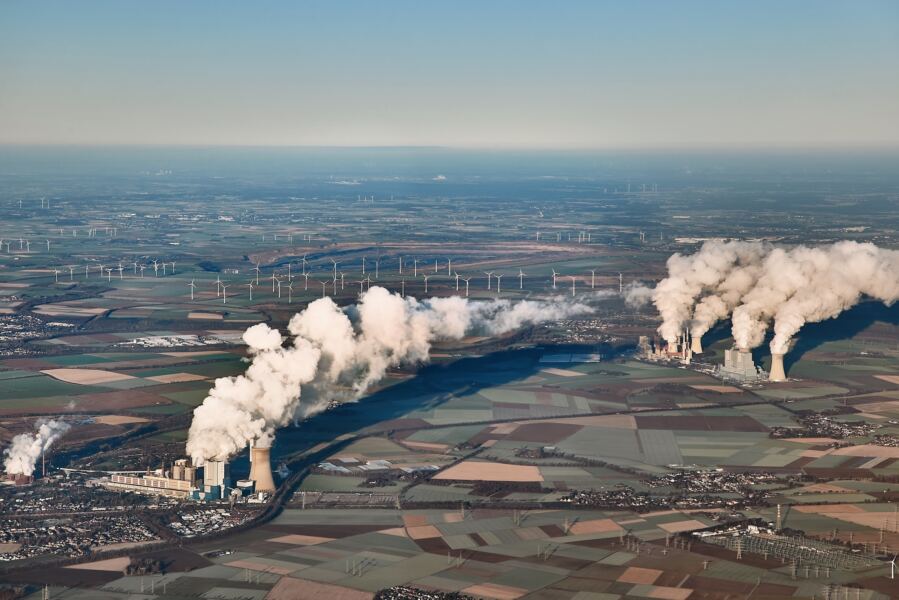
The mechanics are straightforward enough. Hydropower accounts for roughly 15.5 per cent of European electricity generation. When rivers run low, that capacity vanishes. Wind falters too during droughts, which typically arrive with high pressure systems, weak winds and blistering heat. Suddenly the continent’s electricity systems face a gap. They fill it the way they always do when desperate: with fossil fuels. Natural gas plants ramped up by 125 terawatt-hours across Europe during the study period. Coal and lignite, those dirtier cousins, together added another 53 terawatt-hours. Across 25 countries, this shift amounted to an extra 2.7 per cent of total fossil power generation.
But the pattern wasn’t uniform. France, dependent on nuclear power for 71 per cent of its electricity, faced a particular bind. Nuclear plants cannot quickly scale up or down to compensate for missing hydropower. So when drought hit, France burned natural gas, its only flexible fossil fuel option. The consequence: droughts induced roughly 10 per cent of France’s total fossil electricity emissions. In Portugal, that figure reached nearly 8 per cent. For Bulgaria, 7.3 per cent. In countries that had pledged to phase out coal (Spain, Greece, Germany), coal plants that were supposed to be winding down instead fired back up.
The emissions themselves represent a kind of climate violence: 141 million tonnes of CO₂-equivalent over seven years. But the study quantified something else, something closer to how climate change actually touches human bodies. When fossil fuel plants burn, they don’t just release carbon. They release sulphur dioxide, nitrogen oxides, and PM2.5 particles, the finest inhalable particles, small enough to cross the blood-brain barrier.
The air pollution pattern mapped onto Europe’s geography in a way that turns abstract climate science into a public health crisis. Bulgaria, Spain and Italy emerged as pollution hotspots, where emissions from coal and lignite plants in eastern Europe converged with those from western coal plants. In Bulgaria alone, PM2.5 emissions from drought-induced fossil fuel use were nearly 3,300 tonnes. Spain approached 2,800 tonnes. These numbers sound technical until you remember what they mean: fine particles embedding themselves in the lungs and bloodstreams of millions of people, increasing cardiovascular disease, respiratory infection, lung cancer and stroke.
The study found that PM2.5 accounted for only 4 per cent of total air pollutant mass from these fossil fuel plants during droughts, yet caused 20 per cent of the health damage. The reason is brutal chemistry: coal and lignite emit PM2.5 at rates roughly 59 times higher than natural gas. Per unit of electricity, coal plants pump out sulphur dioxide at more than 900 times the rate of gas plants. When drought forces a switch toward coal and away from gas, the air pollution per kilowatt produced doesn’t just increase. It explodes.
“This is an effect of climate change that people experience directly,” Cherubini said in an interview. “We’re not talking about melting glaciers or flooding in the tropics. This is something that impacts your pocket: electricity bills, electricity supplies, and the air you breathe.”
The monetized cost of drought-induced emissions alone reached roughly €26 billion over the study period, using standard estimates of the social cost of carbon. When researchers translated air pollution into disability-adjusted life years (a measure of disease burden), they found that drought-induced air pollution caused the equivalent of more than 5,000 years of healthy life lost across Europe. Germany bore the highest burden at 1,170 disability-adjusted life years, followed by Italy, Bulgaria, Poland and Spain. France, paradoxically, showed net health benefits from its shift away from coal during droughts.
The crux of the problem is that Europe built its climate strategy around renewable energy without adequately confronting what happens when weather goes wrong. Hydropower and wind are not baseload sources. They fluctuate. And when they fluctuate downward during droughts, precisely when electricity demand often rises due to heat and air conditioning, the system must respond. For now, the response is fossil fuels. For the foreseeable future, barring dramatic changes in grid infrastructure, it will remain fossil fuels.
Hu and his colleagues identified several paths forward. Some are already being deployed. Norwegian electric car owners, for example, can receive small discounts for allowing their charging schedules to sync with periods of lower power demand, effectively shedding load when the system is stressed. France and other countries have experimented with voluntary power cuts to large industrial users during peak demand periods. Cross-border interconnectors (the NordLink cable between Norway and Germany, the North Sea Link to the UK) have begun redistributing surplus power from water-rich regions to drought-stricken ones, improving resilience at a continental scale.
Longer-term solutions remain partial. Battery storage is improving but still cannot store energy at the scale required to buffer a continent through weeks of low wind and low water. Green hydrogen, once produced via electrolysis with renewable power, could theoretically serve a similar function, but the technology remains expensive and developmental. Water-efficient cooling technologies for thermal plants could reduce vulnerability to river-temperature constraints, but require retrofitting existing infrastructure at massive cost.
The most radical solution (and the one most obviously necessary) is what Cherubini emphasizes: accelerating the transition to renewable energy faster and more thoroughly than current policy trajectories suggest. Yet here the paradox deepens. To replace fossil fuels faster, Europe needs a more resilient grid. To build a more resilient grid, it needs more interconnection capacity, more storage, more flexible demand-response systems. All of this requires capital investment and regulatory coordination at a continental scale. Meanwhile, droughts continue.
The 2022 Iberian drought was followed by similar events in Italy and France. Sweden’s hydropower output in summer 2018 fell by 43 per cent in a single month. As global temperatures continue to rise, the research suggests, these are not outliers. They are the new pattern. The European Environment Agency projects that average drought frequency could increase by 60 per cent in the Mediterranean, 40 per cent in the Atlantic region and 10 per cent in continental Europe by 2100 under current warming trajectories.
What the Hu study makes clear is that Europe’s emissions budget for climate action has become hostage to the physics of its own hydrological systems. Every percentage point of carbon reduction achieved through renewable investment can be undone by a dry summer. Every ton of CO₂ saved from switching grids can be overwhelmed by the tonnage released when that grid must respond to drought. Europe is not failing to build a sustainable energy system. It is discovering that sustainability requires confronting not just energy sources, but the water that flows through the systems that bind them together.
“We need to be prepared when something extreme happens,” Hu said. “We have to build our systems to be more resilient.” But resilience, the data suggests, will not come from incremental change. It will come from treating drought not as a crisis that electricity systems must adapt to, but as a defining constraint that must reshape how those systems are engineered, regulated and financed from the ground up.
Hydropower depends directly on water availability. When reservoirs run low, output collapses. Wind power declines during droughts because they typically coincide with high-pressure weather systems, which bring weak winds. Solar efficiency also declines at the high temperatures drought-driven heatwaves produce. With renewables faltering and electricity demand often rising (due to air conditioning in the heat), grid operators must find power elsewhere. Natural gas plants are the most flexible, so they ramp up first. Coal and lignite plants also increase generation, particularly in countries where gas capacity is limited.
Fossil fuel combustion releases greenhouse gases, which warm the planet. Warming intensifies evaporation and reduces soil moisture, worsening drought conditions. Worse droughts force more fossil fuel use to maintain electricity supply. This cycle self-reinforces: the carbon released today worsens the droughts of tomorrow, which will require even more carbon to manage. The study found that droughts from 2017 to 2023 alone released emissions equivalent to nearly a third of Europe’s target annual emissions through 2040.
For PM2.5, coal plants emit roughly 59 times more per unit of electricity than natural gas. For sulphur dioxide, the multiple exceeds 900. These pollutants cause respiratory disease, heart disease and premature death. During drought periods when coal use increases, these pollutants spike sharply, even though the total mass of air pollution may appear modest. The health impacts are severe because coal is so disproportionately toxic at the molecular level compared to natural gas.
Bulgaria, Spain and Italy topped the charts for PM2.5 emissions, accounting for roughly 27, 20 and 16 per cent respectively of European drought-induced fine particle pollution. Germany had the highest total greenhouse gas emissions (26.3 million tonnes CO₂-equivalent) due to increased coal and lignite use. France, paradoxically, saw net reductions in both PM2.5 and SO₂ because droughts caused coal generation to decline, and emissions from increased natural gas use were lower than the coal emissions avoided.
Several approaches are being deployed now. Demand-response programs allow factories and buildings to reduce electricity use during peak-demand periods, shaving peak load by 2 to 5 gigawatts in some countries. Cross-border interconnectors allow drought-affected regions to import surplus power from water-rich areas. Better scheduling of hydropower and thermal plants under low-flow conditions can improve operational efficiency. Battery storage and green hydrogen remain developmental but could eventually buffer the grid through extended drought periods. The most fundamental solution is accelerating the transition to renewable energy while simultaneously building the grid infrastructure (storage, interconnection, demand flexibility) that makes renewables reliable.
Using standard estimates of the social cost of carbon (roughly €175 per tonne of CO₂), researchers calculated the economic damage at approximately €26 billion. This reflects the climate impact of the extra emissions. When factoring in health impacts from air pollution (measured in disability-adjusted life years), the burden reached more than 5,000 years of healthy life lost across Europe, equivalent to roughly 0.1 per cent of the total disease burden from fossil-based electricity generation on the continent.
Yes. Climate models project drought frequency will increase 10 to 60 per cent by 2100 depending on region, even under emission-reduction scenarios. Simultaneously, Europe is retiring coal plants and building more renewables, which will increase the continent’s dependence on hydropower and wind. Without major investments in energy storage, demand flexibility and cross-border grid capacity, droughts will force more frequent switching to fossil fuels. The study emphasizes that achieving Europe’s decarbonization targets requires simultaneously building renewable capacity and building the systems that make renewables reliable.