

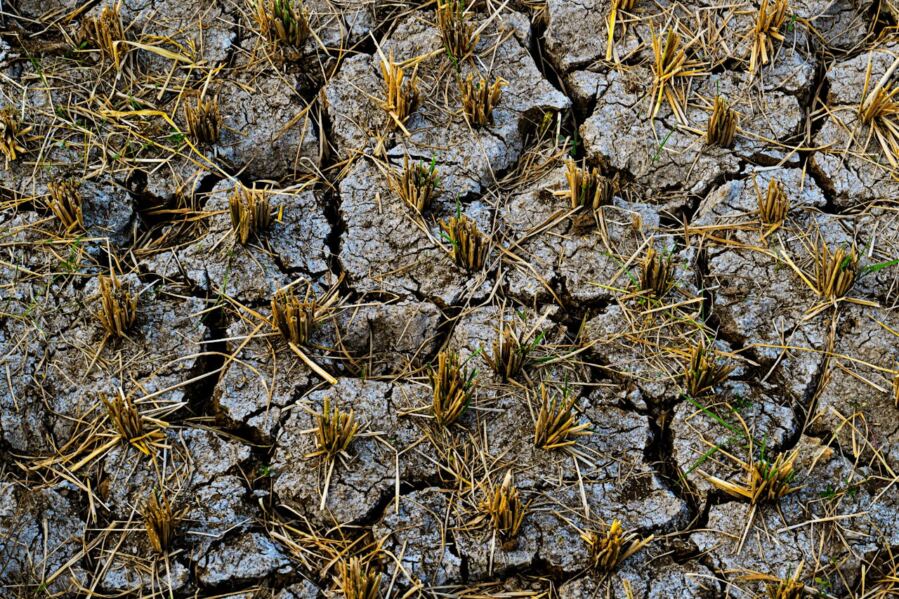
Roughly a fifth of the world’s irrigated farmland is poisoned by its own water supply. Salt accumulates in the soil as water evaporates, year by year, until the ground becomes inhospitable to almost everything farmers want to grow. It’s a slow disaster, mostly invisible from a distance, and it’s getting worse. But in the arid northwest of China, researchers spent two growing seasons testing a possible remedy, one that hijacks an existing piece of farm infrastructure to deliver something unexpected down the drip lines: bacteria.
The idea sounds simple in hindsight. Drip irrigation systems already deliver water and dissolved fertiliser directly to plant roots. Why not add microbes to the mix? The answer is that it hadn’t really been done systematically, at least not in a saline field over multiple years, and not with strains specifically selected for salt tolerance.
The researchers, led by Yunpeng Zhou and Yunkai Li at China Agricultural University, worked in Xinjiang’s jujube orchards, a region where soil salinity is a persistent agricultural headache. Global estimates put saline soils at something like 950 million hectares, or roughly 20 percent of all irrigated farmland worldwide, and Xinjiang’s red jujube industry, which accounts for about half of China’s entire jujube harvest, sits squarely in that problem zone. The experimental plots had soil pH values near 8.9 and salt concentrations above the threshold where most crops start struggling. Conditions, in short, that make normal farming a losing proposition.
Seven bacterial strains were tested, all of them halotolerant, meaning they can survive and even thrive in salty conditions where ordinary soil bacteria tend to falter. Each strain was dissolved in water and pumped through the drip irrigation system in small doses, seven times per growing season, directly into the root zone of mature jujube trees.
Better Fruit, Healthier Soil
The results were striking. Two strains, Bacillus licheniformis and Bacillus mucilaginous, outperformed the others by a considerable margin. Trees receiving these bacteria produced about 23% more fruit than untreated controls, and the vitamin C content of that fruit rose by roughly 22%. The soil’s electrical conductivity, a standard measure of salinity, dropped significantly across every stage of the growing season. Soil pH fell too, though more modestly. What the bacteria seem to be doing, in part, is releasing acidic metabolites that help flush sodium and chloride ions away from the root zone, an effect that compounds over time.
Less obvious, perhaps, was what happened underground to the broader microbial community. When the team sequenced the bacterial DNA in the jujube rhizosphere (the thin zone of soil immediately surrounding plant roots, where biological activity is most intense), they found that adding halotolerant bacteria hadn’t simply introduced a few new species into an existing ecosystem. It had restructured the whole thing. Bacterial diversity increased by 23 to 25 percent. Genera associated with nutrient cycling, Psychrobacter, Flavobacterium, Steroidobacter, became more abundant. The keystone species of the untreated soil, a salt-loving group associated with marine environments called Kineosporiaceae, was replaced in treated plots by nitrogen-fixing bacteria like Bauldia, organisms that actually contribute to soil fertility rather than merely tolerating the conditions.
This matters because soil bacterial communities aren’t just collections of individual species doing independent jobs. They form interaction networks, and the topology of those networks determines what the community as a whole can accomplish. In the treated plots, bacterial co-occurrence networks became considerably more complex, with more nodes, more connections, and lower modularity, patterns that ecologists associate with more stable and functional communities. Functional prediction analysis suggested the shifts weren’t random: pathways linked to plant pathogens and nitrate respiration became less prominent, while nitrogen fixation and nutrient mineralisation increased. The soil, in other words, was becoming more biologically productive, not just less salty.
The Delivery Problem
Perhaps the most agriculturally significant finding is the practical one. Halotolerant bacteria aren’t new. Scientists have known for years that certain microbes can help crops cope with salt stress, by improving water transport in roots, triggering systemic resistance responses, and keeping antioxidant enzymes active enough to neutralise the reactive oxygen species that salt stress generates. The challenge has always been getting bacteria to survive long enough in field conditions to do any good. Traditional inoculation methods, mixing bacteria into soil before planting, coating seeds, or applying them to plant surfaces, are essentially one-time shots. Bacterial populations established this way often collapse before they can colonise the root zone properly, squeezed out by resident microbial communities or simply lacking the water and nutrients needed to proliferate.
Drip irrigation sidesteps this problem by delivering small quantities repeatedly throughout the growing season, directly into the one spot in the field where conditions are most favourable for bacterial growth. And critically, after two full years of operation, the drip emitters in the experimental system showed no additional clogging compared to control plots. If anything, clogging was slightly reduced. That’s not a trivial finding for farmers considering adoption.
A rough cost analysis suggests the economics are at least plausible. The bacteria used cost around 2.6 to 3 dollars for a 500-gram packet, and the application rate works out to about 70 grams per tree per season. Running the numbers for Bacillus licheniformis specifically, the input cost came to roughly 38 cents per tree, against an estimated income gain of about 58 cents. Twenty cents of additional profit per tree may sound modest, but across a large jujube orchard, it adds up, and it requires no new equipment.
Saline soil degradation is one of those slow-motion crises that rarely generates headlines but steadily shrinks the amount of land available for food production. Chemical and physical remediation methods exist, but most are expensive, difficult to scale, and not particularly friendly to soil biology. The Xinjiang experiments suggest a different approach, one that works with soil biology rather than against it, and that could potentially be retrofitted into any farm that already uses drip irrigation. Whether it generalises beyond jujube, or beyond Xinjiang’s specific soil chemistry, is the obvious next question.
Source: https://doi.org/10.1016/j.eng.2025.03.040
Frequently Asked Questions
Could this bacterial treatment work for other crops besides jujube?
The study only tested jujube trees in Xinjiang’s specific saline conditions, so it’s too early to assume the results will translate directly to wheat, cotton, or other salt-stressed crops. The underlying mechanisms, bacteria reducing soil salinity and boosting antioxidant enzyme activity in plant roots, are not jujube-specific, which gives researchers reason to be cautiously optimistic. The bigger question is whether the optimal bacterial strains and dosing frequencies need to be recalibrated crop by crop.
Why doesn’t simply adding more fertilizer fix salt-damaged soil?
Salt stress isn’t primarily a nutrient deficiency problem. High concentrations of sodium and chloride ions create osmotic stress that makes it physically harder for plant roots to absorb water, even when water is present, and triggers a cascade of oxidative damage inside plant cells. Fertiliser can help at the margins, but it doesn’t address the ionic imbalance or the disruption to the soil’s microbial ecosystem that drives long-term fertility loss.
How does adding bacteria to irrigation water not clog the drip lines?
That was a legitimate concern going in, and the two-year trial found the worry was largely unfounded. Delivering bacteria in small, dilute doses through the irrigation system didn’t worsen clogging and may have slightly reduced it, possibly because some of the bacterial species help break down the organic material that typically accumulates in emitters. The bacteria were applied in powdered form at concentrations of around 100 million colony-forming units per milliliter, diluted into the irrigation water rather than applied as a dense slurry.
What’s the difference between ordinary soil bacteria and halotolerant strains?
Most beneficial soil bacteria, the kind involved in nutrient cycling and plant growth promotion, are poorly adapted to salty conditions and either die or become dormant when exposed to high sodium concentrations. Halotolerant strains have evolved mechanisms to regulate their internal salt balance, maintain enzyme function under osmotic stress, and continue metabolising in environments that would shut down ordinary microbes. That resilience is exactly what makes them useful for saline agriculture, where ordinary inoculants tend to fail within weeks.
Is 20 percent of global farmland really affected by salt?
The figure cited in the research, roughly 950 million hectares of saline soil globally, represents around 20 percent of all irrigated farmland, a narrower and more alarming statistic than total agricultural land. Irrigated land is typically the most productive farmland there is, so the overlap with salinisation is particularly costly. The problem is also worsening in many regions because irrigation itself drives salt accumulation when drainage is inadequate, meaning the farming practice creating the highest yields is simultaneously degrading the soil that makes those yields possible.