

The gut is home to trillions of bacteria, most of them peaceful tenants going about their business. For most people, the immune system leaves these microbes alone. But new research suggests that in people destined to develop Crohn’s disease, the body starts treating friendly bacteria as enemies years before the first cramp or bout of fatigue ever arrives.
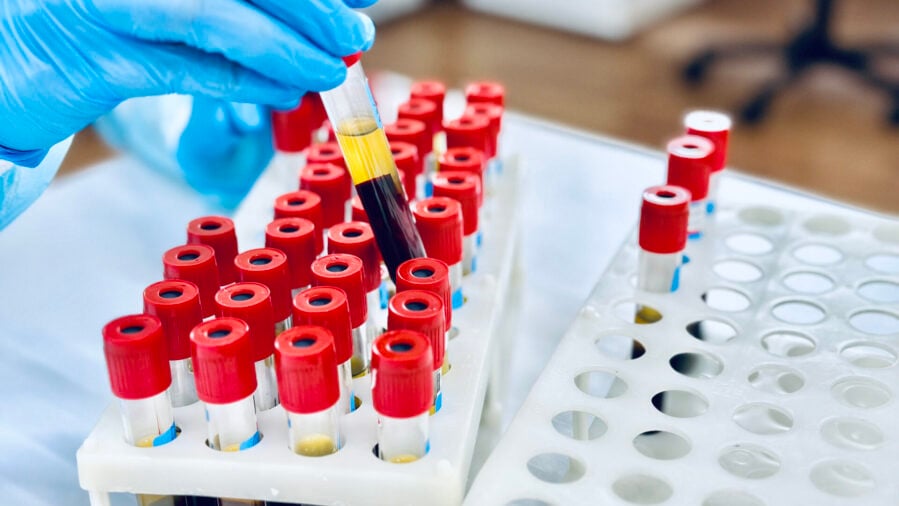
Researchers at Sinai Health and the Lunenfeld-Tanenbaum Research Institute followed 381 healthy first-degree relatives of Crohn’s patients, a group already at higher genetic risk. Among the 77 who eventually developed the disease, more than a third carried a telltale antibody response in their blood, detectable an average of two and a half years before any clinical symptoms appeared.
The immune systems of these individuals had begun attacking flagellin, a protein that acts like a tiny outboard motor helping certain gut bacteria move around. The antibodies didn’t target flagellin randomly. They converged on a specific, conserved hinge-like segment near the protein’s amino end, a pattern consistent across different patients.
When the Immune System Mistakes Friends for Enemies
The findings emerged from the Genetic, Environmental and Microbial Project, a massive international effort tracking thousands of healthy relatives since 2008. By comparing blood samples from people who stayed healthy to those who later got sick, the team spotted a recurring pattern: inflammation building quietly, the gut barrier beginning to weaken, and the immune system fixating on bacteria that should have been tolerated.
Most of the targeted microbes belonged to the Lachnospiraceae family, particularly Roseburia species, organisms normally considered beneficial. The stronger the antibody response, the more signs of gut trouble were already present, even without symptoms.
“The presence of flagellin antibodies long before any symptoms appear suggests that this immune reaction may contribute to triggering the onset of the disease, rather than being a consequence of it,” said Dr. Ken Croitoru, a clinician scientist at Sinai Health.
Siblings of Crohn’s patients showed the strongest responses, hinting that shared environments, perhaps the same kitchen table or childhood home, play a role in training the immune system to misbehave.
Before the Damage
Current treatments for Crohn’s focus on dampening inflammation after it has already scarred the intestinal lining. Even the best biological therapies often provide only partial relief. The possibility of identifying people years before they get sick opens a different door entirely.
The consistency of the immune target, that conserved hinge peptide, raises the prospect of vaccines or targeted therapies designed to retrain the immune system before permanent damage begins. Instead of waiting for someone to show up in the emergency room, future medicine might involve screening high-risk relatives and intervening while the gut is still intact.
For now, the work reframes Crohn’s disease not as a sudden failure but as a slow buildup that begins years earlier. A simple blood test may not be available tomorrow. But the question of when Crohn’s really starts has shifted. The answer, it seems, is long before anyone feels sick.
Clinical Gastroenterology and Hepatology: 10.1016/j.cgh.2025.12.001