

A new technique could reshape the future of vision correction. At the American Chemical Society’s Fall 2025 meeting, scientists from Occidental College and the University of California, Irvine introduced electromechanical reshaping (EMR), a method that remodels the cornea with a mild electric potential instead of lasers.
Unlike LASIK, which permanently cuts tissue, EMR temporarily softens the cornea before locking it into a corrected shape. Early tests in rabbit eyes suggest the approach may be safer, cheaper, and potentially reversible.
Why LASIK Works But Has Limits
The cornea accounts for about two-thirds of the eye’s refractive power, focusing light onto the retina. When the cornea is misshapen, the result is blurred or distorted vision. LASIK, short for laser-assisted in situ keratomileusis, uses precision lasers to remove tiny amounts of corneal tissue, reshaping the eye to improve focus. While effective, the procedure carries risks. Side effects can include dry eyes, glare, and weakened corneal structure.
“LASIK is just a fancy way of doing traditional surgery. It’s still carving tissue, it’s just carving with a laser,” said Michael Hill of Occidental College.
The Science Of Electromechanical Reshaping
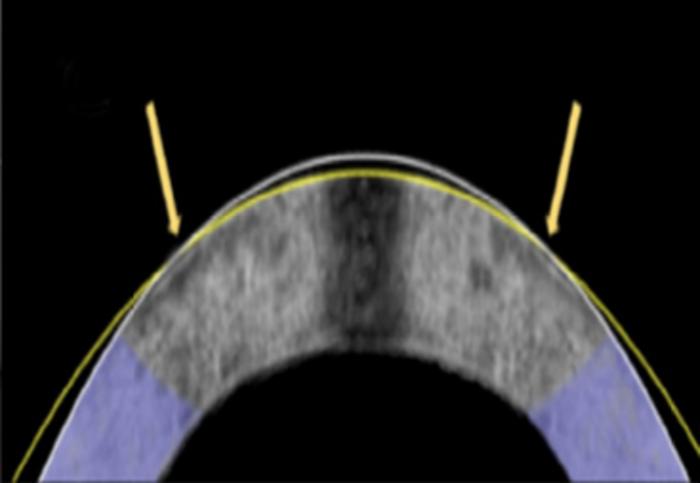
EMR takes advantage of the fact that many tissues rich in collagen, such as cartilage and cornea, can become temporarily pliable when their pH changes. Applying a small electric potential through a platinum electrode lens alters the acidity of the tissue, loosening the bonds that hold its shape. Once the normal pH returns, the cornea stiffens again, locking into a new curvature. The entire process takes about a minute, similar in speed to LASIK but without surgical cuts or costly laser equipment.
In the initial experiments, researchers built specialized platinum “contact lenses” that acted as electrodes, guiding the cornea into a corrected shape. They placed the lenses on rabbit eyes immersed in saline solution, simulating natural tears. When a gentle voltage was applied, the cornea conformed to the shape of the lens. Out of 12 test eyes, 10 were reshaped as if correcting myopia, with results showing targeted improvements in focusing power. Importantly, the corneal cells survived, thanks to precise control over the pH gradient.
Potential Beyond Vision Correction
The team has previously used EMR to reshape rabbit ears and modify scars in pigs. In the eye, the technique might extend beyond correcting nearsightedness or farsightedness. The researchers also demonstrated that EMR could reduce some types of chemically induced cloudiness in the cornea, a condition that typically requires full corneal transplantation. If validated, this could expand treatment options for patients who currently face limited choices.
What Comes Next
The work is still in its earliest stages. The next step is moving from isolated rabbit eyeballs to live animal trials. Further studies will explore whether EMR can reliably correct different refractive errors, including astigmatism, as well as test the durability of reshaping. Long-term safety will also be critical, since corneal health is central to clear vision.
As co-investigator Brian Wong of UC Irvine explained, the discovery itself was unexpected: “I was looking at living tissues as moldable materials and discovered this whole process of chemical modification.”
Despite the promise, the project faces funding uncertainty. According to Hill, “There’s a long road between what we’ve done and the clinic. But, if we get there, this technique is widely applicable, vastly cheaper and potentially even reversible.”
Broader Context
Globally, hundreds of millions of people live with uncorrected refractive errors, making vision one of the most common health issues worldwide. The World Health Organization estimates that more than 2.2 billion people experience some form of vision impairment. Techniques like EMR, if successful, could reduce the need for expensive surgeries and expand access to care in lower-resource settings. By removing lasers from the equation, researchers hope to open the door to safer and more affordable sight correction.
Proceedings: American Chemical Society Fall 2025 Meeting, Division of Inorganic Chemistry