

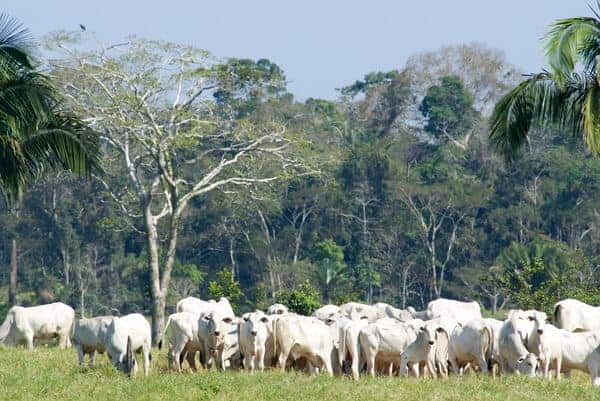
Scientists have discovered that cattle on the Indonesian island of Java carry more genetic diversity than any other cattle population on Earth, thanks to an extraordinary interbreeding event that occurred more than 1,300 years ago between domestic cattle and wild banteng.
The finding, published in Nature Communications, challenges long-held assumptions about how cattle spread across Asia and reveals a treasure trove of genetic variants that could help improve cattle breeds worldwide as they face increasing pressure from climate change and disease.
A Genetic Goldmine Hidden in Plain Sight
The Madura breed from Java contains up to 36.6% banteng ancestry, making it effectively a hybrid between two different bovine species. This ancient mixing has produced cattle with more than 3.5 million previously unknown genetic variants, according to researchers from the University of Copenhagen and IPB University who analyzed whole-genome sequences from 126 Indonesian cattle.
“Due to this high amount of banteng genetics, Madura cattle are also the most genetically diverse cattle in the world. They carry more than 3.5 million new genetic variants that are currently unknown to cattle geneticists around the globe,” said Associate Professor Rasmus Heller from UCPH, lead author on the study.
The banteng, a wild ox species native to Southeast Asia, was domesticated separately from regular cattle around 3,500 years ago on Java. Known as Bali cattle in their domestic form, these animals have historically been prized for their hardiness in tropical conditions and ability to thrive on poor-quality feed.
While admixture between cattle and wild bovines has been documented elsewhere in Asia, the scale discovered in Indonesian breeds is unprecedented. The genetic diversity in Madura cattle even exceeds that of East Asian cattle, previously considered the world’s most diverse due to their own history of wild bovine introgression.
Ancient Maritime Trade Routes Revealed
The genetic analysis also rewrote the history books on how cattle first arrived in the Indonesian archipelago. Rather than coming directly from India as previously assumed based on cultural and trade connections, the data suggests cattle arrived from mainland Southeast Asia through at least two separate waves of introduction.
“We were quite surprised to find that cattle were most likely not introduced from India, which was a significant cultural and mercantile influence around the era of Hindu-Buddhist kingdoms in the beginning of Indonesia’s historical period, but rather from mainland Southeast Asia,” explained Dr. Sabhrina Gita Aninta, a postdoc involved in the study.
One wave brought ancestors to Sumatra, while another introduced different cattle lineages to Java. The genetic dating places the Java introduction at 1,345 to 1,883 years ago, remarkably consistent with the earliest archaeological evidence of cattle on the island.
This pattern suggests that Southeast Asia had more extensive internal maritime connections than previously understood, with trade networks facilitating livestock movement independent of the major India-China routes that dominated historical narratives.
The mixing between zebu cattle and banteng appears to have been a deliberate, large-scale practice rather than occasional hybridization. Given that hybrids between these species face fertility barriers requiring several generations of backcrossing to achieve full reproduction, the high genetic diversity suggests sustained human management of the breeding process.
Climate change and growing global demand for animal protein are putting increasing pressure on cattle populations, particularly in tropical regions where temperatures are rising fastest. The newly catalogued genetic variants from Indonesian cattle could provide crucial resources for developing more resilient breeds.
Some of these variants likely influence disease resistance, heat tolerance, and greenhouse gas emissions – all critical factors as the global cattle population is expected to grow substantially in tropical regions over the coming decades.
The research team identified specific genes related to coat color, immune function, and milk production that show signs of having been under positive selection in the Indonesian breeds. Notably, several color-related genes appear to have undergone convergent evolution across different breeds, suggesting that banteng-derived coat color variants provided consistent advantages.
The findings also carry conservation implications. The banteng ancestry preserved in modern Indonesian cattle contains higher genetic diversity than exists in wild banteng populations today, suggesting that these domestic herds may actually serve as genetic repositories for their wild relatives.
However, the study also revealed concerning levels of inbreeding in some populations, particularly among Bali cattle in Australia, where a feral population descended from just 20 individuals shows severely reduced genetic diversity despite being proposed as a backup population for wild banteng conservation.
For Indonesia specifically, this research provides the first comprehensive genomic baseline for breeds that have been severely understudied compared to cattle populations in Europe, the Americas, and even Africa. This gap in knowledge has potentially limited breeding improvements and conservation efforts for animals that remain culturally and economically important throughout the archipelago.
The work represents a collaboration between the University of Copenhagen and IPB University, with support from research institutions across multiple countries, highlighting how modern genomics can illuminate both ancient history and future opportunities in livestock science.