
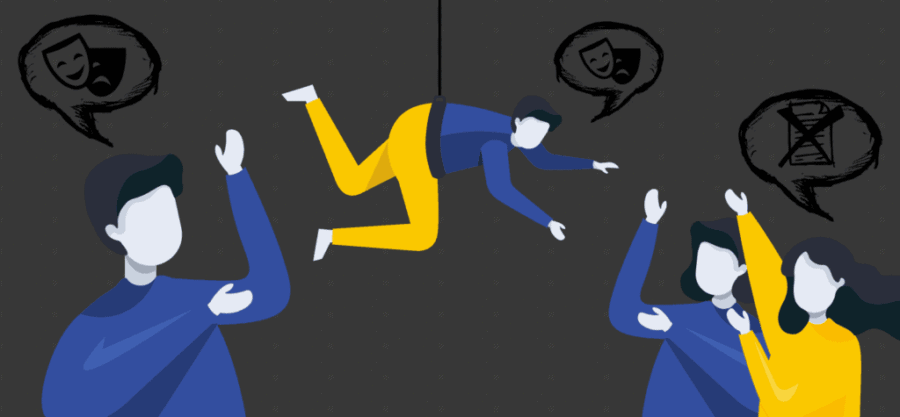
Improvisational theater training can reduce fearfulness and anxiety among teens struggling with social interactions, a new University of Michigan study suggests.
School-based improv theater—performing without a script or preparation—may be effective for social phobias and anxiety disorders because it offers a low stigma, low cost and more accessible context for help in reducing these symptoms, say U-M researchers.
Participating in improv can enhance a student’s well-being and reduce their anxiety, says lead author Peter Felsman, a graduate student in social work and psychology.
“In addition, the mutual support that improvisation rewards builds trust, helping group members feel safer taking risks and more willing to make mistakes,” he said.
Felsman and colleagues say this is the first study to examine whether improvisational training can be linked to reduced social anxiety in a school setting.
For the study, nearly 270 Detroit high school and middle school students participated in a 10-week school improvisational theater program offered by The Detroit Creativity Project. The students completed questionnaires before and after the program, allowing them to assess statements such as, “I am comfortable performing for others” and “I am willing to make mistakes.”
“These findings show that reductions in social anxiety were related to increased confidence in social skills, ability to figure out how to achieve goals and take action to do so (hope), creative ability and greater willingness to make mistakes,” said co-author Colleen Seifert, professor of psychology.
While the findings contribute to research on therapies for mental health, the study’s authors note that the study sample focuses on participants from poorer, lower-performing schools where barriers to accessing standard treatments for social anxiety are greater than in better-resourced contexts.
“For adolescents at wealthier, higher-performing schools with access to more traditional treatments, participating in improvisational theater training may predict different outcomes,” said co-author Joseph Himle, professor of social work and psychiatry. “Future research can examine this further.”
The findings appear in the current issue of The Arts in Psychotherapy.
ScienceBlog.com has no paywalls, no sponsored content, and no agenda beyond getting the science right. Every story here is written to inform, not to impress an advertiser or push a point of view.
Good science journalism takes time — reading the papers, checking the claims, finding researchers who can put findings in context. We do that work because we think it matters.
If you find this site useful, consider supporting it with a donation. Even a few dollars a month helps keep the coverage independent and free for everyone.