

BY THE time someone’s hand begins to tremble, their movements slow, their body stiffens with rigidity, the damage is already done. Half to 80% of the brain cells that produce dopamine (the ones Parkinson’s disease targets) are already damaged or dead. It’s a cruel arithmetic: diagnosis comes only after the neural catastrophe, when treatment can merely manage symptoms rather than halt the underlying destruction.
But what if there were a window, years before that first tremor, when the disease could be caught red-handed?
Researchers at Chalmers University of Technology in Sweden and Oslo University Hospital in Norway think they’ve found it: not in the brain, where Parkinson’s does its damage, but in something far more accessible. Blood. Specifically, in the patterns of gene activity that appear in blood cells during what’s called the prodromal phase of Parkinson’s, that long prelude before motor symptoms emerge.
“This means that we have found an important window of opportunity in which the disease can be detected before motor symptoms caused by nerve damage in the brain appear,” says Annikka Polster, an assistant professor at Chalmers who led the study.
The prodromal phase is strange territory. It can last up to 20 years; two decades during which Parkinson’s is quietly setting up shop in the brain whilst the person remains oblivious or experiences only subtle changes. Problems sleeping, particularly acting out dreams during REM sleep. A diminished sense of smell. Constipation, depression, anxiety. Easy to dismiss, these symptoms, as nothing more than getting older or stressed. But beneath the surface, neurons are under siege.
The research team focused on two cellular processes they suspected were involved in this early assault: DNA damage repair and something called the integrated stress response. Think of these as your cells’ emergency services – systems that detect threats and attempt to fix them before catastrophic damage occurs. When reactive oxygen species accumulate (a byproduct of the very dopamine metabolism that makes these neurons special), they attack DNA. The repair systems should spring into action. But what if, in early Parkinson’s, these systems themselves become part of the problem?
Using machine learning to analyse longitudinal blood samples from the Parkinson’s Progression Markers Initiative, the team discovered something peculiar. Gene expression patterns related to DNA repair and stress response could distinguish people in the prodromal phase from healthy individuals with remarkable accuracy: up to 91% at the 24-month mark for stress response genes, 89% for mitochondrial DNA repair genes at 36 months.
But here’s where it gets interesting: these same patterns couldn’t reliably separate people with established Parkinson’s from healthy controls. The classification accuracy dropped to barely above random chance, 50-64%.
The implication is striking. The molecular signature of disease (at least in peripheral blood) is most pronounced before symptoms appear, then fades as the disease progresses. It’s as if the body mounts a desperate, detectable response to the earliest stages of neurodegeneration, a response that either fails or becomes exhausted by the time clinical diagnosis arrives.
“By the time the motor symptoms of Parkinson’s disease appear, 50–80 per cent of the relevant brain cells are often already damaged or gone,” says Danish Anwer, a doctoral student at Chalmers and the study’s first author. “The study is an important step towards facilitating early identification of the disease.”
The gene expression data revealed something else, too: chaos before order. At the earliest prodromal timepoint, gene activity was all over the place, highly variable between individuals. But as months passed, this variability decreased. Expression patterns converged, became more uniform, suggesting that whatever compensatory mechanisms were initially activated eventually settled into a consistent, perhaps dysfunctional, state.
Many genes followed non-linear trajectories: rising then falling, or the reverse, or mixed patterns. About half the DNA repair genes and nearly three-quarters of the stress response genes showed these complex temporal dynamics. Not a simple on-off switch, but something more like a battle being fought and gradually lost.
Specific genes emerged as particularly important predictors of prodromal Parkinson’s. ERCC6, crucial for transcription-coupled DNA repair. PRIMPOL, a recently discovered enzyme essential for restarting DNA replication in mitochondria after damage. NEIL2 and NTHL1, both DNA glycosylases that repair oxidative damage to DNA bases.
That last one, NTHL1, showed especially intriguing behaviour. It ranked as a strong early marker but then its importance dropped sharply as disease progressed. Previous research in worms has shown that reducing levels of NTH-1 (the worm equivalent) is actually protective in Parkinson’s models; too much activity from this repair enzyme can generate toxic DNA break intermediates that make things worse rather than better.
It’s a reminder that DNA repair, essential as it is, can become maladaptive when overwhelmed or poorly coordinated. A system designed to fix problems instead generates new ones.
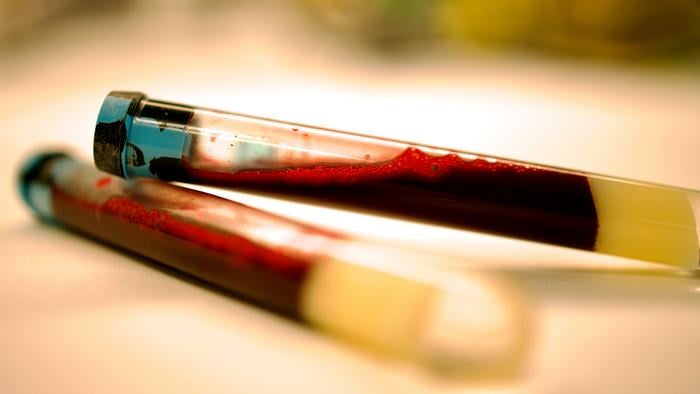
The beauty of a blood-based test, if it works, is accessibility. No spinal taps to extract cerebrospinal fluid, no expensive brain imaging, just a simple blood draw. “We highlighted biomarkers that likely reflect some of the early biology of the disease and showed they can be measured in blood,” says Polster. “This paves the way for broad screening tests via blood samples: a cost-effective, easily accessible method.”
The team believes that within five years, blood tests for early Parkinson’s diagnosis could begin to be tested in healthcare settings. It’s an ambitious timeline, but the longitudinal data (tracking the same individuals over years) provides unusually strong evidence that these molecular changes are genuinely prodromal, not just random variation.
Still, questions remain. Blood gene expression correlates only moderately with what’s happening in the brain, so peripheral signatures might miss crucial central processes. The Parkinson’s Progression Markers Initiative cohort, whilst valuable, is relatively small for the prodromal group: 58 individuals at baseline. Validation in larger, more diverse populations will be essential. And there’s the uncomfortable fact that not everyone in the prodromal group will necessarily convert to clinical Parkinson’s disease. The markers might be detecting something real, but will they distinguish between those who progress and those who don’t?
Then there’s the question of what you do with early diagnosis. At present, there’s no treatment proven to slow or stop Parkinson’s progression. But that might be precisely because trials have always enrolled people after extensive brain damage has already occurred. If these biomarkers hold up, they could enable trials of neuroprotective interventions during that 20-year prodromal window, when perhaps there’s still something left to protect.
“If we can study the mechanisms as they happen, it could provide important keys to understanding how they can be stopped and which drugs might be effective,” says Polster. She mentions the possibility of drug repurposing: taking medicines developed for other conditions that affect the same molecular pathways and testing whether they might help in early Parkinson’s.
The research adds to a growing recognition that Parkinson’s isn’t just about the dramatic motor symptoms we associate with the disease. It’s a process, a trajectory that begins years before diagnosis, when cells are struggling to cope with accumulating damage but haven’t yet given up entirely. That struggle leaves traces: in DNA repair patterns, in stress responses, in the complex non-linear dynamics of genes trying to mount a defence.
Finding those traces in something as accessible as blood could transform how we think about Parkinson’s. Not as a disease that announces itself with a tremor, but as one we might recognise whilst there’s still time to intervene. Whether those interventions exist yet is another question, but you can’t develop them without first being able to see the enemy coming.
More than 10 million people worldwide live with Parkinson’s disease, a number expected to more than double by 2050 as populations age. For many of them, the disease was already well established before anyone knew to look. The hope is that future generations won’t have to wait for the tremor to know something’s wrong.
Study link: https://www.nature.com/articles/s41531-025-01194-7