

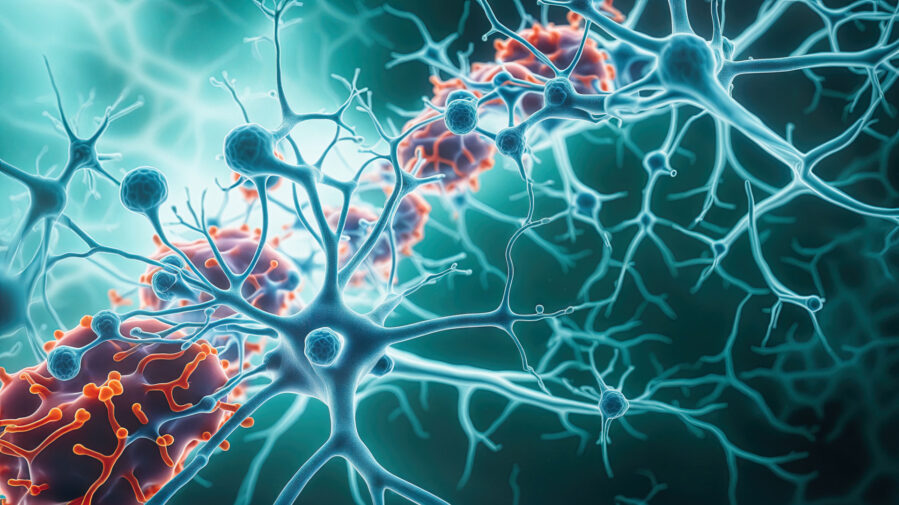
A preclinical study from Cedars-Sinai suggests that super-charging an enzyme already present in the brain’s immune cells can sweep away toxic amyloid plaques, rescue damaged synapses, and restore learning and memory in an aggressive mouse model of Alzheimer’s disease.
The research, published today in Nature Aging, shows that boosting angiotensin converting enzyme (ACE) specifically inside microglia reversed hallmark symptoms of the disorder, raising an exciting question for patients and caregivers alike: could an enzyme upgrade someday do for human brains what it just did for mice?
Why Microglia Matter
Microglia act as housekeepers, patrolling neural neighborhoods and removing debris. In Alzheimer’s disease these cells often become exhausted, allowing amyloid-beta proteins to clump into plaques that choke neurons. Senior author Warren Tourtellotte explained, “We found that by using gene editing to boost ACE in immune cells called microglia, which we believe become exhausted in the brains of patients with Alzheimer’s disease, we supercharged those cells and seemed to restore them to full function,” he said.
Study Snapshot
Researchers engineered 5xFAD mice — a well-established amyloid model — so their microglia overproduced ACE. After nine months the high-ACE mice had dramatically fewer plaques, healthier neurons, and stronger connections between them compared with untreated littermates.
Key Findings
- Plaque burden fell by up to 50 percent in cortex, hippocampus, and amygdala.
- Neuron and synapse loss was largely prevented, preserving communication circuits.
- Learning latency in the Barnes maze dropped to near normal, and fear-conditioning memory rebounded.
- The benefits depended on microglial ACE activity and activation of spleen tyrosine kinase (SYK) pathways.
Expert Perspective
“Scientific discovery is the key to developing treatments that will help us overcome Alzheimer’s disease, which affects more than 7 million people in the U.S. and those who love them,” said Nancy L. Sicotte, chair of Neurology at Cedars-Sinai. She called the results “a promising new direction for future work and possible new treatments.”
How the Enzyme Works
ACE normally turns angiotensin I into angiotensin II to regulate blood pressure. Inside microglia it also appears to rev up endolysosomal trafficking, sharpen phagocytosis, and fuel metabolic pathways that power cell migration toward plaques. When researchers blocked SYK signaling or inhibited ACE’s catalytic core, the cleanup stalled, underscoring a mechanistic link.
What Comes Next?
Before any clinical therapy, scientists must confirm that human microglia respond the same way. The team is now testing patient-derived cells in culture and exploring nanoparticle and cell-based delivery strategies that could insert ACE-enhanced microglia into the aging brain. Will an enzyme upgrade translate from mice to people? The answer could redefine how we tackle neurodegenerative disease.
Real-World Context
Current Alzheimer’s drugs either modify amyloid or target downstream inflammation, yet benefits remain modest. This study combines both strategies inside one cell type, hinting at a synergistic route that complements existing antibody infusions and emerging gene therapies. If successful, microglial enzyme enhancement could join the growing toolbox aimed at delaying or even reversing cognitive decline.
Journal & Funding Information
Study published in Nature Aging
DOI 10.1038/s43587-025-00879-1
Funding provided by NIH grants RF1-AG074365, R01-AG074365, R01-AI164519, and a Cedars-Sinai Goldrich Alzheimer’s Center grant.