Skip to content
ScienceBlog.com
  • Featured Blogs
    • EU Horizon Blog
    • ESA Tracker
    • Experimental Frontiers
    • Josh Mitteldorf’s Aging Matters
    • Dr. Lu Zhang’s Gondwanaland
    • NeuroEdge
    • NIAAA
    • SciChi
    • The Poetry of Science
    • Wild Science
  • Topics
    • Brain & Behavior
    • Earth, Energy & Environment
    • Health
    • Life & Non-humans
    • Physics & Mathematics
    • Social Sciences
    • Space
    • Technology
  • Our Substack
  • Follow Us!
    • Bluesky
    • Threads
    • FaceBook
    • Google News
    • Twitter/X
  • Contribute/Contact

Uncategorized

gold leaf

Medieval Alchemy Goes Nuclear: LHC Creates Gold from Lead

Like the teeth of a comb, a microcomb consists of a spectrum of evenly distributed light frequencies. Optical atomic clocks can be built by locking a microcomb tooth to a ultranarrow-linewidth laser, which in turn locks to an atomic transition with extremely high frequency stability. That way, frequency combs act like a bridge between the atomic transition at an optical frequency and the clock signal at a radio frequency that is electronically detectable for counting the oscillations – enabling extraordinary precision. The researchers’ photonic chip, on the righthand side of the image, contains 40 microcombs generators and is only five millimeters wide.

Tiny Light-Based Chips Could Make Your GPS Accurate to the Centimeter

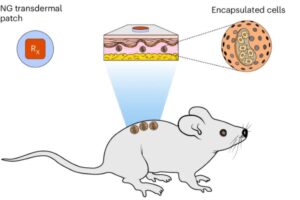
Transdermal patch infographic

Simple Skin Patch Could Control Next-Gen Cell Therapies for Diabetes

View of Palmyra with the Temple of Bel, Syria

80% of Ancient Wonder Palmyra Destroyed In Wake of Assad Ouster

A happy looking senior woman

Happy Mind, Active Body: Mental Wellbeing Helped Older Adults Stay Active During Pandemic

MIT chemical engineers designed a two-part catalyst that can convert methane gas to useful products. The catalyst consists of iron-modified aluminum silicate plus an enzyme called alcohol oxidase (enzyme not pictured).

New Catalyst Turns Problematic Methane into Useful Materials at Room Temperature

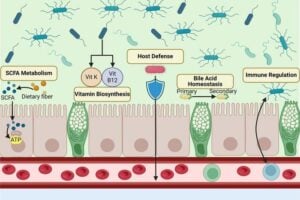
Functions of the gut microbiome. Created with BioRender.com. SCFA, short chain fatty acids.

Gut Microbiome Emerges as Key Player in Multiple Chronic Diseases

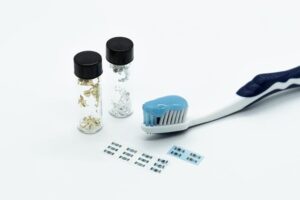
A toothpaste-based transistor is the latest innovation from the research team at the Istituto Italiano di Tecnologia in Milan.

Edible Electronics Advance: Toothpaste-Based Transistor Developed

An image of biomolecules, such as nucleic acids, lipids and proteins, in live cells using an imaging technique called infrared (IR) transmission microscopy. Credit: Y. Lee/NIST

New IR Imaging Technique Reveals Biomolecules in Living Cells

Visitors are often surprised and amused by the results of the Cybernetic Humanity Studio’s facial morphing technology.

Face-Morphing Study Challenges Core Ideas About Self-Recognition

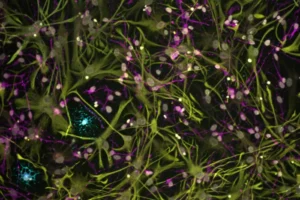
Glia-enriched cultures from a primary progressive multiple sclerosis iPSC line showing astrocytes (yellow), oligodendrocytes (cyan), and neurons (magenta)

Stem Cell Models Uncover Crucial Role of Brain Cells in Multiple Sclerosis

Men on bed

Breakthrough Coating for Antipsychotics Cuts Weight Gain and Boosts Effectiveness

Harbor porpoises need to eat 2000 fish a day to meet their energy needs. Not because it's demanding to swim, dive and hunt as they are streamlined and very energy efficient. They simply need vast amounts of energy to keep warm in the cold water.

Noisy Motorboats Disrupt Hunting and Threaten Survival of Denmark’s Harbor Porpoises

covid vaccine collage

Global Survey Reveals High Vaccine Confidence Amid COVID-19 Pandemic Fatigue

Older posts
Newer posts
← Previous Page1 Page2 Page3 … Page2,393 Next →
Substack subscription form sign up

Comments

  • Karoly Mirnics on Common Prescription Drugs May Disrupt Cholesterol Pathways in the Womb and Raise Autism Risk
  • Aizen on Laziness helped lead to extinction of Homo erectus
  • Norwood johnson on Electrons in New Crystals Behave as If They Live in Four Dimensions
  • ScienceBlog.com on Hidden Geometry Could Finally Fix Quantum Computers
  • Theo Prinse on America Is Going Back to the Moon. This Time, It Plans to Stay
© 2026 ScienceBlog.com | Follow our RSS / XML feed