

Researchers have discovered that cells can clean up damaged mitochondria using a surprising backup system—one that doesn’t rely on the traditional machinery long thought essential.
The finding, published in Nature Cell Biology, reshapes how scientists understand mitophagy, the process by which cells dispose of dysfunctional mitochondria, and could help guide new therapies for neurodegenerative diseases like Parkinson’s.
Beyond the Classic Pathway: A New Route to Mitophagy
Until now, most research on mitophagy has focused on the PINK1/Parkin pathway, where damaged mitochondria are tagged and cleared by autophagosomes. This process is thought to require FIP200, a protein scaffold that recruits the rest of the autophagy machinery.
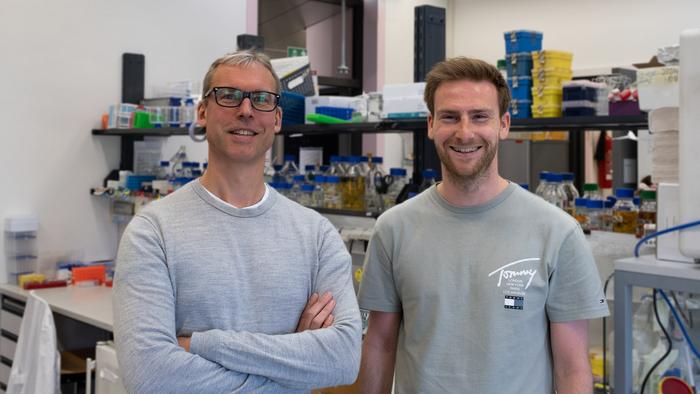
But the new study, led by Elias Adriaenssens and Sascha Martens at the Max Perutz Labs, shows that two mitochondrial receptors—BNIP3 and NIX—can bypass FIP200 entirely. Instead, they recruit a different group of proteins called WIPIs, which were previously assumed to act only later in the autophagy process.
Key Findings from the Study
- BNIP3 and NIX initiate mitophagy without binding to FIP200
- Instead, they bind WIPI2 and WIPI3, previously considered downstream components
- This WIPI recruitment is sufficient to trigger autophagosome formation
- The WIPI–ATG13 interaction is critical for this alternative mitophagy pathway
- Other receptors like TEX264 and FKBP8 also use both WIPI and FIP200 pathways
A New Hierarchy of Autophagy Assembly
By reconstituting the early stages of autophagy in vitro, the researchers showed that WIPI proteins can recruit and activate the ULK1 complex—the same machinery typically brought in by FIP200. This inversion of the usual sequence was unexpected, revealing that WIPI proteins can serve as upstream initiators rather than mere intermediaries.
“Instead of a single, universal mechanism, cells appear to use different molecular strategies depending on the receptor and context,” said Adriaenssens, calling it “a parallel trigger for selective autophagy.”
Even more striking, simply tethering WIPI2 to the mitochondrial surface was enough to initiate mitophagy, proving that WIPIs can kickstart the process without any other known initiators.
Why It Matters for Parkinson’s Disease
Mitophagy is especially important in neurons, where damaged mitochondria are linked to the progression of Parkinson’s disease. While therapies have focused on restoring PINK1/Parkin signaling, this new WIPI-mediated pathway offers an alternative route—especially if the main system is compromised.
The research opens the door to selective therapies that could amplify one pathway when another fails, potentially improving cellular health in neurodegenerative conditions.
Looking Ahead: A More Flexible Autophagy Framework
This discovery also suggests that other transmembrane receptors may trigger autophagy through similar WIPI-based routes. The team found that receptors like TEX264 and FKBP8, which are involved in ER-phagy and mitophagy respectively, also bind WIPI2, hinting at a broader, conserved mechanism across organelles.
“Cells may be using this flexibility to fine-tune their cleanup operations under different stresses or conditions,” said Martens.
For now, the study marks a fundamental shift in how we understand autophagosome initiation. It challenges decades-old assumptions and points to a more modular, context-dependent model—one with exciting potential for therapeutic intervention.
Journal
Nature Cell Biology