

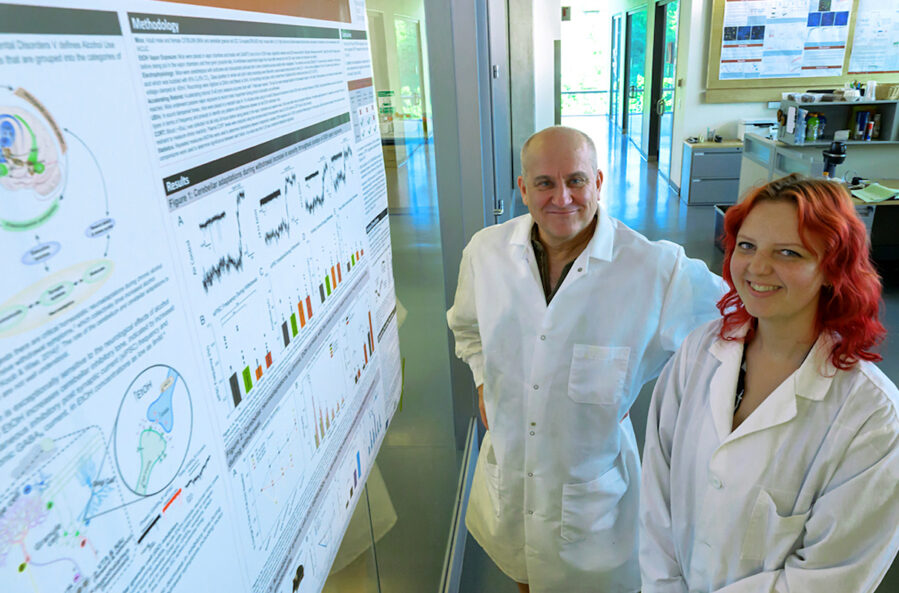
The answer to one of addiction medicine’s most stubborn problems might be hiding in plain sight, tucked into a walnut-sized region at the back of the brain that scientists have long associated with little more than balance and coordination.
Researchers at Washington State University have found they can dramatically reduce the physical and emotional torment of alcohol withdrawal by targeting the cerebellum, a brain structure that houses half of all neurons in the human brain but has been largely overlooked in addiction research. The findings, published in the journal Neuropharmacology, could reshape how doctors help the estimated 29 million Americans struggling with alcohol use disorder.
The study used mice to model the kind of binge drinking common among college students: sustained exposure to alcohol vapor for 48 to 72 hours, followed by abrupt cessation. What the researchers discovered was a precise neurological adaptation. Chronic alcohol exposure essentially rewires the cerebellum to function normally only in the presence of alcohol. Remove the alcohol, and the brain enters a hyperactive state that triggers the shaking, anxiety, and motor problems that send so many people back to drinking.
Two Paths to Relief
The team tested two different approaches to counteract this withdrawal state. The first used genetic modification to insert special receptors into cerebellar neurons that acted like off switches, calming overactive brain activity. While effective at improving motor coordination in mice, this approach is not realistic for human treatment.
The second strategy proved far more promising. The researchers used a synthetic compound called Compound 6, developed by chemists in Austria, that targets a receptor found exclusively in the cerebellum. When given to mice in withdrawal, the drug eased anxiety without affecting the rest of the brain.
“Our research suggests the cerebellum could be a promising therapeutic target to help people get through the most difficult stage of alcohol use disorder. By targeting the cerebellum, we were able to ease both the physical motor discoordination and the emotional distress of withdrawal, the symptoms that so often drive people back to drinking.”
That quote comes from Nadia McLean, the study’s lead author and a doctoral researcher in Washington State’s Department of Integrative Physiology. She points out something that might surprise most people: alcohol use disorder is the nation’s third-leading preventable cause of death, trailing only cigarette smoking and obesity. Despite a range of available treatments, fewer than one in five people with the disorder manage to maintain long-term sobriety.
Rethinking an Old Structure
Most addiction research has focused on the brain’s reward centers, the circuitry that makes alcohol feel good in the first place. But David Rossi, the study’s senior author and McLean’s advisor, says the cerebellum deserves more attention. It is increasingly clear this region does far more than coordinate movement. It plays roles in addiction, emotional regulation, and even social engagement.
The cerebellum responds to alcohol concentrations as low as 9 millimolar, about half a standard drink. What happens during chronic exposure is a kind of neurological compensation. The brain adapts to function with alcohol present, dialing down its normal inhibitory signaling. Pull the alcohol away, and those adaptations become liabilities.
The researchers measured this precisely, using patch-clamp recordings to track electrical activity in individual neurons. After 48 hours of alcohol exposure, they observed a significant decrease in inhibitory signaling frequency. This change paralleled the onset of both motor impairment (measured by how long mice could stay on an accelerating rotating rod) and emotional distress (measured by ultrasonic vocalizations and stress hormone levels).
Compound 6 showed low abuse potential in the study. Mice not experiencing withdrawal found the drug aversive, suggesting it would not become a substance of misuse itself. The compound works by enhancing a specific type of inhibitory current in cerebellar neurons, essentially restoring the brain’s normal balance without broadly sedating the entire nervous system.
“What makes this approach exciting is that we’re looking at ways to target a very specific brain region and receptor, instead of applying a broad treatment that comes with side effects. If we can take away the worst part of withdrawal, even temporarily, people may be better able to succeed with counseling or other long-term treatments for AUD.”
Clinical trials remain far off, but the research establishes proof of concept. The study used C57BL6/N mice, a strain that does not naturally prefer alcohol, which may actually make the findings more relevant. Alcohol use disorder is only 50 to 60 percent genetically determined, meaning environmental and adaptive factors play crucial roles for a large portion of people who develop drinking problems.
The researchers also found that simply giving mice alcohol during withdrawal reduced their symptoms, which fits with the negative reinforcement cycle that traps people with alcohol dependence. The relief is temporary but powerful enough to drive continued drinking.
One particularly interesting finding involved the different types of inhibitory signaling in cerebellar neurons. The genetic approach (using the engineered off switches) improved motor coordination but not emotional symptoms. Compound 6 did the opposite, easing anxiety but not motor problems. This suggests that different aspects of withdrawal may require different treatment strategies, or possibly a combination approach.
The cerebellum’s role in emotional processing may seem counterintuitive for a structure traditionally associated with motor control, but recent research has revealed extensive connections between the cerebellum and brain regions involved in reward, addiction, and emotional regulation. The structure projects to areas like the prefrontal cortex and ventral tegmental area, both central to addiction pathways.
For now, the research offers something that has been in short supply in addiction medicine: a genuinely novel target. Whether Compound 6 or related drugs will eventually help people remains to be seen, but the basic finding that cerebellar-specific interventions can reduce withdrawal symptoms opens new avenues for drug development. The cerebellum, it turns out, may be far more important to addiction than anyone suspected.