

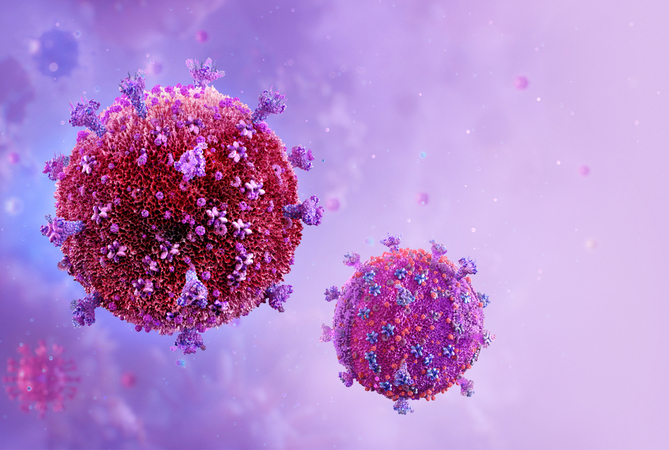
In a counterintuitive twist on traditional vaccine development, researchers are betting that children might hold the key to finally cracking HIV’s decades-old armor. A multi-institutional team led by Weill Cornell Medicine just landed a $20.8 million NIH grant to develop what could become the world’s first effective HIV vaccine, but there’s a catch: it might only work in young immune systems.
The five-year funding from the National Institute of Allergy and Infectious Diseases will advance preclinical development of an experimental vaccine that early studies suggest performs best when given to infants and children. It’s a radical departure from the usual approach of testing vaccines in adults first.
“It may be that our only opportunity for an effective HIV vaccine is to test it as a childhood vaccine.”
Dr. Sallie Permar, who leads the project as chair of pediatrics at Weill Cornell Medicine, isn’t mincing words about the stakes. With 1.3 million new HIV infections in 2024 and 41 million people currently living with the virus worldwide, the need for prevention has never been more urgent. Current treatments can keep people healthy, but they require lifelong medication regimens.
The experimental vaccine tackles one of HIV’s most devious survival tricks. The virus constantly mutates its most visible proteins, essentially playing an endless shell game with the immune system. Meanwhile, its more stable entry points remain hidden behind sugar molecules called glycans, like a fortress protected by an ever-shifting camouflage.
A Quarter-Century Quest Bears Fruit
The vaccine candidate builds on 25 years of painstaking research into HIV’s outer envelope protein, called Env. Scientists led by Dr. John Moore at Weill Cornell Medicine, working with colleagues at Amsterdam UMC and Scripps Research, have engineered stable versions of Env’s natural three-part structure. Think of it as creating a practice target that teaches the immune system to recognize HIV’s vulnerable spots.
Their latest creation, the BG505 GT1.1 SOSIP trimer, represents the most sophisticated decoy yet developed. It’s designed to be given in a series of shots that gradually train antibodies to attack HIV’s weak points across multiple virus strains.
But here’s where things get interesting: preliminary trials in adults and studies in rhesus macaques suggest this approach only generates sufficient protective antibodies in young immune systems. It’s as if the adult immune system has already set its ways, while children’s more flexible defenses can learn these complex recognition patterns.
“This is good news for the potential success of the vaccine, as the number of boosts and length of time needed to achieve an effective anti-HIV response make it optimal to place an HIV vaccine within the childhood vaccine schedule.”
Real-World Challenges in High-Risk Regions
The research team, including co-investigator Dr. Kristina De Paris from UNC School of Medicine, faces complex logistical puzzles. Dr. Ashley Nelson will optimize dosing schedules and immune-boosting adjuvants, while Dr. Genevieve Fouda will examine how the HIV vaccine might interact with standard childhood immunizations.
The interaction question is particularly crucial in sub-Saharan Africa, where mother-to-child HIV transmission rates remain high. Newborns there might receive protective antibodies during breastfeeding while simultaneously getting routine vaccines and the experimental HIV shot. No one yet knows how this immunological juggling act might affect protection levels.
Testing will occur in rhesus macaques at UC Davis, where Dr. Koen Van Rompay will evaluate whether the childhood approach can finally produce the broadly neutralizing antibodies that have proven so elusive in adult trials.
The timeline stretches ahead uncertainly. If animal studies prove promising, human trials in infants would still be years away, requiring extensive safety data and regulatory approval. But for researchers who have watched HIV outmaneuver every vaccine attempt for four decades, the childhood strategy represents a genuinely new angle of attack.
Whether this gamble on young immune systems will pay off remains to be seen. But in a field where conventional approaches have repeatedly failed, sometimes the most unconventional path forward is the only one left to try.