

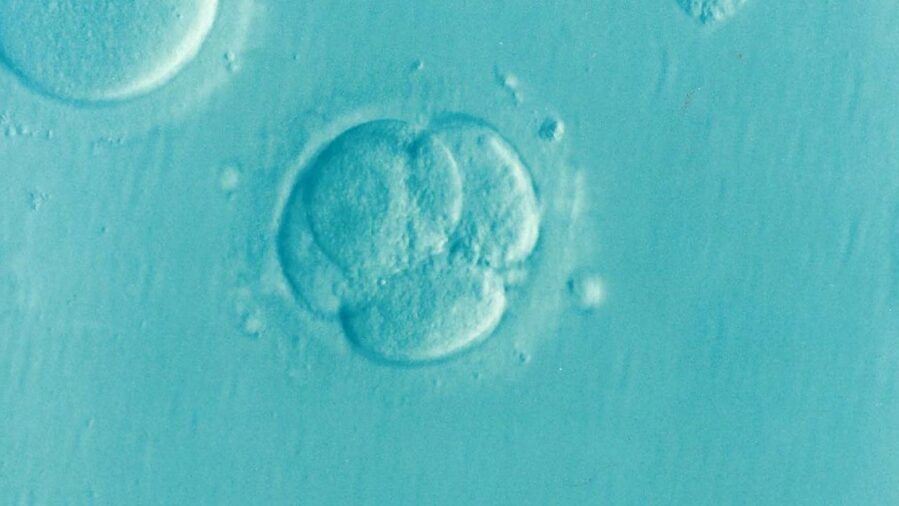
Eight babies have been born healthy using a pioneering IVF technique that prevents the transmission of devastating mitochondrial diseases, according to results published in The New England Journal of Medicine.
The UK-developed treatment, called pronuclear transfer or “mitochondrial donation,” involves transferring nuclear DNA from parents into a donor egg to create embryos with genetic material from three people—effectively giving children healthy mitochondria while preserving their parents’ essential characteristics.
All eight children, including one set of identical twins, show no signs of mitochondrial DNA disease and are meeting normal developmental milestones. The babies were born to seven women at high risk of passing on serious inherited conditions that can affect the heart, brain, and muscles.
Preventing Inherited Energy Production Disorders
Mitochondrial diseases affect approximately one in 5,000 children and result from mutations in the DNA contained within mitochondria—the cellular powerhouses that produce energy for life. These maternally inherited conditions can cause devastating symptoms including vision loss, heart problems, muscle weakness, and developmental delays, with no current cure available.
The Newcastle University team developed pronuclear transfer as a way to break the cycle of inherited mitochondrial disease. The technique transplants the nuclear genome containing parents’ individual characteristics into a donated egg with healthy mitochondria, ensuring children inherit their parents’ traits while receiving functional energy-producing cellular components.
“As parents, all we ever wanted was to give our child a healthy start in life. Mitochondrial donation IVF made that possible,” said the mother of one baby girl. “After years of uncertainty this treatment gave us hope—and then it gave us our baby.”
Encouraging Early Results Show Treatment Effectiveness
The research team, led by Newcastle University and Newcastle Hospitals NHS Foundation Trust, monitored the babies from birth through their current ages. Disease-causing mitochondrial DNA mutations were either undetectable or present at very low levels—well below the 80% threshold typically required for clinical symptoms to appear.
In five babies, no disease-causing mutations were detectable. Three babies showed low levels ranging from 5% to 20% in blood and urine samples, but these remain far below dangerous thresholds. Notably, one child whose initial tests showed 5-9% mutation levels later showed undetectable levels at 18-month follow-up.
Clinical Outcomes and Health Monitoring:
- Eight babies born healthy with normal birth weights
- All children meeting developmental milestones at follow-up
- Disease-causing mutations undetectable in five babies
- Three babies with low mutation levels well below disease threshold
- Comprehensive 18-month developmental monitoring program established
Minor Health Issues Unrelated to Treatment
Three children experienced minor health conditions that researchers believe are unrelated to the mitochondrial donation procedure. One baby developed brief muscle startles that resolved without treatment after three months. Another child had elevated blood fats, successfully managed through dietary changes, and a heart rhythm abnormality being treated with medication. A third child experienced a urinary tract infection that responded quickly to antibiotics.
Professor Bobby McFarland, Director of the NHS Highly Specialised Service for Rare Mitochondrial Disorders, emphasized the importance of continued monitoring: “While longer term follow-up of children born following mitochondrial donation is of paramount importance, these early results are very encouraging. Seeing the joy and relief these children have brought to their parents is such a privilege.”
Addressing Technical Limitations
The technique faces a known limitation called “carryover,” where some maternal mitochondria transfer along with the nuclear DNA during the procedure. This explains why some babies still carry low levels of disease-causing mutations, though at levels considered safe.
Professor Mary Herbert, lead author of the reproductive outcomes study, acknowledged this challenge: “Mitochondrial donation technologies are currently regarded as risk reduction treatments owing to carryover of maternal mitochondrial DNA during the mitochondrial donation procedure. Our ongoing research seeks to bridge the gap between risk reduction and prevention of mitochondrial DNA disease by addressing this problem.”
The technique achieved clinical pregnancies in 36% of patients who underwent pronuclear transfer, compared to 41% for those who received preimplantation genetic testing, an alternative approach offered to women with lower mutation levels.
Global Pioneering in Reproductive Medicine
The UK became the first country to legalize mitochondrial donation in 2015 following extensive public debate and scientific review. Newcastle Fertility Centre received the first clinical license in 2017, with Australia subsequently changing its laws to permit the technique.
Professor Sir Doug Turnbull, part of the Newcastle team, highlighted the broader significance: “Mitochondrial disease can have a devastating impact on families. Today’s news offers fresh hope to many more women at risk of passing on this condition who now have the chance to have children growing up without this terrible disease.”
The research continues with plans to follow the children until age five, providing crucial long-term safety data for this pioneering reproductive technology that offers new hope to families affected by mitochondrial diseases.
