

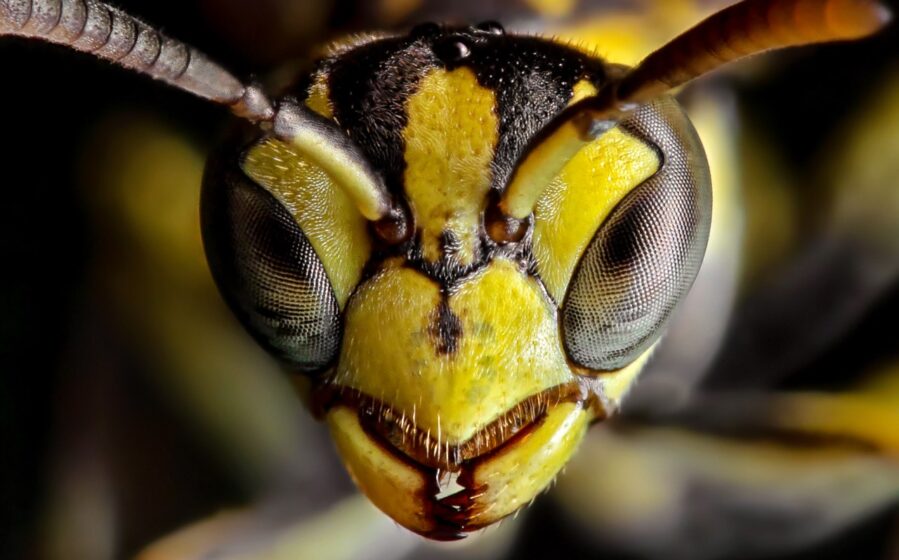
Jumping spiders have evolved such convincing visual disguises that they can fool artificial intelligence algorithms into mistaking them for wasps and other predatory insects.
University of Cincinnati researchers tested 62 spider species using computer vision and machine learning, discovering that some male peacock spiders mimic predator faces so effectively that AI misidentifies them as wasps more than 20% of the time during courtship displays.
The study, published in Behavioral Ecology, reveals how these tiny Australian spiders exploit female sensory responses through sophisticated visual deception that works even on objective computer analysis.
Computer Vision Reveals Evolutionary Deception
The research began with observations of Maratus vespa, a peacock jumping spider whose Latin name literally means “wasp.” During courtship, males lift their abdomens to reveal colorful patterns that remarkably resemble wasp faces, complete with side flaps that create the distinctive guitar-pick shape of wasp facial features.
When travel restrictions prevented field research, the team turned to artificial intelligence for an objective assessment. They fed digital images of jumping spiders, praying mantises, wasps, and flies into machine learning algorithms to test whether computers could correctly identify each species.
“The original idea was inspired by one species, a peacock jumping spider called Maratus vespa, which is Latin for wasp,” explained Olivia Harris, UC doctoral student and lead author. “That got us thinking. Why would a spider want to look like a wasp, which is a predator of spiders, especially as a primary element of its courtship display?”
Strategic Timing Maximizes Deception
The AI analysis revealed that 13 of the 62 species consistently triggered misidentification rates of 20% or higher, with most mistakes categorizing spiders as wasps. The computer vision system correctly identified only 13 species every time, while misclassifying the remaining species nearly 12% of the time overall.
Crucially, the mimicry appears most effective during the initial stages of courtship when males position themselves at greater distances from females. At these ranges, females rely on their lateral eyes, which see only in monochrome green and are more susceptible to the visual trick.
Key Findings from the Computer Analysis:
- 13 spider species fooled AI algorithms more than 20% of the time
- Misidentification peaked during distant courtship phases
- Monochrome lateral vision makes females more vulnerable to deception
- Males break the illusion when females get closer
- Strategy appears unique among documented predator mimicry cases
Sensory Exploitation in Action
The strategy works because spiders instinctively freeze and focus intently when they spot potential predators at a distance. This “deer in headlights” response gives male spiders precious moments to capture female attention and begin their elaborate courtship routines.
“This is the only case we’ve found of males mimicking a predator visually,” Harris noted, distinguishing the behavior from other deceptive courtship strategies like moths that simulate bat echolocation sounds.
As females move closer, their front-facing, color-detecting eyes take over, revealing the true identity of the suitor. Males facilitate this transition by lifting their front legs to frame their colorful displays while simultaneously hiding their more wasp-like features.
Evolutionary Balance Prevents Overdependence
Associate Professor Nathan Morehouse, study co-author, emphasized that the deception must be temporary to remain evolutionarily viable. Prolonged mimicry would prevent females from making informed mate choices, ultimately harming the species.
“Females will not be fooled forever. If they were, they would be robbed of the ability to make mate choices, which would put the species at a long-term disadvantage,” Morehouse explained. “It’s beneficial for the males to break the illusion.”
The research demonstrates what biologists call “sensory exploitation”—the use of existing sensory biases to influence behavior. In this case, male spiders hijack anti-predator responses that evolved for survival and redirect them toward reproductive success.
The team plans to validate their computer vision findings through behavioral experiments with live female jumping spiders, testing whether the visual mimicry actually influences courtship success in real-world scenarios.
“They use predator cues to manage attention and put the female on her back foot — or feet,” Morehouse observed. “There’s a lot of nuance to this interaction for the males to remain safe and for the courtship to have beneficial outcomes for both.”
The findings add jumping spiders to a growing list of animals that employ sophisticated visual deception, demonstrating how evolution can produce remarkably complex solutions to the fundamental challenge of attracting mates while avoiding genuine threats.