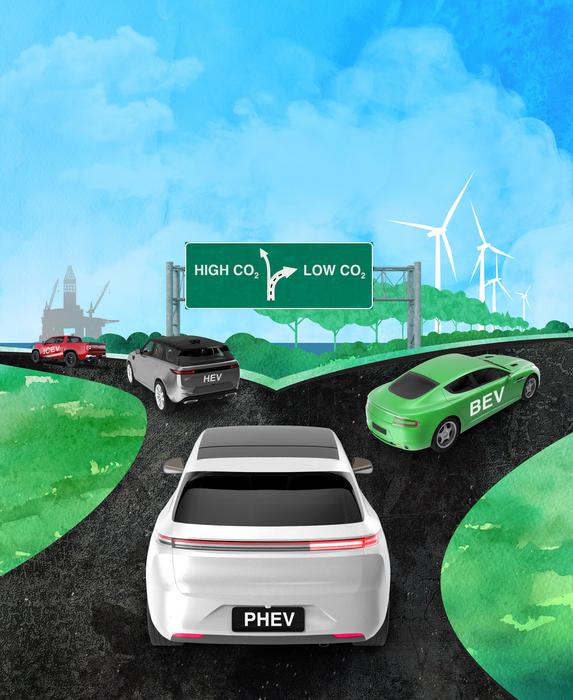
Electric vehicles cut pollution no matter where you live. A sweeping new University of Michigan study finds that battery electric vehicles have lower lifetime greenhouse gas emissions than gasoline, hybrid, or plug-in hybrid cars in every county across the contiguous United States. The research, published in Environmental Science & Technology, compared 35 vehicle and powertrain combinations in a cradle-to-grave analysis and confirmed that choosing a more electrified option always reduces climate pollution.
A Nationwide Accounting of Emissions
The team evaluated emissions from manufacturing, driving, and disposing of vehicles. They compared internal combustion engines (ICEVs), hybrids (HEVs), plug-in hybrids (PHEVs), and fully electric models (BEVs) across sedans, SUVs, and pickups. Local factors such as temperature, driving style, and regional power grid mix were also included, producing an apples-to-apples comparison from rural Pennsylvania to desert New Mexico.
On average, ICE pickups were the dirtiest option at 486 grams of CO2 equivalent per mile. Hybrid pickups reduced that by 23 percent, while electric pickups cut emissions by 75 percent. Compact BEV sedans had the lowest emissions overall at 81 grams per mile, less than 20 percent of a gas-powered pickup.
Cradle-to-Grave Methods
Unlike studies that only measure tailpipe pollution, this analysis included battery production and end-of-life disposal. Vehicles with longer battery ranges had slightly higher manufacturing emissions, but still performed better overall than gas vehicles. The study also provided the first assessment of cargo-hauling impacts, showing that even when carrying 2,500 pounds, a BEV pickup emitted less than 30 percent of an empty ICE pickup.
“Vehicle electrification is a key strategy for climate action. Transportation accounts for 28% of greenhouse gas emissions and we need to reduce those to limit future climate impacts such as flooding, wildfires and drought events, which are increasing in intensity and frequency.” — Greg Keoleian, senior author of the study and professor at the U-M School for Environment and Sustainability
Implications for Drivers and Policy
For consumers, the message is simple: going electric lowers emissions in every scenario. Downsizing vehicles offers an additional reduction. Keoleian emphasized the importance of matching vehicle choice with actual needs, noting that tradespeople may need electric pickups while commuters could maximize benefits with smaller sedans.
The U-M team also released a free online calculator that allows drivers to estimate their personal emissions based on vehicle type, driving habits, and location. Policymakers and manufacturers can use the findings to guide decisions as EV adoption expands, even as federal incentives change. Industry leaders such as Ford have announced new EV platforms, underscoring a long-term shift toward electrification.
Key Findings
- Scope: Analysis covered 35 vehicle and powertrain combinations, including sedans, SUVs, and pickups.
- Sample: Applied to all 3,108 counties in the contiguous United States.
- Average emissions: ICE pickups at 486 g CO2e/mile; BEV sedans at 81 g CO2e/mile.
- Comparisons: BEVs produced lower lifetime emissions than all other vehicle types in every county.
- Cargo effect: Carrying 2,500 lbs increased BEV pickup emissions by 13%, ICE pickup by 22%.
- Downsizing impact: Smaller vehicles consistently lowered emissions across all powertrains.
- Tool: Free online emissions calculator developed for consumers and policymakers.
Takeaway
Electric vehicles have lower lifetime greenhouse gas emissions than gasoline, hybrid, or plug-in hybrid vehicles in every U.S. county. Choosing a smaller, fully electric model maximizes climate benefits, while even electric pickups carrying heavy loads outperform gas alternatives. The findings provide a comprehensive basis for consumer decisions and policy planning.
Journal: Environmental Science & Technology
DOI: 10.1021/acs.est.5c05406