

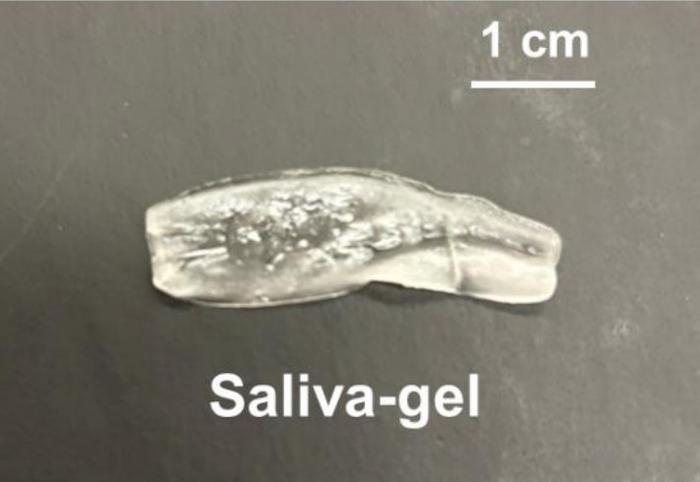
A team of scientists has developed a reusable, polymer-based saliva-gel that could offer hours of relief for people suffering from xerostomia, or chronic dry mouth. The new material, described in the journal ACS Applied Polymer Materials, mimics the properties of natural saliva while steadily releasing moisture into the mouth. Researchers believe the technology could improve everyday comfort and oral health for millions worldwide, including cancer patients, older adults, and individuals with autoimmune diseases.
The Challenge of Treating Xerostomia
Xerostomia affects up to 20 percent of the population, according to the U.S. National Institute of Dental and Craniofacial Research. It can occur as a side effect of medications, radiation therapy, or as a symptom of conditions like Sjögren’s syndrome. Without enough saliva, patients may struggle to chew, swallow, speak, or maintain healthy teeth and gums. Current treatments, such as lozenges and mouth sprays, offer only temporary relief or require frequent application.
How the Saliva-Gel Works
The research team, led by Suman Debnath, Georgia A. Malandraki, and Bryan W. Boudouris, turned to poly(hydroxyethyl methacrylate), or PHEMA—a biocompatible polymer known for its ability to absorb large amounts of water. The new saliva-gel can swell up to 400 percent of its dry volume within six hours, effectively storing artificial saliva inside its structure.
Once in place inside the mouth, the gel gradually releases this stored fluid at body temperature. Tests showed the optimized formula released nearly all of its absorbed artificial saliva within four hours and maintained a 97 percent efficiency over five consecutive use cycles. This consistency suggests the gel could be rinsed, refilled, and reused without losing performance.
“The high swelling capacity allows the gel to both store and release significant amounts of saliva, potentially offering longer-lasting relief than current treatments,” the researchers reported.
Advantages Over Existing Treatments
Unlike sprays or dissolving tablets that require repeated application, the saliva-gel aims to provide sustained moisture with fewer interruptions to a patient’s day. It is noninvasive and free from systemic drug side effects, making it especially appealing for long-term use in older adults or those with complex medical conditions.
Key findings from the study include:
- Swelling capacity of ~400% within six hours.
- 97% release efficiency at body temperature.
- Consistent performance through five reusable cycles.
- Release profile aligned with common dry mouth symptom relief needs.
Why This Matters
Improved dry mouth treatment could have significant downstream benefits. Adequate saliva levels help neutralize acids, wash away food particles, and provide disease-fighting agents that prevent cavities and infections. For cancer survivors who have undergone head and neck radiation, a longer-lasting moisture source could improve both oral comfort and nutrition.
What Comes Next
The team plans to explore how the gel performs in real-world patient settings, including how it could be shaped or contained for comfortable use in the mouth. They are also looking at how the polymer could be adapted to respond to triggers like pH changes or mechanical pressure from chewing.
Could a small, implantable or wearable form of this polymer one day replace the constant cycle of dry mouth sprays? While more testing is needed, the study lays important groundwork for a new category of xerostomia relief products—ones that are reusable, efficient, and capable of mimicking nature’s own saliva.
This research was supported by collaborations among multiple institutions, including the University of Wisconsin–Madison and Purdue University, and aligns with a growing emphasis on biomaterials for targeted therapeutic delivery.