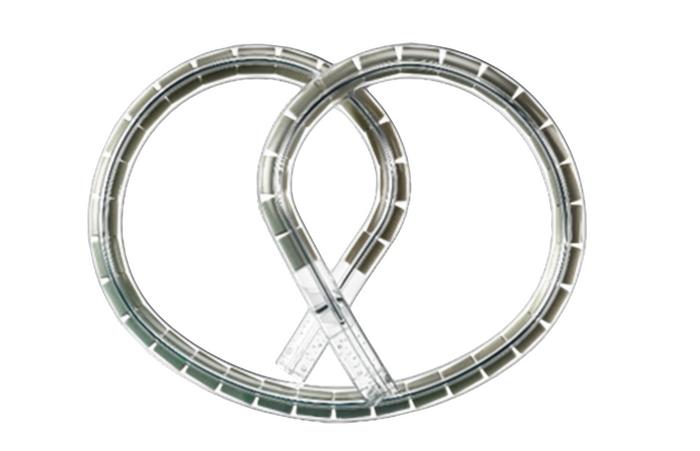
A pretzel-shaped implant that slowly releases chemotherapy over several weeks has wiped out tumors in 82.4 percent of patients with high-risk non–muscle-invasive bladder cancer who had already failed Bacillus Calmette-Guérin (BCG) treatment, according to peer-reviewed results in the Journal of Clinical Oncology.
The device, called TAR-200, sits inside the bladder and delivers gemcitabine continuously, keeping the drug in contact with the bladder lining for far longer than standard treatments. This approach fits with FDA guidance for BCG-unresponsive disease and is now under Priority Review. Details of the SunRISe-1 trial are available at ClinicalTrials.gov.
What The Study Found
The phase IIb SunRISe-1 study tested TAR-200 alone, TAR-200 with the PD-1 inhibitor cetrelimab, and cetrelimab alone in patients with carcinoma in situ (CIS) who did not respond to BCG. A separate group included patients with papillary-only tumors. In CIS, TAR-200 alone achieved an 82.4 percent complete response, with responses lasting a median of 25.8 months at the March 31, 2025 data cutoff. These results meet durability goals set out in FDA guidance.
For papillary-only disease, disease-free survival was 85.3 percent at six months, 81.1 percent at nine months, and 70.2 percent at 12 months. Adding cetrelimab did not improve complete responses over TAR-200 alone but did increase side effects, according to the trial’s parallel cohort analysis.
Key Findings
- TAR-200 alone produced an 82.4 percent complete response in CIS, lasting a median of 25.8 months (JCO).
- Papillary-only disease-free survival: 85.3 percent at six months, 81.1 percent at nine months, 70.2 percent at 12 months.
- Adding cetrelimab increased serious side effects without boosting complete response rates.
- No treatment-related deaths were reported in any group.
How The Device Works
TAR-200 is placed into the bladder through a catheter and left there for about three weeks per treatment cycle. The design allows gemcitabine to soak into the bladder lining continuously, unlike standard bladder instillations that last only a few hours. The goal is to kill more tumor cells while keeping systemic drug exposure low, an approach supported by FDA disease-area guidance.
The SunRISe-1 trial built in endpoints that regulators prioritize: complete response for CIS and disease-free survival for papillary disease. Maintenance dosing was allowed for up to 24 months.
Why It Matters
When BCG fails, many patients face bladder removal surgery, a life-changing procedure. The 82.4 percent complete response rate and durable control seen in SunRISe-1 suggest some patients could delay or avoid cystectomy altogether. The FDA’s Priority Review means a decision could come soon, potentially adding TAR-200 to a growing list of bladder-sparing treatments.
Inside The Trial
SunRISe-1 used parallel groups to test the device alone, with PD-1 immunotherapy, and PD-1 alone for CIS, plus a papillary-only arm for disease-free survival. TAR-200 was given for up to 24 months; cetrelimab for up to 18 months. Serious side effects (grade 3 or higher) occurred in 12.9 percent of CIS patients and 13.5 percent of papillary-only patients on TAR-200 alone, compared to higher rates with the drug-device combination. No treatment-related deaths were reported.
Voices From The Clinic
The trial team, led by Keck Medicine of USC, used centralized response review and close cystoscopic follow-up. Lead author Sia Daneshmand, MD, is a long-time advocate for bladder-sparing care.
“The findings of the clinical trial are a breakthrough in how certain types of bladder cancer might be treated, leading to improved outcomes and saved lives.”
What’s Next
Open questions include whether longer maintenance with TAR-200 could further reduce recurrence and how it stacks up against other bladder-sparing treatments in head-to-head studies. Biomarkers may eventually help identify who benefits most.
With Priority Review underway, TAR-200 could soon change the conversation for patients who relapse after BCG, offering a simple procedure (one catheter placement followed by weeks of slow, steady chemotherapy release) with the potential to keep their bladder and quality of life.